Early results are encouragingMany people have much less pain for at least a year. Doctors are still learning how much of the relief comes from the treatment itself
Home the same day; back to normal activities within a few days
Strong evidence showsEases pain for most people with severe arthritis, and most new knees last a long time. About 1 out of 5 people still have lasting pain
Home in 1 to 4 days; daily activities in 3 to 6 weeks
GAE vs. knee replacement: strong evidence shows a knee replacement eases pain for most people with severe arthritis, and most new knees last a long time. It is major surgery, with weeks of recovery. Early results for genicular (knee) artery embolization (GAE) are encouraging. Many people have much less pain, nothing in the knee is cut or replaced, and you go home the same day. Doctors are still learning how much of that relief comes from the treatment itself. No study has compared the two treatments with each other.1– to 4
It helps to know all your options before you choose. Here is what each one involves and how well it works, with the studies behind them all. If a less invasive treatment works for you, it may spare you a bigger surgery or delay it.
Pain scores. Most studies on this page score knee pain from 0 to 100. A change of about 12 points is the smallest that most people can feel. A smaller change is hard to notice.7, 22
Comparison groups. Knee pain often improves in studies even with a dummy treatment. Salt-water shots did nearly as well as steroid shots and PRP shots, and a fake operation did as well as a knee scope. So this page says when a study had no comparison group. Such a study shows that people felt better, not how much of that came from the treatment itself.54, 59, 86
Different studies. Numbers from different studies cannot be set side by side. They come from different people, followed for different lengths of time. We compare two treatments only when one study tested both.
Every Option's physician performs knee embolization. It is held to the same standard of evidence as every other option here.
What is knee arthritis (osteoarthritis)?
In arthritis, the cushion between the bones wears away. The bones can rub together. This causes pain, swelling, and stiffness. The most common kind is called osteoarthritis. Arthritis is the most common disease of the knee.5, 6
Early results are encouragingMany people have much less pain for at least a year. Doctors are still learning how much of the relief comes from the treatment itself
A thin tube through a tiny skin nick to the knee arteries. Nothing in the knee is cut or replaced
Home the same day; back to normal activities within a few days
Strong evidence showsEases pain for most people with severe arthritis, and most new knees last a long time. About 1 out of 5 people still have lasting pain
Surgery and a hospital stay
Home in 1 to 4 days; daily activities in 3 to 6 weeks
Strong evidence showsDoes not help knee arthritis; a major guideline advises against it
Camera surgery through small cuts
Not reported in the studies we read
Yes
Bold words say how sure the evidence is. Results under How well it works come from different studies that measured different things, so they do not rank one treatment above another.
These are the first steps for most people. No procedure is needed.
Exercise and weight loss
How well it works
Good evidence suggestsHelps you use your knee better and eases pain a little; more when weight loss is added
What it involves
An exercise program, often with a physical therapist
Recovery
None
Keeps your own knee?
Yes
Exercises build strength and keep the knee moving, usually with a physical therapist's help. Losing weight, if you are overweight, takes stress off the knee.5
How well does it work?
Good evidence suggests exercise helps you use your knee better. It also eases pain a little. Adding weight loss helps more.7, 8
What the studies found
Exercise eased pain a little. A review combined the trials of exercise for knee arthritis. Pain was about 9 points better with exercise than with a dummy treatment, on a 100-point scale. That is a little less than most people can feel. People could also do more with their knees.7
Diet plus exercise eased pain more than either one alone. A trial followed 454 overweight adults aged 55 and over for 18 months. Those assigned randomly to diet plus exercise lost about 11% of their weight. Their pain ended lower (about 4 on a 20-point scale) than with exercise alone or diet alone (about 5).8
Side effects and risks
Pain can make it hard to keep active, so ask for a routine you can keep up. If physical therapy has not helped after several weeks, review the plan with your therapist. That is a reason to adjust it, not to stop being active.5
Pain relievers
How well it works
Strong evidence showsAnti-inflammatory pills ease knee pain; acetaminophen helps very little
What it involves
Pills or skin gels
Recovery
None
Keeps your own knee?
Yes
These include acetaminophen, anti-inflammatory pills such as ibuprofen and naproxen, and anti-inflammatory gels that go on the skin.5
How well does it work?
Strong evidence shows anti-inflammatory pills ease knee pain. Gels help some people, with fewer side effects. Acetaminophen helps very little. None of these change the joint itself.5, 9, 10
What the studies found
Anti-inflammatory pills eased pain. A large review combined trials of anti-inflammatory pills and opioids for knee and hip arthritis.9
Acetaminophen helped too little to feel. A review combined the trials that compared it with a dummy pill (a placebo, a pill with no active ingredient).10
Side effects and risks
Anti-inflammatory pills can raise the risk of heart attack, stroke, and stomach bleeding. Talk with a doctor before taking them often. Do not take more than 4,000 mg of acetaminophen a day. The sources we read give no rates for these risks.5, 11
Other medicines
How well it works
Good evidence suggestsDuloxetine eases long-term pain a little; opioids only slightly
What it involves
Daily prescription pills
Recovery
None
Keeps your own knee?
Yes
Duloxetine is a prescription pill also used for depression and nerve pain. Opioid pain pills, including tramadol, are another kind of prescription pill.5
How well does it work?
Good evidence suggests duloxetine eases long-term knee pain a little. Opioids ease arthritis pain only slightly.12– to 14
Side effects and risks
More people stopped duloxetine because of side effects than stopped a dummy pill. For most people with arthritis, the harms of opioids outweigh their small benefit.9, 12, 13
GAE vs. shots and nerve ablation
These are done without surgery. You keep your own knee. Before you agree to surgery, ask about these.
Early results are encouragingMany people have much less pain for at least a year. Doctors are still learning how much of the relief comes from the treatment itself
What it involves
A thin tube through a tiny skin nick to the knee arteries. Nothing in the knee is cut or replaced
Recovery
Home the same day; back to normal activities within a few days
Keeps your own knee?
Yes
In a knee with arthritis, extra small blood vessels grow into the swollen lining of the joint. In genicular (knee) artery embolization (GAE), an interventional radiologist passes a thin tube through a tiny skin nick, usually at the groin and sometimes at the ankle, and guides it to the small arteries around the knee. You get numbing medicine at the skin and medicine to help you relax. You are not put to sleep. The doctor then releases tiny particles that block the extra vessels. Doctors think this calms the swelling and the pain nerves beside those vessels, but this is still being researched.2, 26, 49– to 51
You go home the same day. Most people are back to their normal activities within a few days. Many are back the next day and some the same day. After a knee replacement, that takes 3 to 6 weeks.2, 26, 50– to 52
Relief after GAE often starts within about two weeks. Nothing in the knee is cut or replaced, so you keep your own knee and can still have a knee replacement later.2, 26, 50
The tube goes in through a tiny skin nick, here at the groin, and travels to the knee.
Before
With knee arthritis, the joint gets swollen and painful. Extra small blood vessels feed that swelling, and bending hurts.
During
A thin tube goes through a tiny skin nick to the small blood vessels around the knee. Tiny particles block the extra blood flow.
After
With less blood flow, the swelling can calm down. That can ease the pain.
What is used to block the blood flow?
Embolization means blocking blood flow on purpose, from inside a blood vessel. A doctor guides a thin tube to the spot and releases a material that blocks the small blood vessels feeding it. Doctors choose the material by the size of the vessels and how long the blockage should last.33
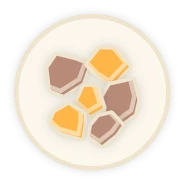
For the knee, doctors use either tiny particles that stay in place for good, or an antibiotic powder that breaks down within hours to days.34, 35
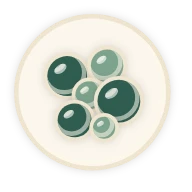
Tiny beads (microspheres)
Round beads of plastic. One common type is an acrylic plastic with gelatin from pigs. Others are a water-holding plastic gel (polyvinyl alcohol) or a plastic gel with a thin coating.36– to 38
They do not dissolve. They stay in place for good. They are not made of metal and do not stop you from having an MRI.36, 37, 39
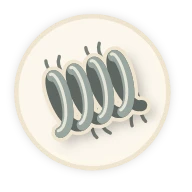
Small springs of platinum or another metal, often with soft fibers. During prostate embolization, doctors sometimes place one in a nearby artery so the beads do not reach the tissue it feeds.33, 42– to 44
They stay in place for good. They are safe in an MRI scanner under set conditions; tell the scanner staff you have them.42
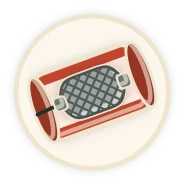
A medicine that works like a detergent, often mixed into a foam (sodium tetradecyl sulfate or polidocanol). It irritates the inside lining of the vein.47, 48
The vein scars shut. This is not always permanent.47
Some beads contain gelatin from pigs. If you avoid pork products or have had a reaction to gelatin, tell your doctor. Types without gelatin are available.36– to 38
How well does it work?
Early results are encouraging. In studies that followed people after GAE, pain dropped a lot, and for many the relief lasted 2 years or more. GAE also did much better than usual care alone. Doctors are still learning how much of this relief comes from the treatment itself: three small trials have compared GAE with a fake procedure so far. Those trial results have prompted multiple larger trials which are currently under way to better investigate this procedure.1, 2, 15– to 17
What the studies found
Pain dropped a lot and stayed down for at least a year. A review combined 45 studies with 2,205 people. Pain fell about 37 points on a 100-point scale by 12 months. That is about three times the smallest change most people can feel. Most of these studies had no comparison group.1
For many people, relief lasted 2 years or more. These studies had no comparison group.17– to 19
In a U.S. study of 40 people with moderate to severe arthritis, about half (18 of 38) had cut their score for pain, stiffness, and daily activity at least in half 2 years later. Of the people helped at 1 year, about 7 out of 10 were still helped at 2 years.17
In a UK study of 46 people, average pain fell from about 59 to about 38 on a 100-point scale at 2 years. Only 28 of the 46 were still being followed, so this result is less certain.18
In a Japanese study of 72 people with mild to moderate arthritis, about 8 out of 10 were still counted as helped at 3 years. The summary we read does not say how "helped" was defined.19
GAE did much better than usual care alone. A trial assigned 50 people randomly to GAE plus usual care or to usual care alone. Everyone knew which they had. After 1 year, pain had fallen by about 73% after GAE, compared with about 24% with usual care alone.16
GAE vs. a fake procedure: three small trials so far. In a fake procedure (a sham), the doctor does every step except blocking the vessels, and people are not told which one they had.
In the first trial (21 people), pain after 1 month was about 50 points better after GAE than after the fake procedure, on a 100-point scale. Everyone in the fake-procedure group then had GAE, so there is no later comparison.20
In a trial of 59 people with early arthritis, knee pain after 1 year had improved about 41% after GAE and about 29% after the fake procedure. That difference could be due to chance.21
In a trial of 58 people, knee pain after 4 months had improved about 21 points after GAE and about 18 points after the fake procedure, on a 100-point scale. After 1 year, GAE was about 7 points ahead. Both differences could be due to chance.22, 23
Taken together (138 people), pain was lower after GAE than after the fake procedure, and some of the difference could be due to chance. These trials were small and enrolled people with mild to moderate arthritis. They cannot yet show whether GAE works better than a fake procedure, or by how much.15
Some people have a second GAE. Across 9 studies with 270 people, about 8 out of 100 had a repeat GAE within 2 years.24
The two kinds of blocking material did about the same. A trial assigned 60 people randomly to the antibiotic powder or to beads that stay. After 1 year, pain was about 4 out of 10 with either one.25
Side effects and risks
GAE is not surgery. There is no cut into the knee, no implant, and no general anesthesia, and you go home the same day. Most side effects are minor and go away on their own.2, 26
Skin color change over the knee: about 1 to 3 out of 10 people. It usually fades within a month.2, 22
Any minor side effect: about 18 out of 100 people, across the studies one review combined. Besides skin changes, these include a bruise at the groin and a few days of knee pain.1, 15, 27
A small skin sore over the knee: about 3 out of 1,000 people, according to the radiology society's 2026 statement. It was more common in one early U.S. study that used very small beads that stay: 7 out of 40 people. All of those healed on their own.2, 28
A small patch of bone that loses its blood supply: fewer than 1 out of 1,000 people in the society's count, usually with no symptoms. It has been seen only with beads that stay (2 out of 40 people in the early U.S. study).2, 15, 28
Numbness or tingling in the lower leg: 2 out of 29 people in one trial. In one of them it was gone by 8 months. In the other it was still there after a year.23
Serious problems are rare. No one had a serious problem in the three trials against a fake procedure (138 people). A German national registry recorded 11 complications in 2,335 procedures, about 5 out of 1,000. Its authors say the true number is probably higher, because the registry was not built to catch every problem. Most reports find no lasting nerve injury and no joint infection.2, 20– to 22, 29
Who was studied, and who it is for
Studies usually enrolled people over 40 whose knee pain had not improved after at least 3 months of other care. They left out people with poor blood flow in the legs, pain coming from the spine, or fibromyalgia (long-term widespread pain).2
People with milder arthritis may do better. In one study of 33 people, about 8 out of 10 with mild changes on X-ray were helped at 6 months, compared with about 4 out of 10 with moderate to severe changes. In severe arthritis, some studies found GAE worked less well and others found it worked equally well.2, 30
What experts say
The Society of Interventional Radiology says GAE should be offered to people whose knee arthritis pain has not improved with non-surgical treatment and who cannot have, do not want, or want to delay a knee replacement. It also calls for larger trials.2
What is not known
How much of the relief comes from GAE itself. Larger trials against a fake procedure are under way, with 110, 130, and 150 people. Other trials compare GAE with a steroid shot and with watching and waiting.2, 31
Whether it delays a knee replacement. In U.S. insurance records, about 13 out of 100 people had a knee replacement within a year after GAE, the same as similar people who did not have GAE. One year is too short of a time to show a delay either way.32
How it compares with knee replacement, shots, or nerve ablation. No finished study has tested GAE against any of them.2
Whether it slows the arthritis. In one study, knee scans 1 year later showed less swelling of the joint lining, while the overall wear had gone on.18
Studies disagreeEases pain for a while; the relief usually fades by about 3 months
What it involves
A shot during an office visit
Recovery
None
Keeps your own knee?
Yes
A steroid medicine is injected into the knee during an office visit.5
How well does it work?
Studies disagree on how much a steroid shot helps. It eases pain for a while, but the relief usually fades by about 3 months. Getting shots again and again does not add relief.5, 53, 54
What the studies found
Relief fades within months. A review combined 27 trials with 1,767 people. Pain relief was moderate 1 to 2 weeks after the shot, small by 3 months, and almost gone by 6 months. Most of the trials were small.53
Repeat shots did not ease pain more than salt-water shots. A trial gave 140 people a steroid shot or a salt-water shot every 3 months for 2 years. Pain eased about the same in both groups.54
Physical therapy did better than steroid shots over a year. A trial assigned 156 people randomly to physical therapy or to steroid shots. After 1 year, the physical therapy group had less pain and stiffness and could do more.55
Side effects and risks
Repeat shots may wear down the knee cushion faster. In the 2-year trial, the cushion thinned about twice as much with steroid shots as with salt-water shots (about 0.2 mm compared with 0.1 mm).54
Before a knee replacement. People who had a shot in the 3 months before surgery were somewhat more likely to get a joint infection. Shots given earlier than that showed no link. Tell your surgeon about any recent shot.56
Gel shots (hyaluronic acid)
How well it works
Strong evidence showsAbout 2 points better than a dummy shot on a 100-point pain scale, too little to feel
What it involves
Shots during office visits
Recovery
None
Keeps your own knee?
Yes
A gel is injected into the knee. It is meant to add to the joint fluid, which thins with arthritis.51
How well does it work?
Strong evidence shows gel shots ease pain only slightly more than dummy shots. The difference is too small for most people to feel.57
What the studies found
Gel shots did about the same as dummy shots. A review looked at 169 trials. In the 24 largest (8,997 people), pain was about 2 points better with gel shots than with dummy shots, on a 100-point scale. Most people cannot feel a change that small.57
Side effects and risks
The knee can be sore or swollen for a short time. In the same review, serious side effects were about one and a half times as common with gel shots as with dummy shots.51, 57
Platelet-rich plasma (PRP)
How well it works
Studies disagreeMay ease pain for up to 6 months; did about the same as a salt-water shot at 1 year in the largest trial
What it involves
A blood draw, then shots
Recovery
None
Keeps your own knee?
Yes
Platelets are taken from your own blood and injected into the knee.51, 59
How well does it work?
Studies disagree on whether PRP helps. Smaller trials suggest it may ease pain for up to 6 months. The largest trial found it did about the same as a salt-water shot after a year.58, 59
What the studies found
In the largest trial, PRP did about the same as a salt-water shot. The trial assigned 288 people aged 50 and over randomly to PRP or salt-water shots. After 1 year, pain had fallen about 2 points in both groups, on a 10-point scale. The trial tested one kind of PRP.59
Side effects and risks
Side effects were mild and short in the largest trial. The sources we read give no rates.59
Nerve ablation
How well it works
Studies disagreeMay ease pain for about 3 months; did about the same as a fake procedure at 1 year in one trial
What it involves
Heat applied to the knee's pain nerves
Recovery
Not reported in the studies we read
Keeps your own knee?
Yes
Heat from a needle quiets the nerves that carry pain from the knee. The sources we read do not describe the steps or the recovery well enough to state them.51
How well does it work?
Studies disagree on whether it helps. It may ease pain for about 3 months. Longer relief has not been shown.60, 61
What the studies found
Compared with a fake procedure, it did about the same after a year. A trial of 64 people found no difference at 12 months.61
Compared with a steroid shot, more people had their pain cut in half. In a trial of 151 people, about 7 out of 10 had at least half their pain gone 6 months after nerve ablation, compared with about 2 out of 10 after a single steroid shot. There was no fake-procedure group.62
The trials are weak overall. A review of 25 trials rated its confidence in the results as low or very low.60
Side effects and risks
Serious problems were no more common than with a fake procedure. The sources we read give no rates.60
Embolization for other joints
Doctors are also trying embolization for arthritis in other joints. None of these studies had a comparison group, and no knee result applies to another joint.63– to 65
Hip: two early studies, one that followed people for a year.63, 64
Shoulder arthritis: a formal review found no studies.66
Frozen shoulder: this is not arthritis. It often gets better on its own, though that can take up to 3 years. Early studies report less night pain within weeks of embolization. Serious problems are possible, but rare: brief loss of vision has been reported.67– to 69
Knee replacement vs. other surgery
Surgery replaces the worn parts of the knee or changes how weight rests on it.
Knee replacement
How well it works
Strong evidence showsEases pain for most people with severe arthritis, and most new knees last a long time. About 1 out of 5 people still have lasting pain
What it involves
Surgery and a hospital stay
Recovery
Home in 1 to 4 days; daily activities in 3 to 6 weeks
Keeps your own knee?
No. The worn surfaces are replaced
The surgeon removes the worn cushion and bone and replaces them with metal and plastic parts. You are asleep or numb from the waist down. Surgery takes 1 to 2 hours. Most people leave the hospital in 1 to 4 days. Most daily activities return in 3 to 6 weeks. Full recovery can take several months.52, 80
How well does it work?
Strong evidence shows a knee replacement eases pain for most people with moderate to severe arthritis, and most new knees last a long time. About 1 out of 5 people still have lasting pain afterward.3, 4, 70
What the studies found
Knee replacement eased pain and improved daily life more than non-surgical care. One trial assigned 100 people with moderate to severe arthritis randomly to a knee replacement or to 12 weeks of exercise, diet advice, and pain medicine. After 1 year, scores for pain and daily life had improved about 32 points after surgery, compared with about 16 points without it, on a 100-point scale. That is a difference people can clearly feel. It was still there after 2 years.4, 71
Many people who tried non-surgical care first did not need surgery within 2 years. In the same trial, about 2 out of 3 people in the non-surgical group had still not had a knee replacement 2 years later.71
Most new knees last decades. About 8 out of 10 knee replacements still have their original parts 25 years later.3
Most people are satisfied, but not all. About 1 to 2 out of 10 people are not satisfied with their new knee.72, 73
Some people still have pain. A review of studies that followed people for up to 5 years found that, in the best studies, about 1 out of 5 still had lasting pain in the new knee.70
Knee replacement vs. GAE: no study has compared them. They are usually for different stages. GAE is for people who are not ready for surgery, cannot have it, or want to put it off.2
Side effects and risks
Knee replacement is major surgery. Its risks are more serious than those of the less invasive treatments, but they have fallen over the years.
Serious medical problems in the trial: 24 were recorded among the 50 people assigned to surgery, compared with 6 among the 50 people assigned to non-surgical care.4
In the 3 months after surgery. A U.S. study of 201,736 knee replacements tracked these from 2008 to 2023:74
A blood transfusion: about 8 out of 100 people in 2008, and about 6 out of 100 in 202374
A blood clot in the leg: about 25 out of 1,000 people in 2008, and about 16 out of 1,000 in 202374
An infection in the new joint: about 12 out of 1,000 people in 2008, and about 7 out of 1,000 in 202374
A knee that stays stiff after surgery: about 2 to 3 out of 100 people need a second trip to the operating room, usually in the first year. There the surgeon bends the knee while the person is asleep, to break up scar tissue (called manipulation under anesthesia). The figures are from national records in Finland and the United States.75, 76
Death within 3 months of surgery, from any cause: about 3 to 4 out of 1,000 people, in a review that combined studies of more than 1.6 million knee replacements.77
Lasting pain or stiffness: see "Some people still have pain" in this section.70, 78
Who it is for
It is usually for severe arthritis when other treatments no longer help. For people who have chosen surgery after non-surgical care did not help, a 2023 guideline from rheumatology and joint-surgery societies advises against putting surgery off to try more non-surgical treatment. It calls this a weaker recommendation, because the studies behind it are limited.79
Partial knee replacement
How well it works
About the same as a full replacement at 5 years, in one trial of 528 people; more likely to need redoing later
What it involves
Surgery on one part of the knee
Recovery
Shorter than after a full replacement
Keeps your own knee?
Partly
The surgeon replaces only the worn part of the knee, usually the inner side.5, 81
How well does it work?
It is an option when only one part of the knee is worn. Results are about the same as with a full replacement at 5 years. A partial knee is more likely to need redoing later.3, 81
What the studies found
Partial and full replacement did about the same. A trial assigned 528 people with arthritis on the inner side of the knee randomly to a partial or a full replacement. Results after 5 years were about the same.81
Side effects and risks
The risks are the same kinds as with a full replacement: infection, blood clots, and lasting pain or stiffness. Recovery is shorter. You may drive after about 3 weeks, compared with at least 6 weeks after a full replacement. The sources we read give no separate rates.52, 78
Bone realignment (osteotomy)
How well it works
Early studies suggestEases symptoms more than non-surgical care, in one trial
What it involves
Surgery to reshape the shin bone
Recovery
Not reported in the studies we read
Keeps your own knee?
Yes
The surgeon cuts and reshapes the shin bone to shift weight off the worn inner side of the knee. It is mainly for younger, active people with bow legs.82, 83
How well does it work?
Early studies suggest it eases symptoms more than non-surgical care. This comes from one trial at one hospital.82
What the studies found
Some people later have a knee replacement. About 1 out of 10 people have a knee replacement more than 10 years after the surgery.83
Side effects and risks
Any complication: about 18 out of 100 people, in a review of 16 studies of a newer, custom-guided version of the surgery. About 1 out of 100 needed another operation.84
Compared with a partial knee replacement, complications and repeat surgery were more common after bone realignment, while people could bend the knee further and stay more active.85
Knee scope clean-out
How well it works
Strong evidence showsDoes not help knee arthritis; a major guideline advises against it
What it involves
Camera surgery through small cuts
Recovery
Not reported in the studies we read
Keeps your own knee?
Yes
A camera and small tools go in through small cuts to wash out or trim the inside of the knee.5, 86
How well does it work?
Strong evidence shows a knee scope clean-out does not help knee arthritis. A major guideline from orthopedic surgeons advises against it.86– to 88
What the studies found
It did about the same as a fake operation. In a trial that compared the scope with a fake operation, all groups improved by about the same amount.86
It added nothing to physical therapy and medicines. A second trial assigned people randomly to the scope plus physical therapy and medicines, or to physical therapy and medicines alone.87
Side effects and risks
It carries the risks of surgery, including blood clots and infection. The sources we read give no rates.89
Does a less invasive step affect later surgery?
With knee arthritis, waiting does not put your life or your leg at risk. Guidelines step from exercise and medicines to shots, and then to surgery. Knee function can decline while you wait.5, 79
After GAE: in 48 knee replacements done about a year and a half after GAE, 4 had a complication, and all 4 cleared up. There was no comparison group, and the authors perform GAE themselves.90
After a steroid shot: a shot in the 3 months before surgery was linked to more joint infection.56
If a joint suddenly turns hot, red, and swollen, you cannot put weight on it, you have a fever, or you feel very sick or faint, call 911.
References
The small numbers on this page point to these sources.
Amin AT, Safar IEM, Trujillo RB, et al. Outcome and safety of genicular artery embolization for knee osteoarthritis: a systematic review and meta-analysis. CardioVascular and Interventional Radiology. 2026;49(9):1682-1697. doi:10.1007/s00270-026-04502-7. PMID 42303879. https://doi.org/10.1007/s00270-026-04502-7
Ahmed O, Taslakian B, Okuno Y, et al. Society of Interventional Radiology position statement on genicular artery embolization for symptomatic knee osteoarthritis. Journal of Vascular and Interventional Radiology. 2026;37(7):108803. doi:10.1016/j.jvir.2026.108803. Open access. https://doi.org/10.1016/j.jvir.2026.108803
Evans JT, Walker RW, Evans JP, Blom AW, Sayers A, Whitehouse MR. How long does a knee replacement last? A systematic review and meta-analysis of case series and national registry reports with more than 15 years of follow-up. Lancet. 2019;393(10172):655-663. doi:10.1016/S0140-6736(18)32531-5. PMID 30782341. https://doi.org/10.1016/S0140-6736(18)32531-5
Skou ST, Roos EM, Laursen MB, et al. A randomized, controlled trial of total knee replacement. New England Journal of Medicine. 2015;373(17):1597-1606. doi:10.1056/NEJMoa1505467. PMID 26488691. https://doi.org/10.1056/NEJMoa1505467
Lawford BJ, Hall M, Hinman RS, et al. Exercise for osteoarthritis of the knee. Cochrane Database of Systematic Reviews. 2024;(12):CD004376. doi:10.1002/14651858.CD004376.pub4. PMID 39625083. https://doi.org/10.1002/14651858.CD004376.pub4
Messier SP, Mihalko SL, Legault C, et al. Effects of intensive diet and exercise on knee joint loads, inflammation, and clinical outcomes among overweight and obese adults with knee osteoarthritis: the IDEA randomized clinical trial. JAMA. 2013;310(12):1263-1273. doi:10.1001/jama.2013.277669. PMID 24065013. https://doi.org/10.1001/jama.2013.277669
da Costa BR, Pereira TV, Saadat P, et al. Effectiveness and safety of non-steroidal anti-inflammatory drugs and opioid treatment for knee and hip osteoarthritis: network meta-analysis. BMJ. 2021;375:n2321. doi:10.1136/bmj.n2321. PMID 34642179. https://doi.org/10.1136/bmj.n2321
Machado GC, Maher CG, Ferreira PH, et al. Efficacy and safety of paracetamol for spinal pain and osteoarthritis: systematic review and meta-analysis of randomised placebo controlled trials. BMJ. 2015;350:h1225. doi:10.1136/bmj.h1225. PMID 25828856. https://doi.org/10.1136/bmj.h1225
Bhandari B, Bisht K, Purohit G, et al. Navigating the efficacy and safety landscape of duloxetine in osteoarthritis management: a meta-analysis of randomized controlled trials. Indian Journal of Orthopaedics. 2025;59(8):1123-1136. doi:10.1007/s43465-025-01372-y. PMID 40852552. https://doi.org/10.1007/s43465-025-01372-y
da Costa BR, Nüesch E, Kasteler R, et al. Oral or transdermal opioids for osteoarthritis of the knee or hip. Cochrane Database of Systematic Reviews. 2014;(9):CD003115. doi:10.1002/14651858.CD003115.pub4. PMID 25229835. https://doi.org/10.1002/14651858.CD003115.pub4
Toupin April K, Bisaillon J, Welch V, et al. Tramadol for osteoarthritis. Cochrane Database of Systematic Reviews. 2019;(5):CD005522. doi:10.1002/14651858.CD005522.pub3. PMID 31132298. Most included trials were industry funded. https://doi.org/10.1002/14651858.CD005522.pub3
Lanza E, Poretti D, Pedicini V, Kon E, Laghi A. Permanent vs. temporary embolic agents in genicular artery embolization for knee osteoarthritis: a systematic review and meta-analysis. European Journal of Radiology. 2026;202:112968. doi:10.1016/j.ejrad.2026.112968. PMID 42208168. https://doi.org/10.1016/j.ejrad.2026.112968
Kumar S, Kumar S, Kumar A, Sinha U, Nain R. Genicular artery embolisation for the management of knee osteoarthritis: a prospective randomised study. Clinical Radiology. 2026;101:107427. doi:10.1016/j.crad.2026.107427. PMID 42585691. Not blinded. Abstract read. https://doi.org/10.1016/j.crad.2026.107427
Cusumano LR, Sparks HD, Masterson KE, Genshaft SJ, Plotnik AN, Padia SA. Genicular artery embolization for treatment of symptomatic knee osteoarthritis: 2-year outcomes from a prospective IDE trial. Journal of Vascular and Interventional Radiology. 2024;35(12):1768-1775. doi:10.1016/j.jvir.2024.08.028. PMID 39322180. Single group, no comparison. Grant support includes a device maker. https://doi.org/10.1016/j.jvir.2024.08.028
Little MW, O'Grady A, Briggs J, et al. Genicular artery embolisation in patients with osteoarthritis of the knee (GENESIS) using permanent microspheres: long-term results. CardioVascular and Interventional Radiology. 2024;47(12):1750-1762. doi:10.1007/s00270-024-03752-7. PMID 38819473. Single group, no comparison. Funded by a device maker. https://doi.org/10.1007/s00270-024-03752-7
Okuno Y, Korchi AM, Shinjo T, Kato S, Kaneko T. Midterm clinical outcomes and MR imaging changes after transcatheter arterial embolization as a treatment for mild to moderate radiographic knee osteoarthritis resistant to conservative treatment. Journal of Vascular and Interventional Radiology. 2017;28(7):995-1002. doi:10.1016/j.jvir.2017.02.033. PMID 28365171. Single group. Abstract read. https://doi.org/10.1016/j.jvir.2017.02.033
Bagla S, Piechowiak R, Sajan A, Orlando J, Hartman T, Isaacson A. Multicenter randomized sham controlled study of genicular artery embolization for knee pain secondary to osteoarthritis. Journal of Vascular and Interventional Radiology. 2022;33(1):2-10.e2. doi:10.1016/j.jvir.2021.09.019. PMID 34610422. Abstract read. https://doi.org/10.1016/j.jvir.2021.09.019
Landers S, et al. Bone & Joint Open. 2023. Triple-blind, single-centre sham-controlled randomized trial of genicular artery embolization in early knee osteoarthritis (described, not the paper's title). doi:10.1302/2633-1462.43.BJO-2022-0161.R2. PMID 37051829. Abstract read. https://doi.org/10.1302/2633-1462.43.BJO-2022-0161.R2
van Zadelhoff TA, Bos PK, Moelker A, et al. Genicular artery embolisation versus sham embolisation for symptomatic osteoarthritis of the knee: a randomised controlled trial. BMJ Open. 2024;14:e087047. doi:10.1136/bmjopen-2024-087047. PMID 39353688. Full text read. https://doi.org/10.1136/bmjopen-2024-087047
van Zadelhoff TA, van der Heijden RA, Bierma-Zeinstra SMA, Bos PK, Oei EHG. Long-term outcomes of genicular artery embolization for knee osteoarthritis: 12-month efficacy and secondary outcomes from a randomized sham-controlled clinical trial. European Radiology. 2026;36(8):6624-6633. doi:10.1007/s00330-026-12505-8. PMID 42009866. https://doi.org/10.1007/s00330-026-12505-8
Taslakian B, et al. Osteoarthritis and Cartilage Open. 2023. Meta-analysis of genicular artery embolization for knee osteoarthritis (described, not the paper's title). doi:10.1016/j.ocarto.2023.100342. PMID 36865988. Abstract read through a summarizing tool. https://doi.org/10.1016/j.ocarto.2023.100342
Correa MP, et al. CardioVascular and Interventional Radiology. 2026. Randomized trial of imipenem/cilastatin against permanent microspheres for genicular artery embolization (GAUCHO; described, not the paper's title). doi:10.1007/s00270-026-04504-5. PMID 42371012. An erratum exists (PMID 42661080, unread). Abstract read. https://doi.org/10.1007/s00270-026-04504-5
Ashraf N, Tahir MJ, Arabi TZ, et al. Safety and efficacy of genicular artery embolization for knee joint osteoarthritis associated pain: a systematic review. Journal of Endovascular Therapy. 2026;33(4):1642-1659. doi:10.1177/15266028251326770. PMID 40219609. https://doi.org/10.1177/15266028251326770
Padia SA, Genshaft S, Blumstein G, et al. Genicular artery embolization for the treatment of symptomatic knee osteoarthritis. JBJS Open Access. 2021;6(4):e21.00085. doi:10.2106/JBJS.OA.21.00085. PMID 34703964. Single group, no comparison. https://doi.org/10.2106/JBJS.OA.21.00085
Taheri Amin A, Safar IEM, Collettini F, et al. Technique, safety and adoption of genicular artery embolization for knee osteoarthritis: a nationwide analysis of the German quality-assurance registry. CardioVascular and Interventional Radiology. 2026. doi:10.1007/s00270-026-04657-3. PMID 42897320. Abstract read. https://doi.org/10.1007/s00270-026-04657-3
Gill SD, Hely R, Hely A, Harrison B, Page RS, Landers S. Outcomes after genicular artery embolization vary according to the radiographic severity of osteoarthritis: results from a prospective single-center study. Journal of Vascular and Interventional Radiology. 2023;34(10):1734-1739. doi:10.1016/j.jvir.2023.06.016. PMID 37331590. Abstract read. https://doi.org/10.1016/j.jvir.2023.06.016
Little MW, Harrison R, MacGill S, et al. Genicular artery embolisation in patients with osteoarthritis of the knee (GENESIS 2): protocol for a double-blind randomised sham-controlled trial. CardioVascular and Interventional Radiology. 2023;46(9):1276-1282. PMID 37337060. Funded by a device maker. https://europepmc.org/article/MED/37337060
Singh A, Shah M, Vij R, Fountain C, Prologo JD. Intra-articular injection use and total knee arthroplasty after genicular artery embolization for knee osteoarthritis: a matched national claims analysis. Journal of Vascular and Interventional Radiology. 2026:109144. doi:10.1016/j.jvir.2026.109144. PMID 42874703. https://doi.org/10.1016/j.jvir.2026.109144
RadiologyInfo.org (Radiological Society of North America and American College of Radiology). Catheter embolization. Reviewed August 5, 2024. https://www.radiologyinfo.org/en/info/cathembol
Ahmed O, et al. [Society of Interventional Radiology position statement on genicular artery embolization.] Journal of Vascular and Interventional Radiology. 2026;37:108803. https://doi.org/10.1016/j.jvir.2026.108803
Correa MP, Michelin AF, Aguiar LA, et al. Genicular artery embolization using imipenem/cilastatin vs. microsphere for knee osteoarthritis (GAUCHO): 12-month clinical results of a single-blind randomized controlled trial. CardioVascular and Interventional Radiology. 2026;49(9):1825-1837. https://doi.org/10.1007/s00270-026-04504-5
Lanza E, Poretti D, Pedicini V, et al. Permanent vs. temporary embolic agents in genicular artery embolization for knee osteoarthritis: a systematic review and meta-analysis. European Journal of Radiology. 2026;202:112968. https://doi.org/10.1016/j.ejrad.2026.112968
Maclean D, Vigneswaran G, Maher B, et al. The effect of protective coil embolization of penile anastomoses during prostatic artery embolization on erectile function: a propensity-matched analysis. Journal of Vascular and Interventional Radiology. 2023;34(2):218-224. https://doi.org/10.1016/j.jvir.2022.10.023
Richardson A, Bhatia A, Maini A, et al. Impact on sexual function of protective coil embolization of penile collaterals during prostatic artery embolization. CardioVascular and Interventional Radiology. 2025;48(4):512-521. https://doi.org/10.1007/s00270-025-03966-3
Strobl F, Böhm AK, Mertens L, et al. Pelvic vein embolization using different embolic agents for the treatment of pelvic venous insufficiency: a systematic review and meta-analysis. Journal of Vascular Surgery: Venous and Lymphatic Disorders. 2026;14(6):102599. https://doi.org/10.1016/j.jvsv.2026.102599
Ratcliffe J, et al. Transpedal genicular artery embolization for knee osteoarthritis: a single-center cohort of 110 knees. European Journal of Radiology. 2026;202:112935. doi:10.1016/j.ejrad.2026.112935. Abstract and parts of the full text read (described, not the paper's title). https://doi.org/10.1016/j.ejrad.2026.112935
Cusumano LR, Padia SA. Navigating the treatment gap in knee osteoarthritis. Seminars in Interventional Radiology. 2026;43:37-41. doi:10.1055/a-2845-7049. Authors report device-maker support. https://doi.org/10.1055/a-2845-7049
Jüni P, Hari R, Rutjes AW, et al. Intra-articular corticosteroid for knee osteoarthritis. Cochrane Database of Systematic Reviews. 2015;(10):CD005328. doi:10.1002/14651858.CD005328.pub3. PMID 26490760. https://doi.org/10.1002/14651858.CD005328.pub3
McAlindon TE, LaValley MP, Harvey WF, et al. Effect of intra-articular triamcinolone vs saline on knee cartilage volume and pain in patients with knee osteoarthritis: a randomized clinical trial. JAMA. 2017;317(19):1967-1975. doi:10.1001/jama.2017.5283. PMID 28510679. https://doi.org/10.1001/jama.2017.5283
Deyle GD, Allen CS, Allison SC, et al. Physical therapy versus glucocorticoid injection for osteoarthritis of the knee. New England Journal of Medicine. 2020;382(15):1420-1429. doi:10.1056/NEJMoa1905877. PMID 32268027. https://doi.org/10.1056/NEJMoa1905877
Yang X, Li L, Ren X, Nie L. Do preoperative intra-articular injections of corticosteroids or hyaluronic acid increase the risk of infection after total knee arthroplasty? A meta-analysis. Bone and Joint Research. 2022;11(3):171-179. doi:10.1302/2046-3758.113.BJR-2021-0350.R1. PMID 35311571. Retrospective studies; higher infection risk with a shot in the 3 months before surgery. https://doi.org/10.1302/2046-3758.113.BJR-2021-0350.R1
Pereira TV, Jüni P, Saadat P, et al. Viscosupplementation for knee osteoarthritis: systematic review and meta-analysis. BMJ. 2022;378:e069722. doi:10.1136/bmj-2022-069722. PMID 36333100. https://doi.org/10.1136/bmj-2022-069722
Auroux M, Debionne T, Mainbourg S, Chapurlat R. Efficacy of intra-articular platelet-rich plasma compared with placebo in knee osteoarthritis: a systematic review and meta-analysis. Joint Bone Spine. 2025;92(6):105947. doi:10.1016/j.jbspin.2025.105947. PMID 40653151. https://doi.org/10.1016/j.jbspin.2025.105947
Bennell KL, Paterson KL, Metcalf BR, et al. Effect of intra-articular platelet-rich plasma vs placebo injection on pain and medial tibial cartilage volume in patients with knee osteoarthritis: the RESTORE randomized clinical trial. JAMA. 2021;326(20):2021-2030. doi:10.1001/jama.2021.19415. PMID 34812863. https://doi.org/10.1001/jama.2021.19415
Almeida M, Saragiotto BT, Hunter DJ, et al. Efficacy and safety of minimally invasive interventions targeting the genicular nerves for knee osteoarthritis: a meta-analysis. Osteoarthritis and Cartilage. 2025;33(5):535-547. doi:10.1016/j.joca.2025.02.780. PMID 40054598. https://doi.org/10.1016/j.joca.2025.02.780
Malaithong W, Tontisirin N, Seangrung R, Wongsak S, Cohen SP. Bipolar radiofrequency ablation of the superomedial, superolateral and inferomedial genicular nerves for chronic osteoarthritis knee pain: a randomized double-blind placebo-controlled trial with 12-month follow-up. Regional Anesthesia and Pain Medicine. 2023;48(4):151-160. doi:10.1136/rapm-2022-103976. PMID 36543391. https://doi.org/10.1136/rapm-2022-103976
Davis T, et al. Regional Anesthesia and Pain Medicine. 2018. Randomized trial of genicular nerve radiofrequency ablation against a steroid injection for knee osteoarthritis pain (described, not the paper's title). doi:10.1097/AAP.0000000000000690. PMID 29095245. Not sham-controlled. Abstract read. https://doi.org/10.1097/AAP.0000000000000690
Cavalheiro F, Marinho Lopes P, Sousa F, Sousa P, Linhares D, Neves N. HipE study: hip embolization for pain control in hip osteoarthritis and greater trochanteric pain syndrome, 12 months follow-up. CardioVascular and Interventional Radiology. 2026;49(7):1295-1305. doi:10.1007/s00270-026-04403-9. PMID 41870537. Single group, no comparison. https://doi.org/10.1007/s00270-026-04403-9
Feier AM, Bloj F, Russu OM, Bloj A, Nechifor R, Pop TS. Periarticular embolization as an alternative treatment for surgery-ineligible patients with hip osteoarthritis: a prospective comparative study. Not randomized. Journal of Clinical Medicine. 2026;15(13):5108. doi:10.3390/jcm15135108. PMID 42452568. https://doi.org/10.3390/jcm15135108
Lee SY, Lim WX, Wu KT, Wu CT, Huang CC, Chang CD. Short-term clinical outcomes of transarterial embolization for symptomatic hand osteoarthritis refractory to conservative treatment. Diagnostic and Interventional Radiology. 2024;30(1):65-71. doi:10.4274/dir.2023.232350. PMID 37927038. Nine patients, no comparison. https://doi.org/10.4274/dir.2023.232350
Krenn C, Semlitsch T, Wilfling D. Transarterial periarticular embolisation for knee and shoulder osteoarthritis. Austrian Institute for Health Technology Assessment (AIHTA), 2026. Read through its INAHTA database record, November 4, 2026. https://database.inahta.org/article/34963
Fernández-Martínez AM. Frozen shoulder embolization: clinical and imaging fundamentals for interventionalists. Seminars in Interventional Radiology. 2026;43:1-4. doi:10.1055/a-2841-4309. https://doi.org/10.1055/a-2841-4309
Okuno Y, Iwamoto W, Matsumura N, et al. Clinical outcomes of transcatheter arterial embolization for adhesive capsulitis resistant to conservative treatment. Journal of Vascular and Interventional Radiology. 2017;28(2):161-167.e1. doi:10.1016/j.jvir.2016.09.028. PMID 28007330. Single group, no comparison. https://doi.org/10.1016/j.jvir.2016.09.028
Allaw S, Khabaz K, Yu Q, Ahmed O. Transarterial embolization for refractory adhesive capsulitis and related tendinopathies: a systematic review and meta-analysis. Journal of Vascular and Interventional Radiology. 2026;37(2):107896. doi:10.1016/j.jvir.2025.10.027. PMID 41161413. https://doi.org/10.1016/j.jvir.2025.10.027
Beswick AD, Wylde V, Gooberman-Hill R, Blom A, Dieppe P. What proportion of patients report long-term pain after total hip or knee replacement for osteoarthritis? A systematic review of prospective studies in unselected patients. BMJ Open. 2012;2(1):e000435. doi:10.1136/bmjopen-2011-000435. PMID 22357571. https://doi.org/10.1136/bmjopen-2011-000435
Skou ST, Roos EM, Laursen MB, et al. Total knee replacement and non-surgical treatment of knee osteoarthritis: 2-year outcome from two parallel randomized controlled trials. Osteoarthritis and Cartilage. 2018;26(9):1170-1180. doi:10.1016/j.joca.2018.04.014. PMID 29723634. https://doi.org/10.1016/j.joca.2018.04.014
Bourne RB, Chesworth BM, Davis AM, Mahomed NN, Charron KD. Patient satisfaction after total knee arthroplasty: who is satisfied and who is not? Clinical Orthopaedics and Related Research. 2010;468(1):57-63. doi:10.1007/s11999-009-1119-9. PMID 19844772. https://doi.org/10.1007/s11999-009-1119-9
DeFrance MJ, Scuderi GR. Are 20% of patients actually dissatisfied following total knee arthroplasty? A systematic review of the literature. Journal of Arthroplasty. 2023;38(3):594-599. doi:10.1016/j.arth.2022.10.011. https://doi.org/10.1016/j.arth.2022.10.011
Wajahath M, Saad J, Elmenini H, Al Jamal M, et al. Declining complications after primary total knee arthroplasty over 16 years. Journal of Arthroplasty. 2026. doi:10.1016/j.arth.2026.10.039. PMID 42971443. https://doi.org/10.1016/j.arth.2026.10.039
Sala J, Sirola J, Jaroma A, Kröger H, et al. Risk factors for manipulation under anesthesia after total knee arthroplasty and subsequent revision arthroplasty: a Finnish register-based study of 154,883 patients. Acta Orthopaedica. 2026;97:435-441. doi:10.2340/17453674.2026.46072. PMID 42329270. https://doi.org/10.2340/17453674.2026.46072
Scott TA, Rainwater RR, Steen LS, Mears SC, et al. Seasonal, regional, and clinical factors associated with manipulation under anesthesia following total knee arthroplasty: a PearlDiver study. Arthroplasty Today. 2026;39:102030. doi:10.1016/j.artd.2026.102030. PMID 42305560. https://doi.org/10.1016/j.artd.2026.102030
Pan X, Turan O, Rullan PJ, Simmons H, et al. 30-days to 10-years mortality rates following total knee arthroplasty: a systematic review and meta-analysis of the last decade (2011-2021). Journal of Knee Surgery. 2022;36(13):1323-1340. doi:10.1055/a-1911-3892. PMID 35901803. https://doi.org/10.1055/a-1911-3892
Hannon CP, Goodman SM, Austin MS, et al. 2023 American College of Rheumatology and American Association of Hip and Knee Surgeons clinical practice guideline for the optimal timing of elective hip or knee arthroplasty. Arthritis Care & Research. 2023;75(11):2227-2238. doi:10.1002/acr.25175. PMID 37743767. Abstract read. https://doi.org/10.1002/acr.25175
Beard DJ, Davies LJ, Cook JA, et al. The clinical and cost-effectiveness of total versus partial knee replacement in patients with medial compartment osteoarthritis (TOPKAT): 5-year outcomes of a randomised controlled trial. Lancet. 2019;394(10200):746-756. doi:10.1016/S0140-6736(19)31281-4. PMID 31326135. https://doi.org/10.1016/S0140-6736(19)31281-4
Birmingham TB, Primeau CA, Moyer RF, et al. High tibial osteotomy for medial compartment knee osteoarthritis: a randomized trial with parallel preference arm. Annals of Internal Medicine. 2025;178(9):1238-1248. doi:10.7326/ANNALS-25-00920. PMID 40720836. One center. https://doi.org/10.7326/ANNALS-25-00920
Loke RWK, Chan YK, Lim YH, Tan BWL, Hui JHP. Conversion to total knee arthroplasty after high tibial osteotomy: a systematic review and meta-analysis. Orthopaedic Journal of Sports Medicine. 2025;13(2):23259671241310963. doi:10.1177/23259671241310963. PMID 39916951. https://doi.org/10.1177/23259671241310963
Correia R, Gomes E, Valente C, Delgado D, et al. Accuracy, patient-reported and surgical-related outcomes in patient-specific 3D-printed versus standard high tibial osteotomy: a systematic review with meta-analysis. The Knee. 2026;61:104432. doi:10.1016/j.knee.2026.104432. PMID 41936349. https://doi.org/10.1016/j.knee.2026.104432
Ma X, Wang Y, Fu K. High tibial osteotomy versus unicompartmental knee arthroplasty for medial compartment knee osteoarthritis: a comprehensive meta-analysis. BMC Musculoskeletal Disorders. 2026;27(1). doi:10.1186/s12891-026-09590-7. PMID 41735997. https://doi.org/10.1186/s12891-026-09590-7
Moseley JB, O'Malley K, Petersen NJ, et al. A controlled trial of arthroscopic surgery for osteoarthritis of the knee. New England Journal of Medicine. 2002;347(2):81-88. doi:10.1056/NEJMoa013259. PMID 12110735. https://doi.org/10.1056/NEJMoa013259
Kirkley A, Birmingham TB, Litchfield RB, et al. A randomized trial of arthroscopic surgery for osteoarthritis of the knee. New England Journal of Medicine. 2008;359(11):1097-1107. doi:10.1056/NEJMoa0708333. PMID 18784099. https://doi.org/10.1056/NEJMoa0708333
Thorlund JB, Juhl CB, Roos EM, Lohmander LS. Arthroscopic surgery for degenerative knee: systematic review and meta-analysis of benefits and harms. BMJ. 2015;350:h2747. doi:10.1136/bmj.h2747. PMID 26080045. https://doi.org/10.1136/bmj.h2747
Albrecht H, Cusumano LR, Little M, et al. CardioVascular and Interventional Radiology. 2025;48:1795-1800. Retrospective study of knee replacement after genicular artery embolization (described, not the paper's title). doi:10.1007/s00270-025-04227-z. PMID 41094076. No control group. Full text read by a research worker. https://doi.org/10.1007/s00270-025-04227-z
Education, not medical advice. Talk to your doctor about your own care.