Fibroid treatments compared, side by side

Reviewed by Abhishek Goswami, MD, interventional radiology

At a glance: 3 of 10 treatments
TreatmentHow well it worksRecovery
Fibroid embolization (UFE)Good evidence suggests Most women feel much betterAbout 1 week
MyomectomyGood evidence suggests Quality of life improves2 to 6 weeks
Hysterectomy (surgical removal of the uterus)The only treatment that keeps fibroids from returning; periods stop2 to 6 weeks

See all 10 and how well each works

Find a doctor for fibroid embolization

UFE vs. myomectomy: both keep the uterus, and good evidence suggests women improve after either one. Some women need another procedure later after either. Embolization works through a tiny skin nick, with no cut in the belly, and recovery takes about 1 week instead of 2 to 6 weeks. Hysterectomy is the only treatment that keeps fibroids from returning.1 to 4

New to fibroids? Start with the quick guide to your fibroid treatment options

How to read this page

It helps to know all your options before you choose. Here is what each one involves and how well it works. If a less invasive treatment works for you, it may spare you a bigger surgery or delay it.

What are fibroids?

Fibroids are muscle growths in or on the wall of the uterus. They are very common. By age 50, about 2 to 8 out of 10 women have them.5

Common symptoms56

  • Heavy or long periods
  • Tiredness from blood loss
  • Pelvic pain or pressure
  • Frequent urination
  • Pain during sex
When to see a doctor

See a doctor if you have any of these, or if you soak through a pad or tampon every hour for 2 to 3 hours. A doctor can check what is causing your symptoms and go over your options.7

Compared at a glance: recovery and which keep the uterus

Compare the treatments here and pick the ones that interest you. Then take your list to your doctor. Select a treatment name to read more about it.

TreatmentHow well it worksWhat it involvesRecoveryKeeps uterus?Treats the fibroids?
Medicines
Medicines without hormonesEase bleeding and cramps; do not treat the fibroidsPills on period daysNoneYesNo. Eases bleeding and cramps
Hormone medicinesStrong evidence shows Greatly reduce bleeding; symptoms often return after stoppingPills or shotsNoneYesEases symptoms, which often return after stopping
Hormone IUDLightens periods; does not treat the fibroidsOffice visitPlaced during a visitYesNo. Lightens periods
Less invasive treatments
Fibroid embolization (UFE)Good evidence suggests Most women feel much betterTiny skin nickAbout 1 weekYesYes. Shrinks them
Radiofrequency ablationResults vary: about 1 out of 11 women needed surgery within 3 years in one study, about 2 out of 5 within 2 years in anotherSmall cuts, or no cuts through the vaginaMost go home the same dayYesYes. Heat destroys the fibroid
Focused ultrasoundEarly studies suggest Eases symptoms; fits only some fibroidsNo cut, in an MRI scannerMost recover quicklyYesYes, for some fibroids
Endometrial ablationTreats the lining, not the fibroids; in heavy-bleeding studies, about 1 out of 8 women had a hysterectomy within 5 yearsNo cuts1 to 2 daysYesNo. Treats the lining
Surgery
Removal through the cervixEarly studies suggest Helps; works only for fibroids inside the uterusNo cuts, through the cervixA few daysYesYes, only those inside the uterus
MyomectomyGood evidence suggests Quality of life improvesSurgery: larger cut or a few small cuts2 to 6 weeksYesYes. Removes those the surgeon can see
HysterectomyThe only treatment that keeps fibroids from returning; periods stopSurgery: removes the uterus2 to 6 weeksNoYes. They cannot return

Results under How well it works come from different studies that measured different things (symptoms, bleeding, or needing more treatment later), so they do not rank one treatment above another.

Find a fibroid embolization doctor

Fibroid medicines compared

These treat symptoms like heavy bleeding and pain. No procedure is needed.

Medicines without hormones

How well it works
Ease bleeding and cramps; do not treat the fibroids
What it involves
Pills on period days
Recovery
None
Keeps uterus?
Yes
Treats the fibroids?
No. Eases bleeding and cramps

You take tranexamic acid only on the days of your period. Pain relievers and iron can help with cramps and tiredness from blood loss.568

How well does it work?

These medicines ease bleeding and cramps. They do not touch the fibroids, so symptoms come back when you stop.68

Side effects and risks

Blood clots from tranexamic acid are possible, but rare.8

Hormone medicines

How well it works
Strong evidence shows Greatly reduce bleeding; symptoms often return after stopping
What it involves
Pills or shots
Recovery
None
Keeps uterus?
Yes
Treats the fibroids?
Eases symptoms, which often return after stopping

This group includes birth control pills or shots, daily pills that lower hormones, and short-term shots before surgery.615

How well does it work?

Strong evidence shows daily hormone-lowering pills greatly reduce bleeding. In a drug-maker-funded trial, bleeding fell greatly for about 7 out of 10 women. Symptoms often come back after stopping.59

The studies

  • The strong evidence is for bleeding over the first months. In four large trials of two medicines (relugolix and elagolix), women were assigned by chance to the medicine or to a placebo (a dummy pill with no active ingredient) and followed over 6 months.910
  • Some women on the dummy pill also improved. In those four trials, about 1 to 2 out of 10 women on the dummy pill met the same bleeding goal (8.7% to 19%). The medicine's real effect is the gap between the two groups.910
  • Use beyond six months rests mostly on extension studies. In these, every woman knew she was taking the medicine. One study assigned some women by chance to switch to a dummy pill. Most of those who stopped the medicine saw heavy bleeding return.1112

Side effects and risks

Hot flashes can happen. Some of these medicines weaken bones, so how long you can take them is limited. They are not for women who have had blood clots.13 to 15

Hormone IUD

How well it works
Lightens periods; does not treat the fibroids
What it involves
Office visit
Recovery
Placed during a visit
Keeps uterus?
Yes
Treats the fibroids?
No. Lightens periods

A small device placed in the uterus during an office visit releases hormone and thins the lining. It lasts up to 5 years.517

How well does it work?

It lightens periods. It does not treat the fibroids.5

Side effects and risks

Spotting is common at first. It is more likely to slip out when fibroids are present.16

Embolization vs. other less invasive treatments

These treat fibroids or bleeding without major surgery. Your uterus stays in place. Before you agree to surgery, ask about these.

Fibroid embolization (UFE)

Does insurance cover it?

How well it works
Good evidence suggests Most women feel much better
What it involves
Tiny skin nick
Recovery
About 1 week
Keeps uterus?
Yes
Treats the fibroids?
Yes. Shrinks them

An interventional radiologist passes a thin tube through a tiny skin nick to the arteries that feed the fibroids. Tiny beads or particles block that blood flow, and the fibroids shrink. You keep your uterus. There is no cut in the belly, so there is no belly scar where a hernia can form. Most women go home the same day. Recovery takes about 1 week, compared with 2 to 6 weeks after major surgery.1 to 46

The tube goes in at the wrist or groin. This drawing shows the wrist.
Before

Fibroids can make the uterus large and swollen. A rich blood supply feeds them.

During

A thin tube goes through a tiny skin nick in the wrist or groin. Tiny beads or particles block the blood flow to the fibroids.

After

Without blood flow, the fibroids shrink over time. The uterus gets smaller, and most women feel much better.

What is used to block the blood flow?

Embolization means blocking blood flow on purpose, from inside a blood vessel. A doctor guides a thin tube to the spot and releases a material that blocks the small blood vessels feeding it. Doctors choose the material by the size of the vessels and how long the blockage should last.28

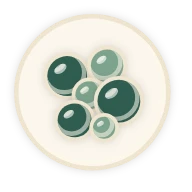
  • Tiny beads (microspheres)

    Round beads of plastic. One common type is an acrylic plastic with gelatin from pigs. Others are a water-holding plastic gel (polyvinyl alcohol) or a plastic gel with a thin coating.29 to 31

    They do not dissolve. They stay in place for good. They are not made of metal and do not stop you from having an MRI.293032

    Used for fibroidsAlso used for enlarged prostate, knee arthritis, and hemorrhoids

  • Small particles (polyvinyl alcohol)

    Rough, uneven flakes of a plastic.33

    They stay in place for good.33

    Used for fibroidsAlso used for enlarged prostate

Other materials doctors use
  • Tiny metal coils

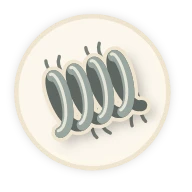
    Small springs of platinum or another metal, often with soft fibers. During prostate embolization, doctors sometimes place one in a nearby artery so the beads do not reach the tissue it feeds.2834 to 36

    They stay in place for good. They are safe in an MRI scanner under set conditions; tell the scanner staff you have them.34

    Used for enlarged prostate, hemorrhoids, and chronic pelvic pain

  • Plugs

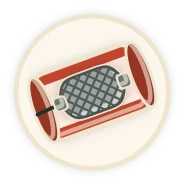
    A small, self-opening plug of fine wire mesh, made of nitinol (a nickel and titanium metal).37

    It stays in place for good. It is safe in an MRI scanner under set conditions; tell the scanner staff you have it.37

    Used for chronic pelvic pain

  • Medical glue (n-butyl cyanoacrylate)

    A liquid glue that the doctor injects into the vein.38

    It hardens quickly and blocks the vein.28

    Used for chronic pelvic pain

  • Vein-closing medicine (sclerosant)

    A medicine that works like a detergent, often mixed into a foam (sodium tetradecyl sulfate or polidocanol). It irritates the inside lining of the vein.3940

    The vein scars shut. This is not always permanent.39

    Used for chronic pelvic pain

  • Materials that dissolve

    An antibiotic powder (imipenem and cilastatin) that forms very fine particles. It breaks down within hours to days, so blood flow can come back.4142

    They break down. Early studies suggest knee pain improves about the same with the antibiotic powder as with beads that stay.4243

    Used for knee arthritis

Some beads contain gelatin from pigs. If you avoid pork products or have had a reaction to gelatin, tell your doctor. Types without gelatin are available.29 to 31

How well does it work?

Good evidence suggests most women feel much better: almost 9 out of 10 women see their symptoms improve, and about 7 out of 10 women still feel better five years later. Most feel just as satisfied as women who had surgery (hysterectomy or myomectomy). The tradeoff is that the uterus stays, so about 1 out of 4 may need another procedure down the line. Even so, after ten years, about 2 out of 3 women avoided a hysterectomy entirely.18 to 23

The studies

  • Most women's symptoms improve. A German health-information institute puts symptom improvement at about 80 to 90 out of 100 women.18
  • Satisfaction: no clear difference from surgery. A Cochrane review combined 7 trials (793 women) that assigned women by chance to embolization or to surgery (hysterectomy or myomectomy). It found no clear difference in satisfaction between embolization and surgery up to 2 years (6 trials, 640 women). There was no clear difference at 5 years either.20
  • Quality of life: no clear lasting difference from myomectomy. A trial assigned 254 women at 29 UK hospitals by chance to myomectomy or to embolization. At 2 years, fibroid quality-of-life scores out of 100 were 84.6 after myomectomy and 80.0 after embolization. After allowing for differences between the women, myomectomy scored 8.0 points higher. At 4 years, myomectomy was 5.0 points higher, a gap that could be due to chance.2224
  • Taken together: no clear difference in satisfaction. On quality of life, myomectomy scored somewhat higher at first, and later the gap could be due to chance.202224

Side effects and risks

Strong cramping pain, like very bad period cramps, is common in the first few days. It often comes with nausea and a low fever. Doctors call this post-embolization syndrome. It usually eases within a week. Early menopause is uncommon: less than 5 out of 100 women go through menopause early. Overall, serious problems are no more common than after surgery.1202526

What experts say

A radiology expert panel rates embolization usually appropriate or possibly appropriate across the fibroid situations it reviewed. Before you agree to surgery, ask about it.27

Find a doctor for fibroid embolization

Radiofrequency ablation

How well it works
Results vary: about 1 out of 11 women needed surgery within 3 years in one study, about 2 out of 5 within 2 years in another
What it involves
Small cuts, or no cuts through the vagina
Recovery
Most go home the same day
Keeps uterus?
Yes
Treats the fibroids?
Yes. Heat destroys the fibroid

Heat from a small needle destroys the fibroid. The doctor uses small cuts in the belly, or goes through the vagina with no cuts. Most women go home the same day.64448

How well does it work?

Results vary from study to study: about 1 out of 11 women needed surgery within 3 years in one study, and about 2 out of 5 within 2 years in another. The first study was funded by the device maker.4445

The studies

  • These two figures differ mainly in what they count.
    • The first study counted only surgery for heavy bleeding.44
    • The second counted any surgery, most often removing other fibroids through the cervix. It looked back at one center's records.45
  • Across several studies, some women needed another procedure. Across studies that followed women forward from treatment, about 1 out of 9 women had another procedure for fibroid symptoms by 3 years (11.5%).46
  • Compared with myomectomy, more women needed a second surgery. A Dutch study followed women after the treatment they chose; treatments were not assigned by chance. Within 18 months, about 1 out of 4 women (27.3%) needed another surgery after the no-cut radiofrequency treatment through the vagina, compared with about 1 out of 16 (6.3%) after myomectomy.47

Side effects and risks

Pain and cramps can happen. Serious problems are possible, but were rare in studies.4445

Focused ultrasound

How well it works
Early studies suggest Eases symptoms; fits only some fibroids
What it involves
No cut, in an MRI scanner
Recovery
Most recover quickly
Keeps uterus?
Yes
Treats the fibroids?
Yes, for some fibroids

Sound waves, guided by an MRI scanner, heat and shrink the fibroid. There is no cut, and most women recover quickly.25

How well does it work?

Early studies suggest it eases symptoms. It fits only some fibroids, and some women need more treatment later. Not all insurance covers it, so check first.254950

The studies

  • It eased symptoms more than a fake treatment in one very small trial. A small pilot trial assigned 20 women by chance to focused ultrasound or to a placebo (a fake treatment). By 12 weeks, symptoms improved more after focused ultrasound than after the fake treatment (31 versus 13 points on a symptom score). At 4 weeks, the difference could be due to chance.51
  • Repeat treatment is common and rises with time. In one group of 138 women, 19% had more treatment by 3 years and 23% by 4 years. In another group of 162 women, 59% had more treatment by 5 years.5253
  • More women needed another procedure than after embolization. A small trial treated 83 women with focused ultrasound or embolization; some of them were assigned by chance. Another fibroid procedure followed for 13 of 43 (30%) after focused ultrasound, compared with 5 of 40 (12.5%) after embolization.54

Side effects and risks

Belly pain can happen. Skin burns or bruises can happen and usually heal in a week or two.25

Endometrial ablation

How well it works
Treats the lining, not the fibroids; in heavy-bleeding studies, about 1 out of 8 women had a hysterectomy within 5 years
What it involves
No cuts
Recovery
1 to 2 days
Keeps uterus?
Yes
Treats the fibroids?
No. Treats the lining

Heat or cold destroys the lining of the uterus to lighten periods. There are no cuts. Most women go home the same day and recover in 1 to 2 days.58

How well does it work?

It treats the lining, not the fibroids, so they stay in place. The American College of Radiology's expert panel rates it usually not appropriate for fibroids. In studies of heavy bleeding, about 1 out of 8 women had a hysterectomy within 5 years.62755

The studies

That hysterectomy figure comes from women with heavy bleeding in general, not women with fibroids. Studies of women with fibroids come from health records. None is a trial.55

  • Women with fibroids more often had a hysterectomy later. In a Finnish national registry, women with fibroids were almost twice as likely to have a hysterectomy after ablation, after allowing for other differences.56
  • Some women with fibroids needed another procedure after ablation. In a large U.S. health system study of women treated for fibroids, 35.5% needed another procedure within 7 years of ablation.57

Side effects and risks

Cramps and discharge can last a while. It is not for anyone who may want a future pregnancy.5859

Myomectomy vs. hysterectomy, and other surgery

Surgery removes the fibroids or the whole uterus.

Removal through the cervix

How well it works
Early studies suggest Helps; works only for fibroids inside the uterus
What it involves
No cuts, through the cervix
Recovery
A few days
Keeps uterus?
Yes
Treats the fibroids?
Yes, only those inside the uterus

A thin camera and small tools go through the cervix and remove fibroids growing inside the uterus. There are no cuts, and recovery takes a few days.3660

How well does it work?

Early studies suggest it helps. It only works for fibroids inside the uterus. New fibroids can form later.56

Side effects and risks

Cramps and light bleeding can last a few days. Heavy bleeding, infection, or a tear in the uterus are possible, but rare.60

Myomectomy

How well it works
Good evidence suggests Quality of life improves
What it involves
Surgery: larger cut or a few small cuts
Recovery
2 to 6 weeks
Keeps uterus?
Yes
Treats the fibroids?
Yes. Removes those the surgeon can see

Surgery removes the fibroids and leaves the uterus. It takes a larger cut in the belly or a few small cuts. Recovery takes 2 to 6 weeks.346

How well does it work?

Good evidence suggests women's quality of life improves. But small or deep fibroids can be missed, and the more you have, the harder it is to remove them all. New ones can also grow, and about 1 out of 8 women may need another procedure down the line.3622246162

The studies

  • Repeat procedures rise over time. About 1 out of 8 women had another procedure by 4 to 5 years (13% at 4 years in one trial; 12.2% at 5 years across several studies combined). About 1 out of 5 had one by 7 years (20.6% in a large U.S. health system study).225763
  • A second combined analysis found a higher rate. It found about 1 out of 5 women had another procedure by 5 years after myomectomy (19%), more than the first combined figure. In the same analysis, the figure was higher after embolization (21%) and after focused ultrasound (49%).64

Side effects and risks

Infection, blood clots, and harm to nearby organs are possible, but not common. Bleeding is the main risk: about 1 out of 5 women need a blood transfusion after open surgery, and about 1 out of 20 after surgery through small cuts, in a review of 9 studies. Scar tissue (adhesions) forms inside the belly in most women. It often causes no symptoms, but it can cause pain or block the bowel. After open surgery, up to 1 out of 5 people get a hernia at the scar.365 to 68

Hysterectomy

How well it works
The only treatment that keeps fibroids from returning; periods stop
What it involves
Surgery: removes the uterus
Recovery
2 to 6 weeks
Keeps uterus?
No
Treats the fibroids?
Yes. They cannot return

Surgery removes the whole uterus, through the vagina, small cuts, or a larger cut in the belly. Recovery takes 2 to 6 weeks.34

How well does it work?

It is the only treatment that keeps fibroids from returning. Periods stop, so the heavy bleeding from fibroids ends. Most women feel much better afterward and stay satisfied years later. It also ends the chance of pregnancy.352369

The studies

  • Compared with embolization: no clear difference in quality of life. A trial in the Netherlands assigned 177 women by chance to embolization or to hysterectomy. Quality of life improved after both, with no clear difference between them at 5 or 10 years. At 10 years, 87% of women were satisfied after hysterectomy and 78% after embolization. Combined with other trials, satisfaction did not clearly differ between embolization and surgery.202370
  • More women needed more treatment after embolization, but most kept their uterus. By 10 years in the Dutch trial, 35% of women treated with embolization (28 of 81) went on to have a hysterectomy, so about 2 out of 3 kept their uterus. In a UK trial, 32% needed another procedure within 5 years after embolization, compared with 4% after surgery, which was mostly hysterectomy.2123
  • Most women go home the same day after embolization. At one U.S. hospital, 9 out of 10 women who had a nerve block for pain during embolization went home the same day. Without the block, about half did. Some women stay one night for pain control. Embolization is also done in outpatient offices, with no hospital stay at all. In U.S. health records from 2016 to 2019, the stay was 1 day after embolization and 5 days after hysterectomy. Older trials kept women in the hospital longer. In the Dutch trial, women spent an average of 2.5 days in the hospital after embolization and 5.1 days after hysterectomy. That trial ran in the early 2000s, and stays after embolization are shorter now. Surgery through small cuts or the vagina usually means a shorter stay than a larger cut in the belly.71 to 75
  • How the surgery is done changes recovery. A Cochrane review of 63 trials (6,811 women) compared ways of doing the surgery. Women got back to normal activities about 11 days sooner after surgery through the vagina, and about 13 days sooner after surgery through small cuts, than after a larger cut in the belly. Surgery through small cuts had about twice as many injuries to the bladder or the tubes that carry urine. The review's example: if about 2 out of 1,000 women have an injury to a tube from the kidney after a larger cut, the figure through small cuts would be between 2 out of 1,000 and 2 out of 100.75
  • Most women improve, but not all. In a Maryland study, 1,299 women had a hysterectomy for noncancer reasons (not only fibroids). Symptoms eased and quality of life rose over 2 years. About 1 out of 12 (8%) still had as many severe symptoms 1 and 2 years later.69

Side effects and risks

Bleeding, infection, blood clots, and harm to nearby organs can happen. In the Dutch trial, serious problems were not clearly more common after either treatment (2.7% after hysterectomy, 4.9% after embolization). In the 6 weeks after leaving the hospital, minor problems were less common after hysterectomy (40% compared with 58%), and no one went back into the hospital, compared with 11% after embolization.474

Menopause begins right away if both ovaries are also removed. Scar tissue can make organs stick together. A blocked bowel from scar tissue is possible, but rare. After open surgery, up to 1 out of 5 people get a hernia at the scar.466 to 68

Longer-term effects are less certain, because they come from studies that followed women after surgery, not from trials.

When the ovaries are kept, studies disagree on whether menopause comes sooner. In one U.S. study, the ovaries stopped working within 4 years in 14.8% of women after hysterectomy, compared with 8.0% of similar women who did not have one. A later U.S. study that tracked an ovarian hormone found no faster decline after hysterectomy.7677

In a Swedish national study of 165,260 women who had a hysterectomy, later surgery for leaking urine when coughing or exercising (stress incontinence) was more than twice as common as in women who did not have one.78

In a Minnesota study that followed 2,094 women for about 22 years after a hysterectomy that kept the ovaries, high blood pressure and heart disease were somewhat more common than in women who did not have one, more so for women 35 or younger. A study like this cannot show that the surgery caused it.79
Find a fibroid embolization doctor

By searching you agree to our Terms.

Fibroid embolization doctors by city

If you have severe bleeding, severe pain, a fever, or feel very sick or faint, call 911.

References

The small numbers on this page point to these sources.

  1. Society of Interventional Radiology. Uterine fibroids and uterine fibroid embolization (UFE). Read November 1, 2026. https://www.sirweb.org/for-patients/conditions-and-treatments/uterine-fibroids/
  2. MedlinePlus Medical Encyclopedia (U.S. National Library of Medicine). Uterine artery embolization. Reviewed February 3, 2025. Read November 1, 2026. https://medlineplus.gov/ency/article/007384.htm
  3. Cleveland Clinic. Myomectomy. Medically reviewed, updated January 11, 2023. Read November 1, 2026. https://my.clevelandclinic.org/health/articles/myomectomy
  4. MedlinePlus Medical Encyclopedia (U.S. National Library of Medicine). Hysterectomy. Reviewed March 17, 2026. Read November 1, 2026. https://medlineplus.gov/ency/article/002915.htm
  5. Office on Women’s Health, U.S. Department of Health and Human Services. Uterine fibroids. Updated February 28, 2025. Read November 1, 2026. https://womenshealth.gov/a-z-topics/uterine-fibroids
  6. MedlinePlus Medical Encyclopedia (U.S. National Library of Medicine). Uterine fibroids. Reviewed March 17, 2026. Read November 1, 2026. https://medlineplus.gov/ency/article/000914.htm
  7. MedlinePlus Medical Encyclopedia (U.S. National Library of Medicine). Vaginal or uterine bleeding. Reviewed October 15, 2024. Read November 1, 2026. https://medlineplus.gov/ency/article/007496.htm
  8. U.S. Food and Drug Administration approved label (DailyMed). Tranexamic acid tablets. Label updated January 15, 2024. Read November 1, 2026. https://dailymed.nlm.nih.gov/dailymed/drugInfo.cfm?setid=128c39ce-f625-47ec-9efe-4de696e5220f
  9. Al-Hendy A, Lukes AS, Poindexter AN 3rd, et al. Treatment of uterine fibroid symptoms with relugolix combination therapy. New England Journal of Medicine. 2021;384(7):630-642. doi:10.1056/NEJMoa2008283. PMID 33596357. Funded by the drug maker. https://doi.org/10.1056/NEJMoa2008283
  10. Schlaff WD, Ackerman RT, Al-Hendy A, et al. Elagolix for heavy menstrual bleeding in women with uterine fibroids. New England Journal of Medicine. 2020;382(4):328-340. doi:10.1056/NEJMoa1904351. PMID 31971678. Abstract read. https://doi.org/10.1056/NEJMoa1904351
  11. Al-Hendy A, Lukes AS, Poindexter AN 3rd, et al. Long-term relugolix combination therapy for symptomatic uterine leiomyomas. Obstetrics and Gynecology. 2022;140(6):920-930. doi:10.1097/AOG.0000000000004988. PMID 36357960. Full text read (PMC). Funded by the drug maker. https://doi.org/10.1097/AOG.0000000000004988
  12. Al-Hendy A, Venturella R, Arjona Ferreira JC, et al. LIBERTY randomized withdrawal study: relugolix combination therapy for heavy menstrual bleeding associated with uterine fibroids. American Journal of Obstetrics and Gynecology. 2023;229(6):662.e1-662.e25. doi:10.1016/j.ajog.2023.08.030. PMID 37666383. Abstract read. Funded by the drug maker. https://doi.org/10.1016/j.ajog.2023.08.030
  13. U.S. Food and Drug Administration approved label (DailyMed). Elagolix, estradiol and norethindrone acetate capsules, for heavy menstrual bleeding with uterine fibroids. Revised December 2025. Read November 1, 2026. https://dailymed.nlm.nih.gov/dailymed/fda/fdaDrugXsl.cfm?setid=99f6eee7-7e52-6999-7eb8-488d06dd1710
  14. U.S. Food and Drug Administration approved label (DailyMed). Relugolix, estradiol and norethindrone acetate tablets. Revised August 2025. Read November 1, 2026. https://dailymed.nlm.nih.gov/dailymed/fda/fdaDrugXsl.cfm?setid=fc3feb73-cc84-43a8-aa32-b262460495e8&type=display
  15. U.S. Food and Drug Administration approved label (DailyMed). Leuprolide acetate for depot suspension 3.75 mg. Revised September 2025. Read November 1, 2026. https://dailymed.nlm.nih.gov/dailymed/fda/fdaDrugXsl.cfm?setid=00c486b0-bd7b-4898-834d-8c656e5e73cb
  16. American College of Obstetricians and Gynecologists. Management of symptomatic uterine leiomyomas: ACOG Practice Bulletin No. 228. Obstetrics and Gynecology. 2021;137(6):e100-e115. doi:10.1097/AOG.0000000000004401. PMID 34011888. Read through the ObG Project summary of the bulletin (June 27, 2021); the bulletin itself is behind a paywall. https://www.obgproject.com/2021/06/27/managing-fibroids-medical-and-surgical-options/
  17. U.S. Food and Drug Administration approved label (DailyMed). Levonorgestrel-releasing intrauterine system 52 mg. Revised October 2025. Read November 1, 2026. https://dailymed.nlm.nih.gov/dailymed/fda/fdaDrugXsl.cfm?setid=dcbd6aa2-b3fa-479a-a676-56ea742962fc&type=display
  18. InformedHealth.org (Institute for Quality and Efficiency in Health Care, Germany). What are the pros and cons of uterine artery embolization? Updated June 24, 2025. Read November 2, 2026. https://www.informedhealth.org/what-are-the-pros-and-cons-of-uterine-artery-embolization.html
  19. Long-term outcome of uterine artery embolization of leiomyomata. Obstetrics and Gynecology. 2005;106(5 Pt 1):933-939. doi:10.1097/01.AOG.0000182582.64088.84. PMID 16260509. https://doi.org/10.1097/01.AOG.0000182582.64088.84
  20. Gupta JK, Sinha A, Lumsden MA, Hickey M. Uterine artery embolization for symptomatic uterine fibroids. Cochrane Database of Systematic Reviews. 2014;(12):CD005073. doi:10.1002/14651858.CD005073.pub4. PMID 25541260. https://doi.org/10.1002/14651858.CD005073.pub4
  21. Moss JG, Cooper KG, Khaund A, et al. Randomised comparison of uterine artery embolisation (UAE) with surgical treatment in patients with symptomatic uterine fibroids (REST trial): 5-year results. BJOG. 2011;118(8):936-944. doi:10.1111/j.1471-0528.2011.02952.x. PMID 21481151. https://doi.org/10.1111/j.1471-0528.2011.02952.x
  22. Daniels J, Middleton LJ, Cheed V, et al. Uterine artery embolization or myomectomy for women with uterine fibroids: four-year follow-up of a randomised controlled trial. European Journal of Obstetrics and Gynecology and Reproductive Biology: X. 2022;13:100139. doi:10.1016/j.eurox.2021.100139. PMID 34877531. https://doi.org/10.1016/j.eurox.2021.100139
  23. de Bruijn AM, et al. Uterine artery embolization vs hysterectomy in the treatment of symptomatic uterine fibroids: 10-year outcomes from the randomized EMMY trial. American Journal of Obstetrics and Gynecology. 2016;215(6):745.e1-745.e12. doi:10.1016/j.ajog.2016.06.051. PMID 27393268. https://doi.org/10.1016/j.ajog.2016.06.051
  24. Manyonda I, Belli AM, Lumsden MA, et al. Uterine-artery embolization or myomectomy for uterine fibroids. New England Journal of Medicine. 2020;383(5):440-451. doi:10.1056/NEJMoa1914735. PMID 32726530. https://doi.org/10.1056/NEJMoa1914735
  25. RadiologyInfo.org (Radiological Society of North America and American College of Radiology). Uterine fibroid treatments: UFE and MRgFUS. Last reviewed October 31, 2024. Read November 1, 2026. https://www.radiologyinfo.org/en/info/uterine-fibroid-treatment
  26. Martin J, Bhanot K, Athreya S. Complications and reinterventions in uterine artery embolization for symptomatic uterine fibroids: a literature review and meta analysis. CardioVascular and Interventional Radiology. 2013;36(2):395-402. doi:10.1007/s00270-012-0505-y. https://doi.org/10.1007/s00270-012-0505-y
  27. Expert Panel on Interventional Radiology. ACR Appropriateness Criteria: Management of Uterine Fibroids, 2023 update. Journal of the American College of Radiology. 2024;21(6S):S203-S218. doi:10.1016/j.jacr.2024.02.022. PMID 38823944. Ratings read on the ACR web narrative (revised 2023), November 1, 2026. https://acsearch.acr.org/docs/69508/Narrative/
  28. RadiologyInfo.org (Radiological Society of North America and American College of Radiology). Catheter embolization. Reviewed August 5, 2024. https://www.radiologyinfo.org/en/info/cathembol
  29. Merit Medical. Tris-acryl gelatin microspheres: instructions for use 404692001MLP_001. 2018. https://cloud.merit.com/catalog/IFUs/404692001MLP.pdf
  30. US Food and Drug Administration. 510(k) summary K203276: polyvinyl alcohol hydrogel microspheres (Biocompatibles UK). April 20, 2021. https://www.accessdata.fda.gov/cdrh_docs/pdf20/K203276.pdf
  31. US Food and Drug Administration. 510(k) summary K141209: coated hydrogel microspheres (CeloNova). 2014. https://www.accessdata.fda.gov/cdrh_docs/pdf14/K141209.pdf
  32. US National Library of Medicine. AccessGUDID: coated hydrogel microspheres (Boston Scientific), device identifier 08714729943006 (MRI safety status: MR Safe). https://accessgudid.nlm.nih.gov/devices/08714729943006
  33. Boston Scientific. Polyvinyl alcohol embolization particles: product information. Accessed November 11, 2026. https://www.bostonscientific.com/en-US/products/embolization/contour-pva-embolization-particles.html
  34. US Food and Drug Administration. 510(k) K153778: platinum embolization coils with synthetic fibers (Cook). May 19, 2016. https://www.accessdata.fda.gov/scripts/cdrh/cfdocs/cfpmn/pmn.cfm?ID=K153778
  35. Maclean D, Vigneswaran G, Maher B, et al. The effect of protective coil embolization of penile anastomoses during prostatic artery embolization on erectile function: a propensity-matched analysis. Journal of Vascular and Interventional Radiology. 2023;34(2):218-224. https://doi.org/10.1016/j.jvir.2022.10.023
  36. Richardson A, Bhatia A, Maini A, et al. Impact on sexual function of protective coil embolization of penile collaterals during prostatic artery embolization. CardioVascular and Interventional Radiology. 2025;48(4):512-521. https://doi.org/10.1007/s00270-025-03966-3
  37. Abbott. Nitinol vascular plug: instructions for use ARTEN600304404 A. 2023. https://manuals.eifu.abbott/content/dam/av/manuals-eifu/global/BY/en/ARTEN600304404_A.pdf
  38. Strobl F, Böhm AK, Mertens L, et al. Pelvic vein embolization using different embolic agents for the treatment of pelvic venous insufficiency: a systematic review and meta-analysis. Journal of Vascular Surgery: Venous and Lymphatic Disorders. 2026;14(6):102599. https://doi.org/10.1016/j.jvsv.2026.102599
  39. Sotradecol (sodium tetradecyl sulfate injection), prescribing information. Mylan Institutional. Revised August 2021. https://dailymed.nlm.nih.gov/dailymed/drugInfo.cfm?setid=f1756c28-dcd2-4b49-be62-07ca20682018
  40. Asclera (polidocanol injection), prescribing information. Methapharm. 2025. https://dailymed.nlm.nih.gov/dailymed/drugInfo.cfm?setid=bb1f342b-5352-4059-a0b2-e60fd652fd28
  41. Ahmed O, et al. [Society of Interventional Radiology position statement on genicular artery embolization.] Journal of Vascular and Interventional Radiology. 2026;37:108803. https://doi.org/10.1016/j.jvir.2026.108803
  42. Correa MP, Michelin AF, Aguiar LA, et al. Genicular artery embolization using imipenem/cilastatin vs. microsphere for knee osteoarthritis (GAUCHO): 12-month clinical results of a single-blind randomized controlled trial. CardioVascular and Interventional Radiology. 2026;49(9):1825-1837. https://doi.org/10.1007/s00270-026-04504-5
  43. Lanza E, Poretti D, Pedicini V, et al. Permanent vs. temporary embolic agents in genicular artery embolization for knee osteoarthritis: a systematic review and meta-analysis. European Journal of Radiology. 2026;202:112968. https://doi.org/10.1016/j.ejrad.2026.112968
  44. Lukes A, Green MA. Three-year results of the SONATA pivotal trial of transcervical fibroid ablation for symptomatic uterine myomata. Journal of Gynecologic Surgery. 2020;36(5):228-233. doi:10.1089/gyn.2020.0021. PMID 33061253. Funded by the device maker. https://doi.org/10.1089/gyn.2020.0021
  45. van der Meulen JF, Cooijmans TH, van Zutven VJ, et al. Long-term results of transcervical, intrauterine ultrasound-guided radiofrequency ablation of uterine fibroids: a retrospective follow-up study. AJOG Global Reports. 2022;2(4):100087. doi:10.1016/j.xagr.2022.100087. PMID 36536842. https://doi.org/10.1016/j.xagr.2022.100087
  46. Bradley LD, Pasic RP, Miller LE. Clinical performance of radiofrequency ablation for treatment of uterine fibroids: systematic review and meta-analysis of prospective studies. Journal of Laparoendoscopic and Advanced Surgical Techniques, Part A. 2019;29(12):1507-1517. doi:10.1089/lap.2019.0550. PMID 31702440. Abstract read. https://doi.org/10.1089/lap.2019.0550
  47. Cooijmans TH, Dujardin Z, van der Meulen JF, et al. Evaluation of the clinical and cost-effectiveness of transcervical ultrasound-guided radiofrequency ablation of leiomyomas (ESONATA): a prospective cohort study. European Journal of Obstetrics, Gynecology, and Reproductive Biology. 2025;311:114062. doi:10.1016/j.ejogrb.2025.114062. PMID 40435802. Abstract read. https://doi.org/10.1016/j.ejogrb.2025.114062
  48. Guido RS, Macer JA, Abbott K, Falls JL, Tilley IB, Chudnoff SG. Radiofrequency volumetric thermal ablation of fibroids: a prospective, clinical analysis of two years’ outcome from the Halt trial. Health and Quality of Life Outcomes. 2013;11:139. doi:10.1186/1477-7525-11-139. PMID 23941588. https://doi.org/10.1186/1477-7525-11-139
  49. U.S. Food and Drug Administration. Premarket approval P040003, supplement S015: magnetic resonance-guided focused ultrasound system for uterine fibroids, indications changed August 31, 2015 (first approved October 22, 2004). Read November 1, 2026. https://www.accessdata.fda.gov/scripts/cdrh/cfdocs/cfpma/pma.cfm?id=P040003S015
  50. Blue Cross and Blue Shield of North Carolina. Corporate medical policy: MRI-guided focused ultrasound. Last reviewed May 2026. Read November 1, 2026. https://www.bcbsnc.com/providers/policies-guidelines-codes/commercial/radiology/updates/mri-guided-focused-ultrasound
  51. Jacoby VL, Kohi MP, Poder L, et al. PROMISe trial: a pilot, randomized, placebo-controlled trial of magnetic resonance guided focused ultrasound for uterine fibroids. Fertility and Sterility. 2016;105(3):773-780. doi:10.1016/j.fertnstert.2015.11.014. PMID 26658133. Abstract read. https://doi.org/10.1016/j.fertnstert.2015.11.014
  52. Gorny KR, Borah BJ, Brown DL, et al. Incidence of additional treatments in women treated with MR-guided focused US for symptomatic uterine fibroids: review of 138 patients with an average follow-up of 2.8 years. Journal of Vascular and Interventional Radiology. 2014;25(10):1506-1512. doi:10.1016/j.jvir.2014.05.012. PMID 24998103. Abstract read. https://doi.org/10.1016/j.jvir.2014.05.012
  53. Quinn SD, Vedelago J, Gedroyc W, Regan L. Safety and five-year re-intervention following magnetic resonance-guided focused ultrasound (MRgFUS) for uterine fibroids. European Journal of Obstetrics, Gynecology, and Reproductive Biology. 2014;182:247-251. doi:10.1016/j.ejogrb.2014.09.039. PMID 25445107. Abstract read. https://doi.org/10.1016/j.ejogrb.2014.09.039
  54. Laughlin-Tommaso S, Barnard EP, AbdElmagied AM, et al. FIRSTT study: randomized controlled trial of uterine artery embolization vs focused ultrasound surgery. American Journal of Obstetrics and Gynecology. 2019;220(2):174.e1-174.e13. doi:10.1016/j.ajog.2018.10.032. PMID 30696556. Full text read (PMC6355152). https://doi.org/10.1016/j.ajog.2018.10.032
  55. Oderkerk TJ, Beelen P, Bukkems ALA, et al. Risk of hysterectomy after endometrial ablation: a systematic review and meta-analysis. Obstetrics and Gynecology. 2023;142(1):51-60. doi:10.1097/AOG.0000000000005223. PMID 37290114. https://doi.org/10.1097/AOG.0000000000005223
  56. Soini T, Rantanen M, Paavonen J, et al. Long-term follow-up after endometrial ablation in Finland: cancer risks and later hysterectomies. Obstetrics and Gynecology. 2017;130(3):554-560. doi:10.1097/AOG.0000000000002166. PMID 28796675. Abstract read. https://doi.org/10.1097/AOG.0000000000002166
  57. Mitro SD, Xu F, Lee C, et al. Long-term risk of reintervention after surgical leiomyoma treatment in an integrated health care system. Obstetrics and Gynecology. 2024;143(5):619-626. doi:10.1097/AOG.0000000000005557. PMID 38547478. Abstract read. https://doi.org/10.1097/AOG.0000000000005557
  58. MedlinePlus Medical Encyclopedia (U.S. National Library of Medicine). Endometrial ablation. Reviewed October 15, 2024. Read November 1, 2026. https://medlineplus.gov/ency/article/007632.htm
  59. U.S. Food and Drug Administration. Endometrial ablation for heavy menstrual bleeding. Content current as of October 25, 2021. Read November 1, 2026. https://www.fda.gov/medical-devices/surgery-devices/endometrial-ablation-heavy-menstrual-bleeding
  60. MedlinePlus Medical Tests (U.S. National Library of Medicine). Hysteroscopy. Read November 1, 2026. https://medlineplus.gov/lab-tests/hysteroscopy
  61. Mayo Clinic. Myomectomy. Updated August 9, 2025. Read November 3, 2026. https://www.mayoclinic.org/tests-procedures/myomectomy/about/pac-20384710
  62. Aktoz F, Arslan T, Güzel Y. Intraoperative laparoscopic ultrasound during laparoscopic myomectomy: a narrative review. Journal of the Turkish-German Gynecological Association. 2024;25(3):179-183. doi:10.4274/jtgga.galenos.2024.2023-9-7. PMID 39219255. https://doi.org/10.4274/jtgga.galenos.2024.2023-9-7
  63. Sandberg EM, Tummers FHMP, Cohen SL, et al. Reintervention risk and quality of life outcomes after uterine-sparing interventions for fibroids: a systematic review and meta-analysis. Fertility and Sterility. 2018;109(4):698-707.e1. doi:10.1016/j.fertnstert.2017.11.033. PMID 29653718. Abstract read. https://doi.org/10.1016/j.fertnstert.2017.11.033
  64. Xu F, Deng L, Zhang L, et al. The comparison of myomectomy, UAE and MRgFUS in the treatment of uterine fibroids: a meta analysis. International Journal of Hyperthermia. 2021;38(2):24-29. doi:10.1080/02656736.2021.1933216. PMID 34420449. Abstract read. https://doi.org/10.1080/02656736.2021.1933216
  65. Alghamdi HA, Al-Zahrani M, Alkodae S, et al. Comparative analysis of robotic-assisted laparoscopic myomectomy versus traditional abdominal and laparoscopic myomectomy: a meta analysis and systematic review. African Journal of Reproductive Health. 2025;29(12):230-246. doi:10.29063/ajrh2025/v29i12.22. PMID 41457683. Abstract read. https://doi.org/10.29063/ajrh2025/v29i12.22
  66. Practice Committee of the American Society for Reproductive Medicine. Postoperative adhesions in gynecologic surgery: a committee opinion. Fertility and Sterility. 2019;112:458-463. Read November 2, 2026. https://www.asrm.org/practice-guidance/practice-committee-documents/postoperative-adhesions-in-gynecologic-surgery-a-committee-opinion-2019
  67. Cleveland Clinic. Abdominal adhesions. Medically reviewed, updated April 1, 2024. Read November 2, 2026. https://my.clevelandclinic.org/health/articles/abdominal-adhesions
  68. Cleveland Clinic. Incisional hernia. Medically reviewed, updated March 24, 2025. Read November 2, 2026. https://my.clevelandclinic.org/health/diseases/incisional-hernia
  69. Kjerulff KH, Langenberg PW, Rhodes JC, Harvey LA, Guzinski GM, Stolley PD. Effectiveness of hysterectomy. Obstetrics and Gynecology. 2000;95(3):319-326. doi:10.1016/s0029-7844(99)00544-x. PMID 10711536. Abstract read. https://doi.org/10.1016/s0029-7844(99)00544-x
  70. van der Kooij SM, Hehenkamp WJK, Volkers NA, Birnie E, Ankum WM, Reekers JA. Uterine artery embolization vs hysterectomy in the treatment of symptomatic uterine fibroids: 5-year outcome from the randomized EMMY trial. American Journal of Obstetrics and Gynecology. 2010;203(2):105.e1-105.e13. doi:10.1016/j.ajog.2010.01.049. PMID 20579960. Abstract read. https://doi.org/10.1016/j.ajog.2010.01.049
  71. Kim NH, Sarwar A, Tahir MM, et al. Thirty-day healthcare encounters after elective uterine artery embolization for fibroids with and without superior hypogastric nerve block. Journal of Vascular and Interventional Radiology. 2025;36(2):247-254.e3. doi:10.1016/j.jvir.2024.10.019. PMID 39461617. Abstract read. https://doi.org/10.1016/j.jvir.2024.10.019
  72. Geschwind JF, Afsari B, Nezami N, White J, Shor M, Katsnelson Y. Quality of life assessment after uterine artery embolization in patients with fibroids treated in an ambulatory setting. Diagnostics. 2025;15(6):739. doi:10.3390/diagnostics15060739. PMID 40150082. Abstract read. Four of the six authors work for the clinic group that did the procedures. https://doi.org/10.3390/diagnostics15060739
  73. Deipolyi AR, Annie F, Bush SH, Spies J. Hysterectomy and myomectomy versus uterine artery embolization for symptomatic fibroids and adenomyosis: national and regional trends and adverse events in 70,000 patients. Journal of Vascular and Interventional Radiology. 2025;36(6):1011-1018.e4. doi:10.1016/j.jvir.2025.02.026. PMID 40024281. Abstract read. https://doi.org/10.1016/j.jvir.2025.02.026
  74. Hehenkamp WJK, Volkers NA, Donderwinkel PFJ, et al. Uterine artery embolization versus hysterectomy in the treatment of symptomatic uterine fibroids (EMMY trial): peri- and postprocedural results from a randomized controlled trial. American Journal of Obstetrics and Gynecology. 2005;193(5):1618-1629. doi:10.1016/j.ajog.2005.05.017. PMID 16260201. Abstract read. https://doi.org/10.1016/j.ajog.2005.05.017
  75. Pickett CM, Seeratan DD, Mol BWJ, et al. Surgical approach to hysterectomy for benign gynaecological disease. Cochrane Database of Systematic Reviews. 2023;8(8):CD003677. doi:10.1002/14651858.CD003677.pub6. PMID 37642285. Abstract read. https://doi.org/10.1002/14651858.CD003677.pub6
  76. Moorman PG, Myers ER, Schildkraut JM, Iversen ES, Wang F, Warren N. Effect of hysterectomy with ovarian preservation on ovarian function. Obstetrics and Gynecology. 2011;118(6):1271-1279. doi:10.1097/AOG.0b013e318236fd12. PMID 22067716. Abstract read. https://doi.org/10.1097/AOG.0b013e318236fd12
  77. Santoro N, Flyckt R, Davis A, et al. Anti-Müllerian hormone level decline in patients undergoing hysterectomy with and without oophorectomy compared with natural menopause. Obstetrics and Gynecology. 2023;141(2):331-340. doi:10.1097/AOG.0000000000005049. PMID 36649324. Abstract read. https://doi.org/10.1097/AOG.0000000000005049
  78. Altman D, Granath F, Cnattingius S, Falconer C. Hysterectomy and risk of stress-urinary-incontinence surgery: nationwide cohort study. Lancet. 2007;370(9597):1494-1499. doi:10.1016/S0140-6736(07)61635-3. PMID 17964350. Abstract read. https://doi.org/10.1016/S0140-6736(07)61635-3
  79. Laughlin-Tommaso SK, Khan Z, Weaver AL, Smith CY, Rocca WA, Stewart EA. Cardiovascular and metabolic morbidity after hysterectomy with ovarian conservation: a cohort study. Menopause. 2018;25(5):483-492. doi:10.1097/GME.0000000000001043. PMID 29286988. Abstract read. https://doi.org/10.1097/GME.0000000000001043

Education, not medical advice. Talk to your doctor about your own care.