Early results are encouragingEases symptoms about as much as TURP in the trials that compared them, with fewer side effects. More men need a second procedure
Most men go home the same day and are back to normal within a few days
PAE vs. TURP: strong evidence shows TURP surgery relieves symptoms most of the time. Early results for prostate artery embolization (PAE) are encouraging. In the trials that compared them, PAE eased symptoms about as much as TURP, with fewer side effects and a faster recovery. More men need a second treatment after PAE than after surgery. The American Urological Association's 2026 guideline lists PAE as an option for men with larger prostates.1– to 3
It helps to know all your options before you choose. Here is what each one involves and how well it works, with the studies behind them all. If a less invasive treatment works for you, it may spare you a bigger surgery or delay it.
Numbers from different studies cannot be set side by side. They come from different men, followed for different lengths of time. We compare two treatments only when one study tested both.
Every Option's physician performs prostate artery embolization. It is held to the same standard of evidence as every other option here.
What is an enlarged prostate (benign prostatic hyperplasia)?
The prostate is a small gland that wraps around the urethra, the tube that carries urine out of the body. In almost all men, it grows with age, which is called benign prostatic hyperplasia (BPH). It can squeeze the urethra and make it hard to empty the bladder. As men get older, this gets more common, with more than 9 out of 10 men having it in their 80s.4, 5
See a doctor if your bladder does not feel empty after you pee, or if self-care has not helped after 2 months. A doctor also checks for other causes, such as infection or cancer.4, 5
The symptom score used on this page
Most studies on this page use the same questionnaire about urinary symptoms (the IPSS, also called the AUA symptom score). It runs from 0 to 35, and higher is worse.14, 70
Men who say they feel slightly better have usually dropped about 3 points. A change smaller than that is hard to feel. Men who start with worse symptoms need a bigger drop to feel a difference.14
Compared at a glance: recovery, sex life, and how sure we are
Compare the treatments here and pick the ones that interest you. Then take your list to your doctor. Select a treatment name to read more about it.
Early results are encouragingEases symptoms about as much as TURP in the trials that compared them, with fewer side effects. More men need a second procedure
A thin tube through a tiny skin nick to the prostate arteries. No cutting, and usually no urinary catheter
Most men go home the same day and are back to normal within a few days
Most men keep normal ejaculation; in studies, erection scores did not drop on average
Often used when the prostate is too large for other surgery. We found no trial comparing it with TURP or laser surgery
Surgery through the belly, open or robotic
About 6 weeks after open surgery
Dry orgasms can happen
Bold words say how sure the evidence is. Results under How well it works come from different studies that measured different things, so they do not rank one treatment above another.
These ease symptoms like frequent peeing and a weak stream. No procedure is needed.
Alpha blockers
How well it works
Good evidence suggestsEase symptoms for many men; most notice a change within 3 to 7 days
What it involves
A daily pill
Recovery
None
Sex life
Ejaculation may change
Tamsulosin and similar pills relax the muscle in the prostate and at the opening of the bladder.4, 5
How well does it work?
Good evidence suggests alpha blockers ease symptoms for many men. Most men notice a change within 3 to 7 days. These pills treat the symptoms, not the growth. On their own, they do not lower the chance of needing surgery later.4– to 6
Side effects and risks
Dizziness is a little more common. In the drug's own trials, about 15 out of 100 men taking tamsulosin felt dizzy, compared with 10 out of 100 men taking a dummy pill (a placebo, a pill with no active ingredient).7
Ejaculation may change. About 8 out of 100 men taking tamsulosin had less semen or none, compared with fewer than 1 out of 100 men taking a dummy pill.7
Tell your eye surgeon. If you are planning cataract or glaucoma surgery, tell your eye surgeon you take this medicine. It can affect the iris during the operation.7
Prostate-shrinking pills
How well it works
Strong evidence showsLower the chance of needing surgery. In one large trial, finasteride cut that chance by about half over 4 years
What it involves
A daily pill, for months
Recovery
None
Sex life
Lower sex drive or erection problems can happen
Finasteride and dutasteride lower a hormone that makes the prostate grow. The prostate then slowly shrinks. It takes 3 to 6 months to feel the effect.4, 9
How well does it work?
Strong evidence shows these pills lower the chance of needing surgery in men with enlarged prostates. They also lower the chance of becoming unable to pass urine (urinary retention). In men with larger prostates, adding one of these pills to an alpha blocker helps more than an alpha blocker alone.6, 8– to 11
What the studies found
Finasteride cut the chance of needing surgery by about half. A trial followed 3,040 men with enlarged prostates for 4 years. They were assigned by chance to finasteride or to a dummy pill.8
On finasteride: about 5 out of 100 men needed surgery.8
On the dummy pill: about 10 out of 100 men needed surgery.8
Two pills together kept more men from getting worse. A trial followed 3,047 men for about 4.5 years. Men were assigned by chance to a dummy pill, an alpha blocker, finasteride, or both pills together. Getting worse meant symptoms climbing by 4 or more points, becoming unable to pass urine, leaking urine, kidney problems, or repeat infections. Men taking both pills were about two-thirds less likely to get worse than men taking the dummy pill.6
The shrinking pill is what lowers the chance of surgery. A second large trial, paid for by a drug maker, tested dutasteride plus an alpha blocker against each pill alone. The two pills together eased symptoms more than either pill alone. For avoiding surgery, the two pills together did about the same as dutasteride alone.11
Side effects and risks
These pills can lower sex drive, cause erection problems, and mean less semen. They cut the PSA level (a blood test used to check for prostate cancer) by about half, so tell any doctor who checks your PSA that you take one. Both drug labels warn that these pills may raise the chance of a more serious type of prostate cancer.9, 10
Tadalafil
How well it works
Early studies suggestEases symptoms a little: about 2 points more than a dummy pill on the 35-point symptom score
What it involves
A daily pill
Recovery
None
Sex life
Also used for erection problems
A low daily dose of tadalafil, the erection pill, relaxes muscle in the bladder and prostate.5, 13
How well does it work?
Early studies suggest it eases symptoms a little. It may suit men who also want help with erections (it is also an erection pill).12, 13
What the studies found
The benefit over a dummy pill was small. A review that combined the trials found that, over 6 to 12 weeks, symptom scores improved about 2 points more with these pills than with a dummy pill, on the 35-point score. That is less than the 3 points most men can feel. The reviewers rated their confidence in this result as low.12, 14
Side effects were more common than with a dummy pill. Men taking the pills were about 1.4 times as likely to have a side effect as men taking a dummy pill.12
Side effects and risks
Tadalafil can cause headache, indigestion, and back pain. It must not be taken with nitrate heart medicines. The label does not recommend taking it together with an alpha blocker for prostate symptoms.13
Is waiting safe?
For most men, yes. The evidence suggests it is reasonable to wait and step up treatment if symptoms get worse.5, 15
In one older trial, men who waited did worse than men who had TURP, but most never needed surgery. The trial followed 556 men with moderate symptoms. They were assigned by chance to TURP or to waiting with regular checkups. Men who had TURP were about half as likely to have a bad outcome as men who waited. About 1 out of 4 men who waited (24%) had surgery within 3 years. The trial's authors called waiting a safe choice for men who are less bothered by their symptoms. This trial was done decades ago, before today's medicines and procedures.15
Waiting is not safe for men who cannot pass urine, or who have kidney damage or bladder stones from the blockage. They need treatment, often surgery.1, 5
PAE vs. other less invasive treatments
These treat the prostate without major surgery. Nothing is cut out of your body. Before you agree to surgery, ask about these.
Early results are encouragingEases symptoms about as much as TURP in the trials that compared them, with fewer side effects. More men need a second procedure
What it involves
A thin tube through a tiny skin nick to the prostate arteries. No cutting, and usually no urinary catheter
Recovery
Most men go home the same day and are back to normal within a few days
Sex life
Most men keep normal ejaculation; in studies, erection scores did not drop on average
An interventional radiologist passes a thin tube through a tiny skin nick at the wrist or groin and guides it into the arteries that feed the prostate. You get numbing medicine at the skin and medicine to help you relax. The doctor then releases tiny beads or particles that block that blood flow. With less blood flow, the prostate shrinks over time. Most men do not need a urinary catheter (a tube that drains the bladder). Most men go home the same day, a few hours after the procedure. In a 2026 U.S. study, all 30 men who had PAE went home about 3 hours later, without a urinary catheter. In an older UK registry (2018), about 3 out of 10 men stayed in the hospital overnight after PAE, compared with 8 out of 10 men after TURP.21, 25, 28, 52
The tube goes in at the wrist or groin. This drawing shows the wrist.
Before
An enlarged prostate squeezes on the tube that carries urine (urethra). The bladder stays full, and urine only trickles out.
During
A thin tube goes through a small puncture in the wrist or groin. Tiny beads or particles slow the blood flow to the prostate.
After
With less blood flow, the prostate shrinks over time. The urethra opens up, and urine flows more easily.
What is used to block the blood flow?
Embolization means blocking blood flow on purpose, from inside a blood vessel. A doctor guides a thin tube to the spot and releases a material that blocks the small blood vessels feeding it. Doctors choose the material by the size of the vessels and how long the blockage should last.36
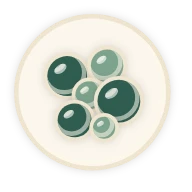
Tiny beads (microspheres)
Round beads of plastic. One common type is an acrylic plastic with gelatin from pigs. Others are a water-holding plastic gel (polyvinyl alcohol) or a plastic gel with a thin coating.37– to 39
They do not dissolve. They stay in place for good. They are not made of metal and do not stop you from having an MRI.37, 38, 40
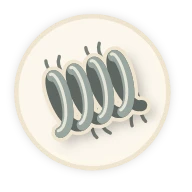
Small springs of platinum or another metal, often with soft fibers. During prostate embolization, doctors sometimes place one in a nearby artery so the beads do not reach the tissue it feeds.36, 42– to 44
They stay in place for good. They are safe in an MRI scanner under set conditions; tell the scanner staff you have them.42
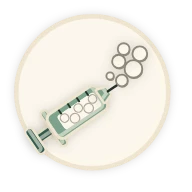
A medicine that works like a detergent, often mixed into a foam (sodium tetradecyl sulfate or polidocanol). It irritates the inside lining of the vein.47, 48
The vein scars shut. This is not always permanent.47
Some beads contain gelatin from pigs. If you avoid pork products or have had a reaction to gelatin, tell your doctor. Types without gelatin are available.37– to 39
How well does it work?
Early results are encouraging. In the trials that compared them, which followed men for up to 2 years, PAE eased symptoms about as much as TURP, with fewer side effects, a shorter hospital stay, and no urinary catheter for most men. The trade-offs: TURP improves urine flow more, and more men need a second procedure after PAE. PAE also eased symptoms far more than a fake procedure, and more than taking two pills.2, 3, 16– to 19
What the studies found
PAE eased symptoms far more than a fake procedure. A trial at one clinic assigned 80 men with severe symptoms by chance to PAE or to a fake procedure (a sham). After 6 months, symptom scores were about 13 points better after PAE than after the fake procedure, on the 35-point score. That is a difference men can clearly feel. The clinic's doctors helped develop PAE.14, 16
PAE vs. TURP: symptom relief is about the same. A review combined the trials that assigned men by chance to PAE or TURP (6 trials, 360 men). In the first year, symptoms improved about the same amount after either treatment. Scores were about 2 points better after TURP on the 35-point score, which is less than most men can feel and could be due to chance. At 2 years, the result was similar (about 3 points). The trials were small, so the reviewers rated their confidence as low.2, 14
PAE vs. TURP: fewer side effects and a shorter hospital stay after PAE. A second review combined 6 studies with 598 men.3
Any side effect: about 4 out of 10 men (39%) after PAE, compared with about 8 out of 10 men (78%) after TURP.3
Urine flow and prostate shrinkage: better after TURP.3
In the largest single trial, symptom relief was close, and side effects were fewer after PAE. A Swiss hospital assigned 103 men by chance to PAE or TURP.17, 20
Symptoms at 12 weeks: scores improved about 9 points after PAE and about 11 points after TURP, on the 35-point score.17, 20
Side effects: about 17 out of 100 men had two or more after PAE, compared with 45 out of 100 men after TURP.17, 20
At 5 years: symptom scores had improved about 8 points after PAE and about 12 points after TURP, on the 35-point score. That difference could be due to chance. Fewer than half of the men in the PAE group were still being followed, so this result is uncertain. Urine flow improved more after TURP.17, 20
PAE eased symptoms more than two pills. A trial assigned 90 men by chance to PAE or to two pills together (dutasteride plus tamsulosin). All had prostates of 50 cc or more and were still bothered while taking an alpha blocker. After 9 months, symptom scores had improved about 10 points after PAE, compared with about 6 points on the pills, on the 35-point score. A second trial of 39 men also favored PAE.18, 19
PAE vs. laser surgery (HoLEP) in very large prostates: symptom relief was about the same. A 2026 U.S. study followed 45 men with prostates of 80 to 250 cc for a year: 30 had PAE and 15 had HoLEP. The men were not assigned by chance, and the study was small.21
Symptoms: scores improved about 17 points after PAE and about 16 points after HoLEP at 1 year, on the 35-point score.21
Going home: about 3 hours after PAE with no catheter, compared with a night in the hospital and a catheter for about a day after HoLEP.21
Erections and bladder control: better after PAE for the first 3 months, and no different by 6 months.21
Urine flow: better after HoLEP.
Medicines: at 3 months, 13 out of 30 men who had PAE were still taking a prostate pill, compared with 0 out of 15 men after HoLEP.21
In very large prostates, open surgery cleared the blockage better. A trial assigned 48 men with prostates over 80 cc by chance to PAE or to open surgery, and followed them for 6 months. Symptom scores improved about equally. However, on a bladder test, about 7 out of 10 men were still blocked after PAE, compared with about 1 out of 10 men after open surgery.22
In larger groups of men followed over time, most stayed better for years. These studies had no comparison group, so they cannot show how much of the relief comes from PAE itself.
At one center that followed 630 men, PAE was still working for about 8 out of 10 men (82%) at 1 to 3 years, and for about 3 out of 4 men (76%) at 3 to 6.5 years.23
In a study of 405 men with symptoms across several countries, the average symptom score fell from about 22 before PAE to about 11 two years later. A maker of embolization beads paid for this study.24
Side effects and risks
PAE does not cut or remove tissue. That is why it avoids most of the risks of surgery.
Fewer side effects than TURP. In a review of 6 studies, about 4 out of 10 men had any side effect after PAE, compared with about 8 out of 10 men after TURP.3
Heavy bleeding is very rare. In a UK registry, 1 out of 216 men needed a blood transfusion after PAE. For comparison, studies of TURP report a transfusion in fewer than 1 to about 3 out of 100 men.25– to 27
A few days of discomfort is common. A burning feeling when you pee, needing to pee often, or pelvic pain happened to half of the men in one study. It passes in a few days. You may also see a little blood in your urine or stool.21, 28, 29
Serious problems are uncommon. At one U.S. center that treated 1,075 men, fewer than 1 out of 100 men (0.65%) had a serious problem, and all recovered. In a Danish study of 336 men, many of whom had very large prostates or depended on a catheter, it was about 8 out of 100 men.30, 31
Beads reaching the bladder, rectum, or penis is rare. This can damage that tissue. In the UK registry, it happened to 2 out of 216 men, and both healed on their own. Doctors lower this risk by placing a protective coil when needed.25, 32
Erections are usually not affected. In studies, erection scores did not drop on average. In trials against TURP, erection scores were about the same after either treatment. At one U.S. center that followed 878 men, erection scores were the same or slightly better after PAE. Men who had a protective coil placed showed no clear difference from men who did not.2, 33
Ejaculation: most men keep it, and some have less semen. In one trial against TURP that asked 25 men in each group, 4 out of 25 men lost ejaculation completely after PAE, compared with 13 out of 25 men after TURP. About 10 out of 25 men had less semen after PAE.34
Who was studied, and who gets it
The trials enrolled men who were fit for either PAE or surgery. In everyday practice, men who choose PAE are often older, with larger prostates. Some take blood thinners, or cannot have surgery. Results in these men may differ from the trial results.2, 25, 30
Men who cannot pass urine and depend on a catheter. In studies with no comparison group, most of these men were able to stop using the catheter after PAE: about 9 out of 10 at one U.S. center (126 men), and about 6 to 7 out of 10 in a Danish study and in a study across several countries. We found no trial that compared PAE with surgery in these men.24, 30, 31
What experts say
The American Urological Association's 2026 guideline says doctors may offer PAE to men with prostates of 50 cc or more. It says PAE can improve symptoms by about as much as TURP surgery in the trials that compared them, which followed men for up to 2 years. It also says more men need a repeat treatment after PAE than after TURP.1
The guideline advises seeing a urologist before PAE, and having PAE done by an interventional radiologist trained in it. It says PAE is one of the options for men on blood thinners. It says men should be told that PAE exposes them to radiation (X-rays). For men who depend on a catheter, it recommends surgery that removes prostate tissue.1
What is not known
Whether PAE spares a man from surgery or only delays it. No trial has measured this.2, 35
How PAE compares with TURP beyond 2 years. The one trial that ran for 5 years lost track of most men in the PAE group.20
How PAE compares with laser surgery (HoLEP) in the long run. The only direct comparison is one small study that ran for a year.21
Whether surgery is harder after PAE. Small studies show no sign that it is, but there is no good evidence either way.2, 35
Early studies suggestEases symptoms, often within 2 weeks; about 1 out of 7 men need another procedure within 5 years
What it involves
Implants placed through the penis
Recovery
About 1 week to normal activity
Sex life
Usually unchanged
Small implants, placed through a scope in the urethra, pull the sides of the prostate apart like curtain tiebacks. Nothing is removed.4, 5, 55
How well does it work?
Early studies suggest the lift eases symptoms, often within 2 weeks. About 1 out of 7 men need another procedure within 5 years. The lift fits only some prostate sizes and shapes, so ask whether yours fits.53
What the studies found
About 1 out of 7 men needed more surgery within 5 years. The maker's trial followed 206 men with prostates of 30 to 80 cc for 5 years. In that time, about 14 out of 100 men needed more surgery. Men were back to their usual activity in about 9 days on average.53
In everyday practice, the number was a little higher. In a large study of U.S. health records, about 16 out of 100 men needed more surgery within 5 years of a lift.54
Side effects and risks
Side effects were mostly mild and short-lived: burning, blood in the urine, and a sudden need to pee. The trial reported no new lasting erection or ejaculation problems.53
Water vapor (steam) therapy
How well it works
Early studies suggestEases symptoms, often within 3 months; about 1 out of 7 men need more surgery within 5 years
What it involves
Steam through the penis, often in the office
Recovery
Not reported in the studies we read
Sex life
Lasting erection problems are rare
Steam, released through a scope in the urethra, destroys some of the inner prostate tissue. It is often done in the doctor's office.5, 55
How well does it work?
Early studies suggest steam therapy eases symptoms, often within 3 months. About 1 out of 7 men need more surgery within 5 years. It was tested only in some prostate sizes, so ask whether yours fits.54, 56
What the studies found
Fewer men needed more surgery in the maker's trial than in everyday practice.
In the maker's trial of 197 men with prostates of 30 to 80 cc: about 4 out of 100 men needed more surgery within 5 years.56
In a large study of U.S. health records: about 14 out of 100 men needed more surgery within 5 years.54
We do not know how much of that gap comes from the men treated and how much from how the procedure is done outside a trial.
Side effects and risks
Side effects were mostly mild and settled quickly. The trials reported no lasting new erection problems.56, 57
Temporary implant
How well it works
Early studies suggestAbout 8 out of 10 men improved at 3 months, compared with 6 out of 10 men after a fake procedure
What it involves
A device left in the prostate for about a week
Recovery
The device is removed after about a week
Sex life
New problems seem uncommon
A small folded metal device is left for about a week in the part of the urethra that runs through the prostate. As it opens, it presses grooves into the tissue. Then it is removed.55, 58
How well does it work?
Early studies suggest it helps some men. Many men also felt better after a fake procedure, so doctors are still learning how much of the relief comes from the device. We do not yet know how long the relief lasts.58, 59
What the studies found
More men improved than after a fake procedure, but many improved after the fake procedure too. The maker's trial assigned 175 men by chance to the implant or a fake procedure. Improving meant a drop of at least 3 points on the 35-point symptom score, the smallest change most men can feel.14, 58
After the implant: about 8 out of 10 men (79%) improved at 3 months.14, 58
After the fake procedure: 6 out of 10 men (60%) improved.14, 58
Longer results come from one small study. It had results for 41 men about 4 to 6.5 years after treatment, with no comparison group.59
Side effects and risks
Side effects were mostly mild and short-lived. They were more common after the implant (about 38 out of 100 men) than after the fake procedure (about 18 out of 100 men). No new erection or ejaculation problems were reported.58
Medicine-coated balloon
How well it works
Early studies suggestEases symptoms for at least 2 years, in the prostate sizes tested
What it involves
A coated balloon through the penis, in the office
Recovery
Not reported in the studies we read
Sex life
Usually unchanged
A balloon widens the space between the two sides of the prostate. It is coated with a medicine (paclitaxel) meant to keep the channel from closing again.60, 62
How well does it work?
Early studies suggest it eases symptoms for at least 2 years, in the prostate sizes tested.60, 61
What the studies found
Symptoms eased after the balloon, but also a lot after a fake procedure. The maker's trial assigned 148 men by chance to the balloon or a fake procedure.60
After the balloon: symptom scores improved about 12 points at 1 year, on the 35-point score.60
After the fake procedure: symptom scores improved 8 points at 3 months.60
About 2 out of 3 men were still better at 2 years. Their symptom scores were at least 30% better than before, without another treatment. By then, the trial no longer had a comparison group.61
Side effects and risks
Blood in the urine and bladder infection were the most common side effects. Sexual function was unchanged.61
Sex life after each treatment
Studies count ejaculation changes in different ways. Some count any change, including less semen. Others count only a dry orgasm (semen going into the bladder, called retrograde ejaculation) or losing ejaculation completely. Check what a number counts before comparing it.34, 63
After PAE, most men keep normal ejaculation.
A review of trials found dry orgasms in fewer than 2 out of 100 men in the first year after PAE. It found the same for the lift, steam, and waterjet surgery.63
In an Italian study of 147 men, about 9 out of 10 men (88.5%) said their ejaculation was unchanged a year after PAE.64
Some men have less semen. In one small trial, this happened to about 10 out of 25 men after PAE.34
Ejaculation problems are less common after PAE than after TURP. When trials were combined, men were about half to two-thirds as likely to have an ejaculation problem after PAE as after TURP.2
After TURP and laser surgery, dry orgasms are common. They happen to about 4 to 7 out of 10 men, and can be permanent.65, 66
Erections are usually not affected by PAE. In studies, erection scores did not drop on average. Against TURP, erection scores were about the same after either treatment. In a study across several countries, the average erection score was the same a year after PAE as before it.2, 24
The lift, steam, implant, and balloon: each maker's trial reported no new lasting erection or ejaculation problems.53, 57, 58, 61
Will I need another treatment later?
Any of these treatments may need to be repeated, or followed by a different one. Treatments that remove more tissue are less likely to need repeating, but they are bigger operations.
After PAE, about 1 out of 5 men had another procedure within 5 years.35, 67, 68
At one center that followed 1,072 men: about 21 out of 100 men had another procedure within 5 years. About half of those were a second PAE, and half were surgery.35
In U.S. insurance records of 959 men: about 26 out of 100 men within 5 years.67
Beyond 5 years, studies disagree. By 10 years, one found about 1 out of 4 men had another operation, and another found more than half had another procedure.35, 68
A repeat treatment is more likely after PAE than after TURP. In trials that assigned men by chance, about 12 out of 100 men needed a repeat treatment in the first year after PAE, compared with about 4 out of 100 men after TURP.2
One study counted several treatments the same way. It used U.S. health records from 2014 to 2024 and counted men who needed more surgery within 5 years. It did not account for differences between the men who chose each treatment, and it gave no number for PAE.54
Open or robotic prostate removal: about 1 out of 100 men54
TURP vs. laser, waterjet, and open surgery
Surgery removes the part of the prostate that blocks the flow of urine.
Surgery improves urine flow the most and is the least likely to need repeating. It also carries more risk than the less invasive treatments: bleeding, a urinary catheter, a hospital stay, and, for most men, dry orgasms.
Transurethral resection (TURP)
How well it works
Strong evidence showsRelieves symptoms most of the time; about 1 out of 10 men need more surgery within 20 years
What it involves
Surgery through the penis, in the hospital, with a urinary catheter for 1 to 3 days
Recovery
3 to 6 weeks
Sex life
Dry orgasms are common
The surgeon removes the inside of the prostate through a scope in the penis. You are asleep (general anesthesia) or numb from the waist down (spinal anesthesia). Most men stay in the hospital and have a urinary catheter for 1 to 3 days. Recovery takes 3 to 6 weeks.66, 69
How well does it work?
Strong evidence shows TURP relieves symptoms most of the time. It is the treatment most other procedures are measured against. About 1 out of 10 men need more surgery within 20 years.5, 69, 70
What the studies found
The newer kind of TURP causes less bleeding. A review of 59 trials and 8,924 men compared the newer kind (bipolar) with the older kind (monopolar). Both relieved symptoms about equally. Men having the newer kind were less than half as likely to need a blood transfusion.70
TURP vs. PAE: symptom relief was about the same. TURP improved urine flow more, and fewer men needed a repeat treatment: about 4 out of 100 men in the first year, compared with about 12 out of 100 men after PAE. Side effects were more common after TURP: about 8 out of 10 men, compared with about 4 out of 10 men after PAE.2, 3, 17
Side effects and risks
TURP is a real operation, and its side effects are more common than those of the less invasive treatments.
Dry orgasms: about 4 to 7 out of 10 men. Semen goes into the bladder instead of out. This can be permanent.65, 66
Any side effect: about 8 out of 10 men, in a review of studies that compared TURP with PAE.3
In the weeks after surgery. A German study followed 10,654 men who had TURP in 2002 and 2003. Surgery has improved since then, so today's numbers may be lower. A 2006 review found that in studies from 2000 to 2005, fewer than 1 out of 100 men needed a transfusion.27
Later on: scar tissue that narrows the urethra happens to about 2 to 10 out of 100 men, and scar tissue at the bladder opening to as many as 9 out of 100 men. In the first weeks, up to 3 or 4 out of 10 men have sudden urges to pee with some leaking. Lasting leaking is rare: fewer than 1 out of 200 men. Erection problems can happen; we found no reliable rate.27, 69, 71
Laser surgery
How well it works
Early studies suggestHoLEP relieves symptoms at least as well as TURP
What it involves
Laser surgery through the penis
Recovery
Home the same day or the next
Sex life
Dry orgasms are common
A laser, passed through a scope, either shells out the enlarged part of the prostate (called HoLEP) or burns it away. Most men go home the same day or the next, with a urinary catheter for a few days.55
How well does it work?
Early studies suggest HoLEP relieves symptoms at least as well as TURP.72, 73
What the studies found
HoLEP vs. TURP: less bleeding and a shorter hospital stay with HoLEP. A review combined 8 trials with 764 men whose prostates were under 100 cc. Men having HoLEP were about one-sixth as likely to need a blood transfusion as men having TURP. They also had a catheter for less time and went home sooner. (PAE does not cut tissue, and a transfusion after it is very rare; see the PAE section.)25, 73
Side effects and risks
Dry orgasms: about 4 to 7 out of 10 men, as after TURP.65
Bleeding and serious problems. At one German center that did 1,816 HoLEP operations, about 2 out of 100 men needed a blood transfusion, and about 3 out of 100 men had a serious complication. Most men had a catheter for 2 days.74
Leaking urine and erection problems can happen. Leaking is usually short-lived.21, 55
Waterjet surgery
How well it works
Early studies suggestSymptoms improved about as much as after TURP over 5 years, in one trial paid for by the maker
What it involves
Water-jet surgery through the penis
Recovery
A urinary catheter for a few days
Sex life
Ejaculation problems are less common than after TURP
A high-pressure water jet, passed through a scope, removes the blocking tissue. A urinary catheter stays in for a few days.55, 75
How well does it work?
Early studies suggest it works about as well as TURP for at least 5 years, in small to medium prostates. This comes from one trial paid for by the maker.75
What the studies found
Waterjet vs. TURP: symptoms improved about as much, and fewer men lost ejaculation. The trial assigned 181 men with prostates of 30 to 80 cc by chance to waterjet surgery or TURP.75
Symptoms at 5 years: scores had improved about 15 points after waterjet and about 13 points after TURP, on the 35-point score. That difference could be due to chance.75
Ejaculation problems at 3 months: 7 out of 100 men after waterjet, compared with 25 out of 100 men after TURP.75
Side effects and risks
About 7 out of 100 men lost ejaculation in the trial, compared with 25 out of 100 men after TURP. In the same trial, about 26 out of 100 men had a complication after waterjet surgery, compared with 42 out of 100 men after TURP. Erection problems and leaking urine can happen. The reports we read do not give a rate for bleeding.55, 75, 76
Open or robotic prostate removal
How well it works
Often used when the prostate is too large for other surgery. We found no trial comparing it with TURP or laser surgery
What it involves
Surgery through the belly, open or robotic
Recovery
About 6 weeks after open surgery
Sex life
Dry orgasms can happen
The surgeon removes the inner part of the prostate through the lower belly, either through one larger cut or with a robot through small cuts. After open surgery, most men stay in the hospital 2 to 4 days and recover in about 6 weeks.5, 77
How well does it work?
It is often used when the prostate is too large for other surgery. We found no trial comparing it with TURP or laser surgery. In one small trial in very large prostates, it cleared the blockage better than PAE: about 1 out of 10 men were still blocked afterward, compared with about 7 out of 10 men after PAE.22, 77
Side effects and risks
This is the biggest operation on this page. In a German study of 902 men who had open surgery in 2002 and 2003, about 17 out of 100 men had a complication, about 8 out of 100 needed a blood transfusion, about 4 out of 100 needed a second operation for bleeding, and 2 out of 1,000 died. Keyhole and robotic surgery look safer: in a study of 1,330 men, about 11 out of 100 had a complication, mostly minor, about 4 out of 100 needed a transfusion, and the usual hospital stay was 4 days. Dry orgasms and leaking urine can also happen; we found no reliable rates.77– to 79
If you cannot pee at all, have a fever with chills, see a lot of blood or clots in your urine, have severe pain, or feel very sick or faint, call 911.
References
The small numbers on this page point to these sources.
Goueli R, Badlani GH, Welliver C, et al. Management of lower urinary tract symptoms attributed to benign prostatic hyperplasia: AUA guideline (2026) part III: procedural/surgical management. Journal of Urology. Published May 6, 2026, as submitted. doi:10.1097/JU.0000000000005099. Prostate artery embolization: conditional recommendation, evidence grade B, prostates 50 cc or larger. https://www.auanet.org/2026BPHGuideline
Jung JH, McCutcheon KA, Borofsky M, et al. Prostatic arterial embolization for the treatment of lower urinary tract symptoms in men with benign prostatic hyperplasia. Cochrane Database of Systematic Reviews. 2022;(3):CD012867. doi:10.1002/14651858.CD012867.pub3. PMID 35349161. https://doi.org/10.1002/14651858.CD012867.pub3
Knight GM, Talwar A, Salem R, Mouli S. Systematic review and meta-analysis comparing prostatic artery embolization to gold-standard transurethral resection of the prostate for benign prostatic hyperplasia. CardioVascular and Interventional Radiology. 2021;44(2):183-193. doi:10.1007/s00270-020-02657-5. PMID 33078236. Abstract read. https://doi.org/10.1007/s00270-020-02657-5
McConnell JD, Roehrborn CG, Bautista OM, et al. The long-term effect of doxazosin, finasteride, and combination therapy on the clinical progression of benign prostatic hyperplasia. New England Journal of Medicine. 2003;349(25):2387-2398. doi:10.1056/NEJMoa030656. PMID 14681504. Abstract read. https://doi.org/10.1056/NEJMoa030656
McConnell JD, Bruskewitz R, Walsh P, et al. The effect of finasteride on the risk of acute urinary retention and the need for surgical treatment among men with benign prostatic hyperplasia. New England Journal of Medicine. 1998;338(9):557-563. doi:10.1056/NEJM199802263380901. PMID 9475762. https://doi.org/10.1056/NEJM199802263380901
Roehrborn CG, Siami P, Barkin J, et al. The effects of combination therapy with dutasteride and tamsulosin on clinical outcomes in men with symptomatic benign prostatic hyperplasia: 4-year results from the CombAT study. European Urology. 2010;57(1):123-131. doi:10.1016/j.eururo.2009.09.035. PMID 19825505. Funded by the drug maker (NCT00090103). https://doi.org/10.1016/j.eururo.2009.09.035
Pattanaik S, Mavuduru RS, Panda A, et al. Phosphodiesterase inhibitors for lower urinary tract symptoms consistent with benign prostatic hyperplasia. Cochrane Database of Systematic Reviews. 2018;11:CD010060. doi:10.1002/14651858.CD010060.pub2. PMID 30480763. https://doi.org/10.1002/14651858.CD010060.pub2
Barry MJ, Williford WO, Chang Y, et al. Benign prostatic hyperplasia specific health status measures in clinical research: how much change in the American Urological Association symptom index and the benign prostatic hyperplasia impact index is perceptible to patients? Journal of Urology. 1995;154(5):1770-1774. doi:10.1016/s0022-5347(01)66780-6. PMID 7563343. Abstract read. https://doi.org/10.1016/s0022-5347(01)66780-6
Wasson JH, Reda DJ, Bruskewitz RC, et al. A comparison of transurethral surgery with watchful waiting for moderate symptoms of benign prostatic hyperplasia. New England Journal of Medicine. 1995;332(2):75-79. doi:10.1056/NEJM199501123320202. PMID 7527493. Abstract read. https://doi.org/10.1056/NEJM199501123320202
Pisco JM, Bilhim T, Costa NV, et al. Randomised clinical trial of prostatic artery embolisation versus a sham procedure for benign prostatic hyperplasia. European Urology. 2020;77(3):354-362. doi:10.1016/j.eururo.2019.11.010. PMID 31831295. https://doi.org/10.1016/j.eururo.2019.11.010
Abt D, Hechelhammer L, Müllhaupt G, et al. Comparison of prostatic artery embolisation (PAE) versus transurethral resection of the prostate (TURP) for benign prostatic hyperplasia: randomised, open label, non-inferiority trial. BMJ. 2018;361:k2338. doi:10.1136/bmj.k2338. PMID 29921613. Full text read. https://doi.org/10.1136/bmj.k2338
Sapoval M, Thiounn N, Descazeaud A, et al. Prostatic artery embolisation versus medical treatment in patients with benign prostatic hyperplasia (PARTEM): a randomised, multicentre, open-label, phase 3, superiority trial. Lancet Regional Health Europe. 2023;31:100672. doi:10.1016/j.lanepe.2023.100672. PMID 37415648. Abstract read. https://doi.org/10.1016/j.lanepe.2023.100672
Brown N, Kiosoglous A, Castree S, et al. The P-EASY ADVANCE trial: a randomised controlled trial of prostate embolisation vs medication for BPH. BJU International. 2024;134 Suppl 2:38-46. doi:10.1111/bju.16479. PMID 39139009. Full text read (HQ chat, 2026-11-06). https://doi.org/10.1111/bju.16479
Müllhaupt G, Hechelhammer L, Graf N, et al. Prostatic artery embolisation versus transurethral resection of the prostate for benign prostatic obstruction: 5-year outcomes of a randomised, open-label, noninferiority trial. European Urology Focus. 2024;10(5):788-795. doi:10.1016/j.euf.2024.03.001. PMID 38531756. https://doi.org/10.1016/j.euf.2024.03.001
Bhatia S, Bhatia A, Richardson A, et al. Prospective, non-randomized, controlled investigation of prostate artery embolization compared to holmium laser enucleation of prostate for the treatment of symptomatic benign prostatic hyperplasia with prostate volume 80-250 cc: the HOPE trial outcome at 1 year. World Journal of Urology. 2026;44(1):87. doi:10.1007/s00345-025-06115-0. PMID 41528505. Full text read. https://doi.org/10.1007/s00345-025-06115-0
Lebani BR, Porto DDS, Silva ABD, et al. Randomized controlled trial comparing open simple prostatectomy or prostate artery embolization in large prostates: clinical and urodynamic assessment (PoPAE study). Urology. 2024;189:94-100. doi:10.1016/j.urology.2024.04.024. PMID 38697363. Abstract read. https://doi.org/10.1016/j.urology.2024.04.024
Pisco JM, Bilhim T, Pinheiro LC, et al. Medium- and long-term outcome of prostate artery embolization for patients with benign prostatic hyperplasia: results in 630 patients. Journal of Vascular and Interventional Radiology. 2016;27(8):1115-1122. doi:10.1016/j.jvir.2016.04.001. PMID 27321890. https://doi.org/10.1016/j.jvir.2016.04.001
Sapoval MR, Bhatia S, Déan C, et al. Two-year outcomes of prostatic artery embolization for symptomatic benign prostatic hyperplasia: an international, multicenter, prospective study. CardioVascular and Interventional Radiology. 2024;47(11):1515-1524. doi:10.1007/s00270-024-03802-0. PMID 39230672. Funded by an embolic maker (NCT03527589). https://doi.org/10.1007/s00270-024-03802-0
Ray AF, Powell J, Speakman MJ, et al. Efficacy and safety of prostate artery embolization for benign prostatic hyperplasia: an observational study and propensity-matched comparison with transurethral resection of the prostate (the UK-ROPE study). BJU International. 2018;122(2):270-282. doi:10.1111/bju.14249. PMID 29645352. https://doi.org/10.1111/bju.14249
Reich O, Gratzke C, Bachmann A, et al. Morbidity, mortality and early outcome of transurethral resection of the prostate: a prospective multicenter evaluation of 10,654 patients. Journal of Urology. 2008;180(1):246-249. doi:10.1016/j.juro.2008.03.058. PMID 18499179. Abstract read. https://doi.org/10.1016/j.juro.2008.03.058
Rassweiler J, Teber D, Kuntz R, Hofmann R. Complications of transurethral resection of the prostate (TURP): incidence, management, and prevention. European Urology. 2006;50(5):969-979. doi:10.1016/j.eururo.2005.12.042. PMID 16469429. Abstract read. https://doi.org/10.1016/j.eururo.2005.12.042
Kristensen-Alvarez A, Lund-Frank C, Stroomberg HV, et al. Long-term outcomes of prostatic artery embolisation: a nationwide prospective cohort study. European Urology Focus. 2025;11(6):991-998. doi:10.1016/j.euf.2025.08.003. PMID 40846555. Abstract read. https://doi.org/10.1016/j.euf.2025.08.003
Bhatia S, Bhatia A, Richardson AJ, et al. Prostatic artery embolization: mid- to long-term outcomes in 1,075 patients. Journal of Vascular and Interventional Radiology. 2025;36(3):456-466. doi:10.1016/j.jvir.2024.11.002. PMID 39532156. Abstract read. https://doi.org/10.1016/j.jvir.2024.11.002
Maclean D, Vigneswaran G, Maher B, et al. The effect of protective coil embolization of penile anastomoses during prostatic artery embolization on erectile function: a propensity-matched analysis. Journal of Vascular and Interventional Radiology. 2023;34(2):218-224. doi:10.1016/j.jvir.2022.10.023. PMID 36283591. Abstract read. https://doi.org/10.1016/j.jvir.2022.10.023
Richardson A, Bhatia A, Maini A, et al. Impact on sexual function of protective coil embolization of penile collaterals during prostatic artery embolization. CardioVascular and Interventional Radiology. 2025;48(4):512-521. doi:10.1007/s00270-025-03966-3. PMID 39915324. Abstract read. https://doi.org/10.1007/s00270-025-03966-3
Müllhaupt G, Hechelhammer L, Diener PA, et al. Ejaculatory disorders after prostatic artery embolization: a reassessment of two prospective clinical trials. World Journal of Urology. 2020;38(10):2595-2599. doi:10.1007/s00345-019-03036-7. PMID 31813028. https://doi.org/10.1007/s00345-019-03036-7
Bilhim T, Costa NV, Torres D, Pinheiro LC, Spaepen E. Long-term outcome of prostatic artery embolization for patients with benign prostatic hyperplasia: single-centre retrospective study in 1072 patients over a 10-year period. CardioVascular and Interventional Radiology. 2022;45(9):1324-1336. doi:10.1007/s00270-022-03199-8. PMID 35778579. https://doi.org/10.1007/s00270-022-03199-8
RadiologyInfo.org (Radiological Society of North America and American College of Radiology). Catheter embolization. Reviewed August 5, 2024. https://www.radiologyinfo.org/en/info/cathembol
Maclean D, Vigneswaran G, Maher B, et al. The effect of protective coil embolization of penile anastomoses during prostatic artery embolization on erectile function: a propensity-matched analysis. Journal of Vascular and Interventional Radiology. 2023;34(2):218-224. https://doi.org/10.1016/j.jvir.2022.10.023
Richardson A, Bhatia A, Maini A, et al. Impact on sexual function of protective coil embolization of penile collaterals during prostatic artery embolization. CardioVascular and Interventional Radiology. 2025;48(4):512-521. https://doi.org/10.1007/s00270-025-03966-3
Strobl F, Böhm AK, Mertens L, et al. Pelvic vein embolization using different embolic agents for the treatment of pelvic venous insufficiency: a systematic review and meta-analysis. Journal of Vascular Surgery: Venous and Lymphatic Disorders. 2026;14(6):102599. https://doi.org/10.1016/j.jvsv.2026.102599
Ahmed O, et al. [Society of Interventional Radiology position statement on genicular artery embolization.] Journal of Vascular and Interventional Radiology. 2026;37:108803. https://doi.org/10.1016/j.jvir.2026.108803
Correa MP, Michelin AF, Aguiar LA, et al. Genicular artery embolization using imipenem/cilastatin vs. microsphere for knee osteoarthritis (GAUCHO): 12-month clinical results of a single-blind randomized controlled trial. CardioVascular and Interventional Radiology. 2026;49(9):1825-1837. https://doi.org/10.1007/s00270-026-04504-5
Lanza E, Poretti D, Pedicini V, et al. Permanent vs. temporary embolic agents in genicular artery embolization for knee osteoarthritis: a systematic review and meta-analysis. European Journal of Radiology. 2026;202:112968. https://doi.org/10.1016/j.ejrad.2026.112968
Roehrborn CG, Barkin J, Gange SN, et al. Five year results of the prospective randomized controlled prostatic urethral L.I.F.T. study. Canadian Journal of Urology. 2017;24(3):8802-8813. PMID 28646935. LIFT pivotal study NCT01294150, sponsored by the device maker. https://europepmc.org/article/MED/28646935
Carletti F, Tamborino F, Turcan A, et al. Five-year retreatment and medication restart rates following benign prostate hyperplasia treatments: a nationwide real-world analysis using Epic Cosmos. European Urology Focus. 2026;12(3):383-392. doi:10.1016/j.euf.2026.01.003. PMID 41558957. https://doi.org/10.1016/j.euf.2026.01.003
MedlinePlus Medical Encyclopedia (U.S. National Library of Medicine). Prostate resection: minimally invasive. Reviewed April 29, 2025. Read November 4, 2026. https://medlineplus.gov/ency/article/007415.htm
McVary KT, Gittelman MC, Goldberg KA, et al. Final 5-year outcomes of the multicenter randomized sham-controlled trial of a water vapor thermal therapy for treatment of moderate to severe lower urinary tract symptoms secondary to benign prostatic hyperplasia. Journal of Urology. 2021;206(3):715-724. doi:10.1097/JU.0000000000001778. PMID 33872051. Sponsored by the device maker (NCT01912339). https://doi.org/10.1097/JU.0000000000001778
McVary KT, Gange SN, Gittelman MC, et al. Minimally invasive prostate convective water vapor energy ablation: a multicenter, randomized, controlled study for the treatment of lower urinary tract symptoms secondary to benign prostatic hyperplasia. Journal of Urology. 2016;195(5):1529-1538. doi:10.1016/j.juro.2015.10.181. PMID 26614889. Sponsored by the device maker (NCT01912339). https://doi.org/10.1016/j.juro.2015.10.181
Chughtai B, Elterman D, Shore N, et al. The iTind temporarily implanted nitinol device for the treatment of lower urinary tract symptoms secondary to benign prostatic hyperplasia: a multicenter, randomized, controlled trial. Urology. 2021;153:270-276. doi:10.1016/j.urology.2020.12.022. PMID 33373708. Sponsored by the device maker (NCT02506465). https://doi.org/10.1016/j.urology.2020.12.022
Amparore D, De Cillis S, Schulman C, Kadner G, Fiori C, Porpiglia F. Temporary implantable nitinol device for benign prostatic hyperplasia-related lower urinary tract symptoms: over 48-month results. Minerva Urology and Nephrology. 2023;75(6):743-751. doi:10.23736/S2724-6051.23.05322-3. PMID 37350585. Sponsored by the device maker (NCT02145208). https://doi.org/10.23736/S2724-6051.23.05322-3
Kaplan SA, Moss J, Freedman S, et al. The PINNACLE study: a double-blind, randomized, sham-controlled study evaluating the Optilume BPH catheter system for the treatment of lower urinary tract symptoms secondary to benign prostatic hyperplasia. Journal of Urology. 2023;210(3):500-509. doi:10.1097/JU.0000000000003568. PMID 37555604. Sponsored by the device maker (NCT04131907). https://doi.org/10.1097/JU.0000000000003568
Kaplan SA, Moss JL, Freedman SJ. Two-year long-term follow-up of treatment with the Optilume BPH catheter system in a randomized controlled trial for benign prostatic hyperplasia (the PINNACLE study). Prostate Cancer and Prostatic Diseases. 2024;27(3):531-536. doi:10.1038/s41391-024-00833-z. PMID 38684918. Sponsored by the device maker (NCT04131907). https://doi.org/10.1038/s41391-024-00833-z
Lokeshwar SD, Valancy D, Lima TFN, et al. A systematic review of reported ejaculatory dysfunction in clinical trials evaluating minimally invasive treatment modalities for BPH. Current Urology Reports. 2020;21(12):54. doi:10.1007/s11934-020-01012-y. PMID 33104947. https://doi.org/10.1007/s11934-020-01012-y
Al Rawashdah SF, Pastore AL, Velotti G, et al. Sexual and functional outcomes of prostate artery embolisation: a prospective long-term follow-up, large cohort study. International Journal of Clinical Practice. 2020;74(3):e13454. doi:10.1111/ijcp.13454. PMID 31769906. https://doi.org/10.1111/ijcp.13454
Calik G, Laguna MP, Gravas S, Albayrak S, de la Rosette J. Preservation of antegrade ejaculation after surgical relief of benign prostatic obstruction is a valid endpoint. World Journal of Urology. 2021;39(7):2277-2289. doi:10.1007/s00345-021-03682-w. PMID 33796882. https://doi.org/10.1007/s00345-021-03682-w
Mabud TS, Sajan A, Azevedo R, et al. Reintervention through 5 years after prostatic artery embolization for benign prostatic hyperplasia: a national claims analysis. Journal of Vascular and Interventional Radiology. 2026;37(12):109054. doi:10.1016/j.jvir.2026.109054. PMID 42665129. Abstract read. https://doi.org/10.1016/j.jvir.2026.109054
Rubin R, et al. Canadian Urological Association Journal. 2026. U.S. TriNetX records study of reoperation after a first BPH procedure (described, not the paper's title). doi:10.5489/cuaj.9601. PMID 42531442. Full text read. https://doi.org/10.5489/cuaj.9601
MedlinePlus Medical Encyclopedia (U.S. National Library of Medicine). Transurethral resection of the prostate. Reviewed July 1, 2025. Read November 4, 2026. https://medlineplus.gov/ency/article/002996.htm
Alexander CE, Scullion MM, Omar MI, et al. Bipolar versus monopolar transurethral resection of the prostate for lower urinary tract symptoms secondary to benign prostatic obstruction. Cochrane Database of Systematic Reviews. 2019;12:CD009629. doi:10.1002/14651858.CD009629.pub4. PMID 31792928. Full text read. https://doi.org/10.1002/14651858.CD009629.pub4
Sathianathen N, Hwang EC, Brown SJ, et al. Holmium laser enucleation of the prostate for the treatment of lower urinary tract symptoms in men with benign prostatic hyperplasia. Cochrane Database of Systematic Reviews. 2026;9:CD013291. doi:10.1002/14651858.CD013291.pub2. PMID 42713842. https://doi.org/10.1002/14651858.CD013291.pub2
Chen J, Dong W, Gao X, et al. A systematic review and meta-analysis of efficacy and safety comparing holmium laser enucleation of the prostate with transurethral resection of the prostate for patients with prostate volume less than 100 mL or 100 g. Translational Andrology and Urology. 2022;11(4):407-420. doi:10.21037/tau-21-1005. PMID 35558272. https://doi.org/10.21037/tau-21-1005
Gild P, Lenke L, Pompe RS, et al. Assessing the outcome of holmium laser enucleation of the prostate by age, prostate volume, and a history of blood thinning agents: report from a single-center series of more than 1800 consecutive cases. Journal of Endourology. 2021;35(5):639-646. doi:10.1089/end.2020.0605. PMID 33040607. Abstract read. https://doi.org/10.1089/end.2020.0605
Gilling PJ, Barber N, Bidair M, et al. Five-year outcomes for Aquablation therapy compared to TURP: results from a double-blind, randomized trial in men with LUTS due to BPH. Canadian Journal of Urology. 2022;29(1):10960-10968. PMID 35150215. Sponsored by the device maker (NCT02505919). https://europepmc.org/article/MED/35150215
Gilling P, Barber N, Bidair M, et al. WATER: a double-blind, randomized, controlled trial of Aquablation vs transurethral resection of the prostate in benign prostatic hyperplasia. Journal of Urology. 2018;199(5):1252-1261. doi:10.1016/j.juro.2017.12.065. PMID 29360529. Sponsored by the device maker. Abstract read. https://doi.org/10.1016/j.juro.2017.12.065
Gratzke C, Schlenker B, Seitz M, et al. Complications and early postoperative outcome after open prostatectomy in patients with benign prostatic enlargement: results of a prospective multicenter study. Journal of Urology. 2007;177(4):1419-1422. doi:10.1016/j.juro.2006.11.062. PMID 17382744. Abstract read. https://doi.org/10.1016/j.juro.2006.11.062
Autorino R, Zargar H, Mariano MB, et al. Perioperative outcomes of robotic and laparoscopic simple prostatectomy: a European-American multi-institutional analysis. European Urology. 2015;68(1):86-94. doi:10.1016/j.eururo.2014.11.044. PMID 25484140. Abstract read. https://doi.org/10.1016/j.eururo.2014.11.044
Education, not medical advice. Talk to your doctor about your own care.