Hemorrhoid embolization vs. banding and surgery: good evidence suggests banding works well for many people, while hemorrhoid removal is the most lasting fix. Early results for hemorrhoid artery embolization (HAE) are encouraging for bleeding and suggest it hurts far less than surgery in the first days. Bleeding comes back for some within a year. It is not known to fix bulging hemorrhoids.1– to 5
It helps to know all your options before you choose. Here is what each one involves and how well it works, with the studies behind them all. If a less invasive treatment works for you, it may spare you a bigger surgery or delay it.
Numbers from different studies are not head-to-head comparisons. They come from different people, follow-up times, and outcome definitions, so this page never lines them up as if they did.
Hemorrhoid grades run from the lowest (which bleed but do not bulge) to the highest (which bulge out and stay out).
Every Option's physician performs hemorrhoid artery embolization. It is held to the same standard of evidence as every other option here.
What are hemorrhoids?
Hemorrhoids are swollen veins inside the lower rectum (the last part of the bowel) or under the skin around the anus. Hemorrhoids that are inside the rectum can bleed or bulge out and are usually painless. Outside ones can itch, ache, or form a tender lump.6
Rectal bleeding needs a check with a doctor first. Bleeding can come from other problems, such as colon cancer or bowel inflammation, so see a doctor about any bleeding. Sudden, severe pain can mean a blood clot in a hemorrhoid or a small tear (fissure), and needs a doctor soon.6, 7
Bleeding after banding: how the paths compare
For bleeding that keeps coming back after office care, the choice is usually more office treatment, embolization, or surgery.1– to 5, 31, 34
Surgery has the strongest record for lasting results and the hardest recovery.
Embolization: early studies suggest it spares most of the painful recovery. It treats bleeding, but its benefit fades for some within a year, and it is not known to fix bulging hemorrhoids.
More office treatment: banding can be repeated, and it works well for many people.
No trial has compared embolization with banding yet.
Compared at a glance: recovery, bulging, and how sure we are
Compare the treatments here and pick the ones that interest you. Then take your list to your doctor, who can check which options fit your hemorrhoids. Select a treatment name to read its studies.
Bold words say how sure the evidence is, in the same words as the short guide. The figures come from different studies, people and follow-up times, so they do not rank one treatment above another.
Good evidence suggestsEases symptoms and lowers the chance of bleeding
What it involves
More fiber, less straining
Recovery
None
Hemorrhoids that bulge out
Not shown to help
Fiber from food or a supplement softens stool, and the advice is to avoid straining or sitting a long time on the toilet. The AGA review calls this a reasonable first step.7
Bottom line
Good evidence suggests fiber eases symptoms and lowers the chance of bleeding. It may not help much with bulging, pain, or itching.8
What the studies found
7 trials of 378 people compared fiber with no fiber:8
Fewer symptoms: people taking fiber were about half as likely to still have symptoms as people not taking it.8
Less bleeding: they were also about half as likely to still bleed.8
Bulging, pain, and itching: no clear effect. The ranges were wide and included no difference at all.
The trials are older and of moderate quality.
Harms
Mild side effects were more common with fiber in the trials, but the difference could be chance.8
What experts say
The AGA lists fiber and changes in toilet habits as first-line care.7
What is not known
Whether fiber stops hemorrhoids from coming back has not been well tested.8
Creams and warm baths
How well it works
Early studies suggestCreams and warm baths may ease symptoms for a while; not shown to fix hemorrhoids.
What it involves
Numbing, witch hazel, or steroid creams and wipes; sitting in a few inches of warm water (a sitz bath)
Recovery
None
Hemorrhoids that bulge out
Not shown to help
These treat symptoms, not the hemorrhoid itself. That is often enough: many people mainly need the bleeding, itching, or soreness to settle, and doctors often recommend them for that. The AGA says warm baths are often advised and creams can be considered.7
Bottom line
Many people find they ease symptoms for a while, but there is little proof they help in the long run. Small trials of single creams suggest short-term relief. Warm baths may also provide some symptomatic relief. Neither has been shown to make hemorrhoids go away or stop them coming back.7, 9– to 13
What the studies found
Creams eased symptoms over a few weeks in small trials. Each tested one product against a cream with no active ingredient (a placebo):
A drug-free cream, in 60 people with lower-grade hemorrhoids: every symptom improved more than with placebo after 1 and 2 weeks.9
A sodium pentaborate gel, in 206 people over 4 weeks: less itching, pain, and feeling of a lump. Bleeding with bowel movements: 42% with the gel vs 67% with placebo.10
An herbal cream, in 52 people over 3 weeks: less irritation, bleeding, pain, and swelling; itching was no different.11
Numbing ointment helps briefly after banding. In 99 people, lidocaine ointment eased pain in the first hour more than placebo; the effect was short-lived.12
Warm baths relax the anal muscle for a while. In 28 people with painful anal problems (10 with hemorrhoids) and 18 healthy volunteers, sitting in warm water relaxed the inner anal muscle and eased pain. The muscle tightened again 25 to 70 minutes later.13
These trials are small and short, and each tested a single product. Results may not carry over to other creams.
Harms
Steroid creams should not be used for more than 2 weeks at a time. Use warm, not hot, water: a burn from a hot sitz bath has been reported.7, 14
What experts say
The AGA says warm baths are often advised to ease symptoms, with limited data, and that creams can be considered, with little data to support them.7
What is not known
Which creams work best, and whether any of them help beyond a few weeks.7
Flavonoid pills
How well it works
Early studies suggestEase bleeding and itching; reviews disagree on pain
What it involves
Daily pills
Recovery
None
Hemorrhoids that bulge out
Not stated in our sources
Flavonoids are plant compounds taken as pills. They are one kind of vein medicine (phlebotonic); the group also includes some synthetic drugs. Like creams, they ease symptoms rather than remove the hemorrhoid.15, 16
Bottom line
Early studies suggest flavonoid pills ease bleeding and itching; the two large reviews disagree on pain. There are many trials, but they are of limited quality.15, 16
What the studies found
14 trials of 1,514 people compared flavonoids with a placebo or no treatment:15
Fewer people still had symptoms: people taking flavonoids were less than half as likely to still have symptoms.15
Less bleeding: about a third as likely to still bleed.15
Less pain and itching: about a third as likely to still have pain and about two thirds as likely to still itch.15
Fewer returns: about half as likely to have symptoms come back.15
A Cochrane review agreed: in 20 trials of 2,344 people, vein pills (phlebotonics, which include flavonoids and some synthetic drugs) meant less bleeding, itching, and leakage than a comparison treatment, and more people improved overall. Unlike the first review, it found no clear effect on pain.16
The trials varied a lot, their quality was limited, and the authors worried that trials with poor results may never have been published.15
Harms
The Cochrane review found few safety concerns in the trials. In pregnancy, a Cochrane review of 2 trials (150 women) found a related pill eased symptoms, but said it should not be recommended until its safety is shown.16, 17
What is not known
How they compare with office treatments such as banding and how long the benefit lasts after stopping.15
Do hemorrhoids get better without a procedure?
One trial, from 1989, tested this. About 186 people with a first episode of grade 2 hemorrhoids were assigned by chance to no treatment or to banding. They were followed for up to 4 years.18
Banding resolved more people's first episodes. Symptoms did not clear in about 1 out of 3 people left untreated (34%), against about 1 out of 16 who were banded (6%).18
Some got better on their own. 1 out of 4 people left untreated (25%) had no further episode in 4 years.18
Hemorrhoids often came back. Among people whose first episode resolved, symptoms returned in about 6 out of 10 left untreated (61%), against about 3 out of 10 after banding (33%).18
This data is old and small. It is a reason to start simple, not a promise.18
Hemorrhoid embolization vs. banding and more
These need no surgery. Banding is usually tried first, in the office. Embolization is an option when bleeding keeps coming back.
Early results are encouragingMost bleed less; bleeding returns for some within a year
What it involves
A thin tube through a tiny skin nick in the wrist or groin
Recovery
Most go home the same day; some may experience a few days of pressure or urge to go
Hemorrhoids that bulge out
Not known to help
A doctor guides a thin tube through a tiny skin nick in the wrist or groin to the arteries that feed the hemorrhoids. You get numbing medicine at the skin and medicine to help you relax. Tiny metal coils, tiny beads, or both then block those arteries. No one material is proven best.3, 5, 23
The tube goes in at the wrist or groin. This drawing shows the wrist.
Before
Hemorrhoids are swollen veins just inside the bottom. Arteries from above bring them blood, and they can bleed.
During
A thin tube goes through a tiny skin nick in the wrist or groin. Tiny coils or beads block the arteries feeding the hemorrhoids.
After
With less blood flowing in, the hemorrhoids bleed less. They may shrink a little. For some people, bleeding comes back later.
What is used to block the blood flow?
Embolization means blocking blood flow on purpose, from inside a blood vessel. A doctor guides a thin tube to the spot and releases a material that blocks the small blood vessels feeding it. Doctors choose the material by the size of the vessels and how long the blockage should last.36
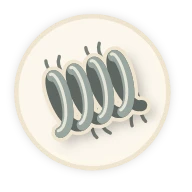
Tiny metal coils
Small springs of platinum or another metal, often with soft fibers. During prostate embolization, doctors sometimes place one in a nearby artery so the beads do not reach the tissue it feeds.36– to 39
They stay in place for good. They are safe in an MRI scanner under set conditions; tell the scanner staff you have them.37
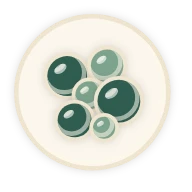
Round beads of plastic. One common type is an acrylic plastic with gelatin from pigs. Others are a water-holding plastic gel (polyvinyl alcohol) or a plastic gel with a thin coating.40– to 42
They do not dissolve. They stay in place for good. They are not made of metal and do not stop you from having an MRI.40, 41, 43
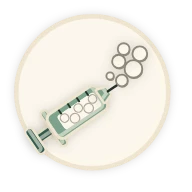
A medicine that works like a detergent, often mixed into a foam (sodium tetradecyl sulfate or polidocanol). It irritates the inside lining of the vein.47, 48
The vein scars shut. This is not always permanent.47
Some beads contain gelatin from pigs. If you avoid pork products or have had a reaction to gelatin, tell your doctor. Types without gelatin are available.40– to 42
Bottom line
Early results are encouraging. Most people bleed less, and about 2 out of 3 people still have little or no bleeding a year later, some after a second embolization. Some need a second treatment or surgery. It is mainly a treatment for bleeding.3, 4, 19– to 22
What the studies found
Most bleed less at first. Pooled data from 13 studies of 381 patients: it worked for about 8 out of 10 (82%). Every study followed one group before and after, with no comparison group.21
Results vary from center to center. A review of 22 studies (810 procedures) found success from 63% to 94%, and repeat treatment in 8% to 20%. The authors judged the studies too different to combine into one number.4
The benefit fades for some within a year.
80 patients in a registry: 68.7% had no bleeding at 12 months; 21.3% had a second embolization and 5% had surgery.19
25 patients: 72% success at 12 months, but 8 of the 18 successes needed 2 sessions.20
32 patients, with a strict definition of success: 87.5% at 1 month, 59.4% at 6 months, 56.2% at 12 months.22
Against surgery: far less pain early. One small trial of 29 people compared embolization with closed hemorrhoid removal. Pain at the first bowel movement was 0 after embolization vs 6.08 after surgery (0 means no pain), and pain-medicine doses 2.4 vs 28.9. At 1 year, symptoms remained in 6 of 13 vs 5 of 13, and 8 of 13 vs 13 of 13 were satisfied; the trial was too small to compare results at 1 year. Its limits: one center, patients and doctors knew the treatment, coils only, designed to measure pain alone, and a device maker supplied grants and equipment.3
In everyday U.S. practice: 134 patients at one outpatient center, about half after earlier banding. All went home 2 hours after; success was 93% at 1 month, with no longer follow-up. The first author consults for device makers.23
In frail patients: 21 patients at high surgical risk with anemia (a low blood count): hemoglobin rose 1.2 g/dL on average. 3 still needed blood transfusions.24
Bulging: grade did not change in the particle-size trial, and other series report small or short-lived changes. The procedure does not lift tissue.4, 5
Harms
Embolization is not surgery. Nothing is cut, there is no wound, and no loss of bowel control has been reported, compared with about 2 to 3 out of 100 people after hemorrhoid removal or stapled surgery.25
Common and short-lived: a few days of rectal pressure, urge to go, or low fever. In one series, 53.1% had an urge to go and 34.4% a low fever; in another, 81.8% had an urge to go that eased in 3 to 5 days.26, 27
Small ulcers, which healed: in a small trial that looked inside everyone with a scope, shallow ulcers were found in 71.4% of patients with the smallest particles and 0% with the largest, all healed by 6 months. 3 of 14 in the smallest-particle group had ulcers higher up in the bowel (the rectosigmoid) that needed enema treatment and healed after 6 months. Most series do not look with a scope, so they undercount ulcers.5
Serious bowel injury: possible, but rare. It has been reported more than once, with no reliable rate. Case reports describe bowel damage from poor blood flow, including one hole in the bowel that needed an operation and one narrowing of the bowel.4, 28– to 30
Studied mostly in people with bleeding hemorrhoids of grades 1 to 3 that did not respond to other care, some too sick for surgery, some who refused it. Pregnancy, active inflammatory bowel disease, poor kidney function, and dye allergy are commonly excluded from trials. It is not a treatment for a clotted hemorrhoid or a fissure.4, 7, 31
What experts say
NICE (England), last reviewed 2018 and based on 84 patients, says it should be used only in research; its next review is due April 2027.32
An Italian colorectal consensus reserves it for selected patients with disabling symptoms that other care has not helped, and no bulging that cannot be pushed back.33
The AGA review's summary does not mention it. We found no position from the U.S. or European interventional radiology societies (SIR or CIRSE).7
Results past about 2 years, where almost no data exist.4, 19
Trials under way: against banding or artery tying (80 patients, results expected 2030), against banding (40 patients, 2030), and against hemorrhoid removal (102 patients, 2028).31, 34, 35
If it works for you, it may spare you surgery. No study has measured that against a comparison group.
Good evidence suggestsWorks well for many; comes back more often than after surgery
What it involves
A rubber band placed in the office
Recovery
Many back at work the next day
Hemorrhoids that bulge out
Helps; may last longer than infrared
A rubber band is placed above the pain-sensing line inside the anus, around the base of an internal hemorrhoid, which then shrinks and falls off.6, 7
Bottom line
Good evidence suggests banding works well for many people. Hemorrhoids come back more often than after surgery, and some people need more than one session.1, 52
What the studies found
Against hemorrhoid removal: one trial across several hospitals, in 87 people with grade 3 hemorrhoids, stopped early:1
Hemorrhoids came back in about half after banding (48.8%) vs about 1 out of 16 after removal (6.1%), with up to 2 banding sessions allowed.1
Back to work after 1 day with banding vs 9 days after removal.1
Pain in the first week: 1 after banding vs 4 after removal, on a pain score where 0 means no pain.1
Against infrared: see the infrared treatment section.53
Harms
Pain and pressure for a few days, and some bleeding when the band falls off. In one study of 100 people, about 12 had a problem afterward: severe pain in 7, and bleeding that stopped on its own in 5. In the UK trial against artery tying, about 1 out of 100 people needed a hospital stay for a serious problem after banding. A serious pelvic infection is rare after any hemorrhoid treatment.7, 53– to 55
What experts say
The AGA advises banding or infrared treatment before surgery for grades 1 to 3, and a surgeon's opinion for grade 3 hemorrhoids that do not respond to banding.7
What is not known
How banding compares with embolization; trials are under way.31, 34
Infrared treatment
How well it works
Studies disagreeAbout as good as banding at first
What it involves
Heat from a probe, in the office
Recovery
Less pain than banding
Hemorrhoids that bulge out
Banding may last longer
Infrared light from a probe scars the hemorrhoid so it shrinks.6
Bottom line
Studies disagree on whether it lasts as long as banding. It helps about as much as banding at first.7, 52, 53
What the studies found
About the same as banding: 9 randomized trials of moderate quality compared banding with heat or coagulation methods, including infrared. They found no clear difference in success, return of hemorrhoids, or bulging. For infrared alone, banding caused more pain, and bleeding afterward was no different.53
Fewer repeat treatments after banding: an older pooled analysis of 5 trials (863 patients) found similar numbers symptom-free at 12 months, but fewer people needed repeat treatment after banding.52
Harms
Less pain than banding; bleeding afterward was no different.53
What experts say
The AGA says banding gives longer benefit for bulging and repeat bleeding, and, for people with cirrhosis whose blood clotting is badly impaired, prefers infrared over banding.7
Injection (sclerotherapy)
How well it works
Early studies suggestAbout as good as banding and other non-surgical treatments
What it involves
An injection, in the office
Recovery
Not stated in our sources
Hemorrhoids that bulge out
Not stated in our sources
A chemical injected into the hemorrhoid scars it.56
Bottom line
Early studies suggest it works about as well as banding and other non-surgical treatments.56
What the studies found
14 randomized trials compared injection with other non-surgical treatments: banding, heat or electric treatments, fiber, flavonoid pills, other injection mixes, and artery tying. The authors pooled these comparisons together, and results varied a lot from trial to trial:56
Same success: success was equally likely with injection and with the other treatments.56
Fewer complications: complications were about half as likely with injection.56
What is not known
Long-term results; the authors call for more research.56
Hemorrhoid removal vs. stapled, laser, and artery-tying surgery
Surgery ties off, lifts, shrinks, or removes the hemorrhoids. It is the most lasting fix, and recovery hurts more.
Artery tying (ligation)
How well it works
Early studies suggestHelps; comes back more often than after removal
What it involves
Stitches tie off the arteries, inside the anus
Recovery
Faster than after removal; more pain than banding
Hemorrhoids that bulge out
Not stated in our sources
Doppler-guided artery ligation, also called dearterialization: an ultrasound probe in the anus finds the feeding arteries, which are tied with stitches; a lifting stitch (mucopexy) is sometimes added.55, 57
Bottom line
Early studies suggest it helps, but hemorrhoids come back more often than after removal. It may last longer than a single banding.55, 57
What the studies found
Against banding: a UK trial of 372 people in 17 centers:55
Hemorrhoids back at 1 year: 30% after artery tying vs 49% after a single banding.55
Most of that gap came from people who needed repeat banding. Repeat banding made the comparison 27% vs 37.5%, which could be due to chance.55
Serious problems needing a hospital stay: 12 people (7%) after artery tying vs 2 (1%) after banding.55
More pain on day 1 and day 7 after artery tying.55
Against removal: in 6 randomized trials of 465 patients, hemorrhoids came back more often after artery tying than after removal; the odds of return were almost 3 times as high. People got back to normal about 14 days sooner after artery tying.57
Harms
More pain than banding in the first week; serious problems needing a hospital stay were more common after artery tying than after banding in the UK trial.55
What is not known
It targets the same blood supply as embolization, so how long it lasts may be similar. No trial has tested this.57
Stapled surgery
How well it works
Good evidence suggestsBulging comes back more often than after removal
What it involves
A stapling tool lifts the hemorrhoids
Recovery
Not stated in our sources
Hemorrhoids that bulge out
Comes back more often than after removal
A circular stapler removes a ring of tissue above the hemorrhoids and lifts them back into place.58
Bottom line
Good evidence suggests symptoms, mostly bulging, come back more often than after standard surgery.58
What the studies found
17 randomized trials of 2,072 patients compared stapled surgery with hemorrhoid removal:58
Bulging came back about 3 times as often after stapled surgery.58
Symptoms overall came back about 1.5 times as often. The low end of the range is no difference, so this part could be due to chance.58
The authors judge that there are still too few patients to be sure.
Harms
Long-term pain, bowel function, and quality of life were about the same as after hemorrhoid removal. How often problems happen varies widely from study to study. Serious problems are possible, but rare: a hole in the bowel or a severe infection that needed emergency surgery has been reported, including deaths, with no reliable rate.58– to 60
Laser surgery
How well it works
Early studies suggestLess early pain than removal; how long it lasts is unknown
What it involves
Laser heat shrinks the hemorrhoids
Recovery
Back to daily life sooner than after removal
Hemorrhoids that bulge out
Not yet known
A laser fiber shrinks the hemorrhoid from inside.61
Bottom line
Early studies suggest it hurts less than standard surgery. How long it lasts is not yet known.61
What the studies found
15 randomized trials of 1,099 patients compared laser surgery with hemorrhoid removal:61
Less pain: lower pain on day 1 and day 7 after laser surgery.61
Faster recovery: back to daily life about 11 days sooner.61
How sure: low to very low certainty, with short follow-up.
Harms
Less bleeding, trouble passing urine, and narrowing of the anus than after removal in the pooled trials.61
What is not known
Long-term results; the authors do not suggest it replace removal.61
Hemorrhoid removal (hemorrhoidectomy)
How well it works
Good evidence suggestsThe most lasting fix
What it involves
Surgery to cut out the hemorrhoids
Recovery
Painful first week or more
Hemorrhoids that bulge out
Treats them; needed when they stay out
The hemorrhoids are cut out, with the wounds closed or left open.2
Bottom line
Good evidence suggests it is the most lasting fix. Hemorrhoids come back less often than after banding or other procedures.1, 2
What the studies found
Fewest hemorrhoid returns, most pain: a combined analysis of 79 randomized trials (9,232 patients) found closed and open removal, along with stapled surgery, had the fewest returns of hemorrhoids and the most pain of the procedures compared. 73% of the trials had flaws that could skew their results.2
Against banding: hemorrhoids came back in 6.1% after removal vs 48.8% after banding, in one trial of 87 people; see the banding section.1
Harms
Hemorrhoid removal is surgery, and its side effects are more common than those of office treatments. Trouble passing urine right after surgery: about 14 out of 100 people in one large hospital study. Bleeding that starts days later: about 2 to 5 out of 100 people. Back in the hospital within a month: about 12 out of 100 people in one study, mostly for pain or bleeding. Narrowing of the anus: about 3 out of 100 people in one study, eased with stretching. Lasting loss of some bowel control: about 2 to 3 out of 100 people after hemorrhoid removal or stapled surgery (2.48%).2, 25, 62– to 66
What experts say
The AGA says grade 4 hemorrhoids need surgical removal.7
If you have heavy bleeding that does not stop, feel faint or dizzy, or have a high fever or severe pain after a procedure, get emergency care or call 911.
References
The small numbers on this page point to these sources.
van Oostendorp JY, Dekker L, van Dieren S, et al. Comparison of rubber band ligation and hemorrhoidectomy in patients with symptomatic hemorrhoids grade III: a multicenter, open-label, randomized controlled noninferiority trial. Diseases of the Colon and Rectum. 2025;68(5):572-583. doi:10.1097/DCR.0000000000003679. PMID 39952268. https://doi.org/10.1097/DCR.0000000000003679
Jin JZ, Bhat S, Lee KT, et al. Interventional treatments for prolapsing haemorrhoids: network meta-analysis. BJS Open. 2021;5(5):zrab091. doi:10.1093/bjsopen/zrab091. PMID 34633439. https://doi.org/10.1093/bjsopen/zrab091
Falsarella PM, Nasser F, Affonso BB, et al. Embolization of the superior rectal arteries versus closed hemorrhoidectomy (Ferguson technique) in the treatment of hemorrhoidal disease: a randomized clinical trial. Journal of Vascular and Interventional Radiology. 2023;34(5):736-744.e1. doi:10.1016/j.jvir.2023.01.022. PMID 36736690. https://doi.org/10.1016/j.jvir.2023.01.022
Al Jnainati M, Ikkurthy N, Ayoub M, et al. Outcomes of embolization therapy of superior rectal arteries for the management of grade 1 to 3 internal hemorrhoids: a systematic review of clinical studies. International Journal of Colorectal Disease. 2025;40(1):190. doi:10.1007/s00384-025-04944-4. PMID 40877526. https://doi.org/10.1007/s00384-025-04944-4
Küçükay MB, Küçükay F. Superior rectal artery embolization with tris-acryl gelatin microspheres: a randomized comparison of particle size. Journal of Vascular and Interventional Radiology. 2021;32(6):819-825. doi:10.1016/j.jvir.2021.02.011. PMID 33640516. https://doi.org/10.1016/j.jvir.2021.02.011
Qureshi W, Hoang S, Frye J, Rao SSC. AGA clinical practice update on diagnosis and treatment of hemorrhoids: expert review. Clinical Gastroenterology and Hepatology. 2026;24(7):1773-1781. doi:10.1016/j.cgh.2026.04.008. PMID 42067175. https://doi.org/10.1016/j.cgh.2026.04.008
Alonso-Coello P, Mills E, Heels-Ansdell D, et al. Fiber for the treatment of hemorrhoids complications: a systematic review and meta-analysis. American Journal of Gastroenterology. 2006;101(1):181-188. doi:10.1111/j.1572-0241.2005.00359.x. PMID 16405552. https://doi.org/10.1111/j.1572-0241.2005.00359.x
Sturiale A, Fralleone L, Cafaro D, et al. Safety and efficacy of topical drug-free cream in subjects with hemorrhoidal disease: a randomized, double blind, clinical trial. Minerva Gastroenterology. 2022;68(4):407-414. doi:10.23736/S2724-5985.22.03173-4. PMID 35511655. https://doi.org/10.23736/S2724-5985.22.03173-4
Şahin F, Farshbaf-Khalili A, Alihosseini S, et al. The efficacy of topical formulation on hemorrhoid disease: a randomized, double-blind, placebo-controlled trial. Heliyon. 2024;10(5):e27215. doi:10.1016/j.heliyon.2024.e27215. PMID 38463771. https://doi.org/10.1016/j.heliyon.2024.e27215
Mehdi Z, Fatemeh P, Roja R, et al. Efficacy and safety of Hemoheal cream in patients with hemorrhoids: a randomized double-blind placebo controlled clinical trial. Journal of Traditional Chinese Medicine. 2021;41(2):301-307. PMID 33825411. https://pubmed.ncbi.nlm.nih.gov/33825411/
Kwok AMF, Smith SR, Zhao J, et al. Topical lidocaine or lidocaine/diltiazem ointment following rubber band ligation of hemorrhoids: a prospective 3-armed randomized controlled trial. Diseases of the Colon and Rectum. 2023;66(8):1110-1117. doi:10.1097/DCR.0000000000002774. PMID 36940309. https://doi.org/10.1097/DCR.0000000000002774
Shafik A. Role of warm-water bath in anorectal conditions. The "thermosphincteric reflex". Journal of Clinical Gastroenterology. 1993;16(4):304-308. doi:10.1097/00004836-199306000-00007. PMID 8331263. https://doi.org/10.1097/00004836-199306000-00007
Kahraman A, Karaca K, Etöz A, Ozcan M. Perianal burn as a complication of hemorrhoid treatment caused by hot water sitz bath. Burns. 2004;30(8):868-870. doi:10.1016/j.burns.2004.05.011. PMID 15555807. https://doi.org/10.1016/j.burns.2004.05.011
Alonso-Coello P, Zhou Q, Martinez-Zapata MJ, et al. Meta-analysis of flavonoids for the treatment of haemorrhoids. British Journal of Surgery. 2006;93(8):909-920. doi:10.1002/bjs.5378. PMID 16736537. https://doi.org/10.1002/bjs.5378
Perera N, Liolitsa D, Iype S, et al. Phlebotonics for haemorrhoids. Cochrane Database of Systematic Reviews. 2012;(8):CD004322. doi:10.1002/14651858.CD004322.pub3. PMID 22895941. https://doi.org/10.1002/14651858.CD004322.pub3
Quijano CE, Abalos E. Conservative management of symptomatic and/or complicated haemorrhoids in pregnancy and the puerperium. Cochrane Database of Systematic Reviews. 2005;(3):CD004077. doi:10.1002/14651858.CD004077.pub2. PMID 16034920. https://doi.org/10.1002/14651858.CD004077.pub2
Jensen SL, Harling H, Arseth-Hansen P, Tange G. The natural history of symptomatic haemorrhoids. International Journal of Colorectal Disease. 1989;4(1):41-44. doi:10.1007/BF01648549. PMID 2708881. https://doi.org/10.1007/BF01648549
De Gregorio MA, Guirola JA, Serrano-Casorran C, et al. Catheter-directed hemorrhoidal embolization for rectal bleeding due to hemorrhoids (Goligher grade I-III): prospective outcomes from a Spanish emborrhoid registry. European Radiology. 2023;33(12):8754-8763. doi:10.1007/s00330-023-09923-3. PMID 37458757. Single group, no comparison. https://doi.org/10.1007/s00330-023-09923-3
Tradi F, Louis G, Giorgi R, et al. Embolization of the superior rectal arteries for hemorrhoidal disease: prospective results in 25 patients. Journal of Vascular and Interventional Radiology. 2018;29(6):884-892.e1. doi:10.1016/j.jvir.2018.01.778. PMID 29724519. Single group, no comparison. https://doi.org/10.1016/j.jvir.2018.01.778
Nguyenhuy M, Xu Y, Kok HK, et al. Clinical outcomes following rectal artery embolisation for the treatment of internal haemorrhoids: a systematic review and meta-analysis. Cardiovascular and Interventional Radiology. 2022;45(9):1351-1361. doi:10.1007/s00270-022-03154-7. PMID 35551442. https://doi.org/10.1007/s00270-022-03154-7
Cai H, Zhang H, Pang R, et al. Short- and medium-term efficacy of super-selective haemorrhoidal artery embolisation for internal haemorrhoids and its relationship with severity grading: a single-centre retrospective study. Journal of Medical Imaging and Radiation Oncology. 2026. doi:10.1111/1754-9485.70165. PMID 42573173. https://doi.org/10.1111/1754-9485.70165
Bagla S, Pavidapha A, Lerner J, et al. Outcomes of hemorrhoidal artery embolization from a multidisciplinary outpatient interventional center. Journal of Vascular and Interventional Radiology. 2023;34(5):745-749. doi:10.1016/j.jvir.2023.01.023. PMID 36736822. Single group, no comparison. https://doi.org/10.1016/j.jvir.2023.01.023
Campennì P, Iezzi R, Marra AA, et al. The emborrhoid technique for treatment of bleeding hemorrhoids in patients with high surgical risk. Journal of Clinical Medicine. 2022;11(19):5533. doi:10.3390/jcm11195533. PMID 36233395. https://doi.org/10.3390/jcm11195533
Jin JZ, Men V, Bahl P, et al. The prevalence of incontinence after excisional hemorrhoidectomy and stapled hemorrhoidopexy: a systematic review and meta-analysis. Surgery. 2025;180:109139. doi:10.1016/j.surg.2024.109139. PMID 39854786. https://doi.org/10.1016/j.surg.2024.109139
Han X, Xia F, Chen G, et al. Superior rectal artery embolization for bleeding internal hemorrhoids. Techniques in Coloproctology. 2021;25(1):75-80. doi:10.1007/s10151-020-02312-8. PMID 32712932. Single group, no comparison. https://doi.org/10.1007/s10151-020-02312-8
Zhou H, Li L, Wang WJ, Li YL. Clinical analysis of percutaneous superselective superior rectal artery embolization for grades II-III internal hemorrhoids [in Chinese]. Zhonghua Nei Ke Za Zhi. 2024;63(9):861-865. doi:10.3760/cma.j.cn112138-20231123-00337. PMID 39183158. English abstract only. https://doi.org/10.3760/cma.j.cn112138-20231123-00337
de Oliveira DS, Hora JAB, de Assis AM, et al. Embolization of rectal arteries for treating hemorrhoidal disease using a combination of microspheres and microcoils: a pilot study. Cardiovascular and Interventional Radiology. 2025;48(3):388-394. doi:10.1007/s00270-024-03942-3. PMID 39725725. https://doi.org/10.1007/s00270-024-03942-3
Eberspacher C, Ficuccilli F, Tessieri L, et al. Annoyed with haemorrhoids? Risks of the emborrhoid technique. Digestive Diseases and Sciences. 2021;66(11):3725-3729. doi:10.1007/s10620-021-07208-7. PMID 34398325. https://doi.org/10.1007/s10620-021-07208-7
Hess TN, Baron JJ. Colonic ischemia and necrosis following hemorrhoid embolization: a brief report. American Surgeon. Published online September 8, 2025; 2026;92(1):291-292. doi:10.1177/00031348251378901. PMID 40921478. https://doi.org/10.1177/00031348251378901
ClinicalTrials.gov NCT05697562. Randomized non-inferiority trial of hemorrhoidal artery embolization versus rubber band ligation or Doppler-guided ligation. UZ Brussel. Recruiting; record read November 9, 2026. https://clinicaltrials.gov/study/NCT05697562
National Institute for Health and Care Excellence. Haemorrhoidal artery embolisation for haemorrhoids (IPG627, now HTG485). Read November 9, 2026. https://www.nice.org.uk/guidance/htg485
Gallo G, Martellucci J, Sturiale A, et al. Consensus statement of the Italian Society of Colorectal Surgery (SICCR): management and treatment of hemorrhoidal disease. Techniques in Coloproctology. 2020;24(2):145-164. doi:10.1007/s10151-020-02149-1. PMID 31993837. https://doi.org/10.1007/s10151-020-02149-1
ClinicalTrials.gov NCT07559630. Rectal arterial embolization versus band ligation for hemorrhoids (STRATOS). University of California, Los Angeles. Recruiting; record read November 9, 2026. https://clinicaltrials.gov/study/NCT07559630
ClinicalTrials.gov NCT07844629. Hemorrhoid artery embolization versus hemorrhoidectomy (HemEmbo). Colorado. Not yet recruiting; record read November 9, 2026. https://clinicaltrials.gov/study/NCT07844629
RadiologyInfo.org (Radiological Society of North America and American College of Radiology). Catheter embolization. Reviewed August 5, 2024. https://www.radiologyinfo.org/en/info/cathembol
Maclean D, Vigneswaran G, Maher B, et al. The effect of protective coil embolization of penile anastomoses during prostatic artery embolization on erectile function: a propensity-matched analysis. Journal of Vascular and Interventional Radiology. 2023;34(2):218-224. https://doi.org/10.1016/j.jvir.2022.10.023
Richardson A, Bhatia A, Maini A, et al. Impact on sexual function of protective coil embolization of penile collaterals during prostatic artery embolization. CardioVascular and Interventional Radiology. 2025;48(4):512-521. https://doi.org/10.1007/s00270-025-03966-3
Strobl F, Böhm AK, Mertens L, et al. Pelvic vein embolization using different embolic agents for the treatment of pelvic venous insufficiency: a systematic review and meta-analysis. Journal of Vascular Surgery: Venous and Lymphatic Disorders. 2026;14(6):102599. https://doi.org/10.1016/j.jvsv.2026.102599
Ahmed O, et al. [Society of Interventional Radiology position statement on genicular artery embolization.] Journal of Vascular and Interventional Radiology. 2026;37:108803. https://doi.org/10.1016/j.jvir.2026.108803
Correa MP, Michelin AF, Aguiar LA, et al. Genicular artery embolization using imipenem/cilastatin vs. microsphere for knee osteoarthritis (GAUCHO): 12-month clinical results of a single-blind randomized controlled trial. CardioVascular and Interventional Radiology. 2026;49(9):1825-1837. https://doi.org/10.1007/s00270-026-04504-5
Lanza E, Poretti D, Pedicini V, et al. Permanent vs. temporary embolic agents in genicular artery embolization for knee osteoarthritis: a systematic review and meta-analysis. European Journal of Radiology. 2026;202:112968. https://doi.org/10.1016/j.ejrad.2026.112968
Johanson JF, Rimm A. Optimal nonsurgical treatment of hemorrhoids: a comparative analysis of infrared coagulation, rubber band ligation, and injection sclerotherapy. American Journal of Gastroenterology. 1992;87(11):1600-1606. PMID 1442682. https://pubmed.ncbi.nlm.nih.gov/1442682/
Ding Z, Xuan J, Tang G, et al. Rubber band ligation versus coagulation for the treatment of haemorrhoids: a meta-analysis of randomised controlled trials. Postgraduate Medical Journal. 2023;99(1175):946-953. doi:10.1136/pmj-2022-141941. PMID 37117040. https://doi.org/10.1136/pmj-2022-141941
Pastor Peinado P, Ocaña J, Abadía Barno P, et al. Quality of life and outcomes after rubber band ligation for haemorrhoidal disease. Langenbeck's Archives of Surgery. 2023;408(1):243. doi:10.1007/s00423-023-02990-6. PMID 37349572. Abstract read. https://doi.org/10.1007/s00423-023-02990-6
Brown SR, Tiernan JP, Watson AJM, et al. Haemorrhoidal artery ligation versus rubber band ligation for the management of symptomatic second-degree and third-degree haemorrhoids (HubBLe): a multicentre, open-label, randomised controlled trial. Lancet. 2016;388(10042):356-364. doi:10.1016/S0140-6736(16)30584-0. PMID 27236344. https://doi.org/10.1016/S0140-6736(16)30584-0
Gallo G, Picciariello A, Armellin C, et al. Sclerotherapy for hemorrhoidal disease: systematic review and meta-analysis. Techniques in Coloproctology. 2024;28(1):28. doi:10.1007/s10151-023-02908-w. PMID 38261136. https://doi.org/10.1007/s10151-023-02908-w
Jee J, O'Connell LV, Kaur I, et al. Conventional excisional haemorrhoidectomy versus transanal haemorrhoidal dearterialization for haemorrhoids: a systematic review and meta-analysis. Digestive Surgery. 2024;41(4):204-212. doi:10.1159/000540256. PMID 39084191. https://doi.org/10.1159/000540256
Lauricella S, Brucchi F, Mascianà G, et al. Long-term outcomes of stapled haemorrhoidopexy versus conventional haemorrhoidectomy: an updated systematic review, meta-analysis and trial-sequential analysis of randomized controlled trials. International Journal of Colorectal Disease. 2026;41(1):34. doi:10.1007/s00384-026-05080-3. PMID 41535511. https://doi.org/10.1007/s00384-026-05080-3
Porrett LJ, Porrett JK, Ho YH. Documented complications of staple hemorrhoidopexy: a systematic review. International Surgery. 2015;100(1):44-57. doi:10.9738/INTSURG-D-13-00173.1. PMID 25594639. Abstract read. https://doi.org/10.9738/INTSURG-D-13-00173.1
Cirocco WC. Life threatening sepsis and mortality following stapled hemorrhoidopexy. Surgery. 2008;143(6):824-829. doi:10.1016/j.surg.2007.10.004. PMID 18549901. Abstract read. https://doi.org/10.1016/j.surg.2007.10.004
Pompeu BF, Barone GL, Delgado LM, et al. Laser hemorrhoidoplasty versus excisional hemorrhoidectomy: the recovery-durability tradeoff in hemorrhoid surgery, a systematic review of randomized trials. American Surgeon. 2026. doi:10.1177/00031348261471500. PMID 42503488. https://doi.org/10.1177/00031348261471500
Jeong HY, Song SG, Lee JK. Predictors of postoperative urinary retention after semiclosed hemorrhoidectomy. Annals of Coloproctology. 2022;38(1):53-59. doi:10.3393/ac.2021.00304.0043. PMID 34284555. Abstract read. https://doi.org/10.3393/ac.2021.00304.0043
Jeong HY, Hwang DY, Cho DH, Lee JK. Analysis of risk factors for delayed bleeding after semi-closed hemorrhoidectomy. International Journal of Colorectal Disease. 2021;36(4):857-864. doi:10.1007/s00384-021-03895-w. PMID 33661360. Abstract read. https://doi.org/10.1007/s00384-021-03895-w
Cheng KC, Song LC, Wu KL, Chen HH, Lee KC. Risk factors of delayed hemorrhage after LigaSure hemorrhoidectomy. BMC Surgery. 2022;22(1):361. doi:10.1186/s12893-022-01802-w. PMID 36229826. Abstract read. https://doi.org/10.1186/s12893-022-01802-w
Siggins LA, Fagan PVB, Kim HM, Lin AY. Risk factors for readmission in excisional hemorrhoidectomy at a tertiary teaching center. Journal of Surgical Research. 2024;297:128-135. doi:10.1016/j.jss.2024.02.013. PMID 38503194. Abstract read. https://doi.org/10.1016/j.jss.2024.02.013
Marino F, Donghia R. Ligasure versus Voyant hemorrhoidectomy: comparison of 30-day postoperative complications. Minerva Surgery. 2026;81(1):32-37. doi:10.23736/S2724-5691.26.11077-6. PMID 41804964. Abstract read. https://doi.org/10.23736/S2724-5691.26.11077-6