What are hemorrhoids?
Hemorrhoids are swollen veins inside the lower rectum (the last part of the bowel) or under the skin around the anus. Hemorrhoids that are inside the rectum can bleed or bulge out and are usually painless. Outside ones can itch, ache, or form a tender lump.1
Common symptoms1
When to see a doctor
What is hemorrhoid artery embolization (HAE)?
Hemorrhoid artery embolization (HAE) treats bleeding hemorrhoids without surgery. A thin tube goes through a tiny skin nick in the wrist or groin. Tiny coils or beads block the arteries feeding the hemorrhoids, so they bleed less. Most people go home the same day.8 to 10
How it works
Hemorrhoids are swollen veins just inside the bottom. Arteries from above bring them blood, and they can bleed.
A thin tube goes through a tiny skin nick in the wrist or groin. Tiny coils or beads block the arteries feeding the hemorrhoids.
With less blood flowing in, the hemorrhoids bleed less. They may shrink a little. For some people, bleeding comes back later.
What is embolization?
Embolization means blocking blood flow on purpose, from inside a blood vessel. A doctor guides a thin tube to the small blood vessels that feed the problem area. Then the doctor releases a material that blocks them.3
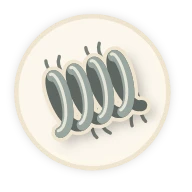

For hemorrhoids, the material is tiny metal coils, tiny plastic beads, or both. Both stay in place for good.4 to 7
If you avoid pork products or have had a reaction to gelatin, tell your doctor before the procedure.7
Recovery
Early studies suggest recovery is far less painful than after surgery in the first days.8
How well does it work?
Early results are encouraging. Most patients bleed less afterward. About 2 out of 3 people still have little or no bleeding a year later, some after a second embolization. Some may need a second treatment or surgery. It is not known to fix hemorrhoids that bulge out. It may spare you surgery, but we don't know that yet.10 to 14
Side effects
Results vary from person to person. Talk to a doctor about whether this is right for you.
If bleeding keeps coming back after banding
You have three paths. Banding is a good choice for many people. Embolization needs no surgery, and early studies suggest it hurts much less than surgery in the first days. However, bleeding may come back for some people. Surgery is the most lasting fix, but also the most painful to recover from.28122122
If your hemorrhoids bulge out and stay bulging out, surgery is usually needed. Embolization is mainly a treatment for bleeding. Studies comparing it with banding are under way. Every Option's physician performs embolization.21023 to 25
Hemorrhoids are swollen veins in and around the bottom. They are common. Fiber eases symptoms for many people, and office treatments like banding work well for many. If bleeding keeps coming back after those, embolization is one option that needs no surgery. Surgery is the most lasting fix. The right choice depends on your symptoms and goals.12212226
If you have heavy bleeding that does not stop, feel faint or dizzy, or have a high fever or severe pain after a procedure, get emergency care or call 911.
Your other hemorrhoid treatment options
Home care
Most people start here. No procedure is needed.
Fiber and home care
This means more fiber from food or a daily fiber supplement and not straining or sitting a long time on the toilet.2
Creams and warm baths
Creams, wipes, and sitz baths (sitting in warm water) are often used to soothe itching and aching. They treat symptoms, not the hemorrhoid itself.2
Less invasive treatments
These need no surgery. Banding is usually tried first, in the office. Embolization is an option when bleeding keeps coming back.
Hemorrhoid artery embolization (HAE)See detailsBanding
A doctor places a tiny rubber band around the base of a hemorrhoid inside the rectum. It cuts off the blood supply, so the hemorrhoid shrinks and falls off.1
Infrared treatment
A small probe uses heat from infrared light to scar the hemorrhoid so it shrinks.1
Injection (sclerotherapy)
A doctor injects a medicine into the hemorrhoid so it scars and shrinks.32
Surgery
Surgery ties off, lifts, shrinks, or removes the hemorrhoids. It is the most lasting fix, and recovery hurts more.
Artery tying (ligation)
A surgeon uses an ultrasound probe inside the anus to find the arteries that feed the hemorrhoids, then ties them off with stitches. Nothing is cut out.34
- How invasive is it?
- This is surgery, with no cut in the skin. Recovery is faster than after standard surgery.33
- How well does it work?
- Early studies suggest it helps, but hemorrhoids come back more often than after standard surgery. It may last longer than banding.3334
- Side effects
- It hurts more than banding in the first week.34
Stapled surgery
Laser surgery
A surgeon shrinks the hemorrhoids with heat from a laser.37
- How invasive is it?
- This is surgery. People got back to daily life sooner than after standard surgery.37
- How well does it work?
- Early studies suggest it hurts less than standard surgery. How long it lasts is not yet known.37
- Side effects
- Bleeding and trouble peeing afterward seem less common than after standard surgery.37
Hemorrhoid removal (hemorrhoidectomy)
A surgeon cuts out the hemorrhoids.21
Learn more
Is embolization right for me?
If bleeding keeps coming back after fiber and office treatments and you do not want surgery, it may suit you. Early studies suggest some people also have less aching afterward.81123
It is usually not the right choice if your hemorrhoids bulge out and stay out, or if your main problem is sudden, severe pain from a clot or a tear. It has not been studied in pregnancy.224
Serious problems after any hemorrhoid treatment
A serious infection in the pelvis is very rare after any hemorrhoid treatment. Get care right away if you have a fever, severe pain, or feel very sick after a procedure.2
What should I ask my doctor?
- Have you checked my colon? What is causing the bleeding?
- Do my hemorrhoids bulge out? Do they go back in?
- Could banding or another office treatment work for me?
- If I choose embolization, how often does bleeding come back? What happens if it does?
- What is the plan if a problem happens after the procedure?
Common questions
Does insurance cover hemorrhoid embolization?
Coverage varies by plan. Some insurers cover it under set conditions, some list it as unproven or not covered, and Medicare decides case by case. Ask your plan before you book. See what each insurer's policy says.38 to 41
Which doctor treats hemorrhoids?
Family doctors, gastroenterologists (digestive specialists), and colorectal surgeons check and treat hemorrhoids, and many do banding in the office. Interventional radiologists perform embolization. Ask your doctor for a referral, or contact one of the doctors listed on our site.
Will hemorrhoids go away on their own?
Sometimes. Some people with an early flare have no more flares for years, but for many the symptoms come back.42
What if I am pregnant?
Hemorrhoids are common in pregnancy. Treatment is usually fiber, treating constipation, and creams. Office treatments can be considered after the birth if symptoms last.2
References
The small numbers on this page point to these sources.
- National Institute of Diabetes and Digestive and Kidney Diseases. Hemorrhoids: definition and facts; symptoms and causes; treatment. Last reviewed October 2016. Read November 9, 2026. https://www.niddk.nih.gov/health-information/digestive-diseases/hemorrhoids
- Qureshi W, Hoang S, Frye J, Rao SSC. AGA clinical practice update on diagnosis and treatment of hemorrhoids: expert review. Clinical Gastroenterology and Hepatology. 2026;24(7):1773-1781. doi:10.1016/j.cgh.2026.04.008. PMID 42067175. https://doi.org/10.1016/j.cgh.2026.04.008
- RadiologyInfo.org (Radiological Society of North America and American College of Radiology). Catheter embolization. Reviewed August 5, 2024. https://www.radiologyinfo.org/en/info/cathembol
- Küçükay MB, Küçükay F. Superior rectal artery embolization with tris-acryl gelatin microspheres: a randomized comparison of particle size. Journal of Vascular and Interventional Radiology. 2021;32(6):819-825. https://doi.org/10.1016/j.jvir.2021.02.011
- Moussa N, Bonnet B, Pereira H, et al. Mid-term results of superior rectal artery and coils for hemorrhoidal embolization with particles bleeding. CardioVascular and Interventional Radiology. 2020;43(7):1062-1069. https://doi.org/10.1007/s00270-020-02441-5
- US Food and Drug Administration. 510(k) K153778: platinum embolization coils with synthetic fibers (Cook). May 19, 2016. https://www.accessdata.fda.gov/scripts/cdrh/cfdocs/cfpmn/pmn.cfm?ID=K153778
- Merit Medical. Tris-acryl gelatin microspheres: instructions for use 404692001MLP_001. 2018. https://cloud.merit.com/catalog/IFUs/404692001MLP.pdf
- Falsarella PM, Nasser F, Affonso BB, et al. Embolization of the superior rectal arteries versus closed hemorrhoidectomy (Ferguson technique) in the treatment of hemorrhoidal disease: a randomized clinical trial. Journal of Vascular and Interventional Radiology. 2023;34(5):736-744.e1. doi:10.1016/j.jvir.2023.01.022. PMID 36736690. https://doi.org/10.1016/j.jvir.2023.01.022
- Bagla S, Pavidapha A, Lerner J, et al. Outcomes of hemorrhoidal artery embolization from a multidisciplinary outpatient interventional center. Journal of Vascular and Interventional Radiology. 2023;34(5):745-749. doi:10.1016/j.jvir.2023.01.023. PMID 36736822. Single group, no comparison. https://doi.org/10.1016/j.jvir.2023.01.023
- Küçükay MB, Küçükay F. Superior rectal artery embolization with tris-acryl gelatin microspheres: a randomized comparison of particle size. Journal of Vascular and Interventional Radiology. 2021;32(6):819-825. doi:10.1016/j.jvir.2021.02.011. PMID 33640516. https://doi.org/10.1016/j.jvir.2021.02.011
- Nguyenhuy M, Xu Y, Kok HK, et al. Clinical outcomes following rectal artery embolisation for the treatment of internal haemorrhoids: a systematic review and meta-analysis. Cardiovascular and Interventional Radiology. 2022;45(9):1351-1361. doi:10.1007/s00270-022-03154-7. PMID 35551442. https://doi.org/10.1007/s00270-022-03154-7
- De Gregorio MA, Guirola JA, Serrano-Casorran C, et al. Catheter-directed hemorrhoidal embolization for rectal bleeding due to hemorrhoids (Goligher grade I-III): prospective outcomes from a Spanish emborrhoid registry. European Radiology. 2023;33(12):8754-8763. doi:10.1007/s00330-023-09923-3. PMID 37458757. Single group, no comparison. https://doi.org/10.1007/s00330-023-09923-3
- Tradi F, Louis G, Giorgi R, et al. Embolization of the superior rectal arteries for hemorrhoidal disease: prospective results in 25 patients. Journal of Vascular and Interventional Radiology. 2018;29(6):884-892.e1. doi:10.1016/j.jvir.2018.01.778. PMID 29724519. Single group, no comparison. https://doi.org/10.1016/j.jvir.2018.01.778
- Al Jnainati M, Ikkurthy N, Ayoub M, et al. Outcomes of embolization therapy of superior rectal arteries for the management of grade 1 to 3 internal hemorrhoids: a systematic review of clinical studies. International Journal of Colorectal Disease. 2025;40(1):190. doi:10.1007/s00384-025-04944-4. PMID 40877526. https://doi.org/10.1007/s00384-025-04944-4
- Jin JZ, Men V, Bahl P, et al. The prevalence of incontinence after excisional hemorrhoidectomy and stapled hemorrhoidopexy: a systematic review and meta-analysis. Surgery. 2025;180:109139. doi:10.1016/j.surg.2024.109139. PMID 39854786. https://doi.org/10.1016/j.surg.2024.109139
- Han X, Xia F, Chen G, et al. Superior rectal artery embolization for bleeding internal hemorrhoids. Techniques in Coloproctology. 2021;25(1):75-80. doi:10.1007/s10151-020-02312-8. PMID 32712932. Single group, no comparison. https://doi.org/10.1007/s10151-020-02312-8
- Zhou H, Li L, Wang WJ, Li YL. Clinical analysis of percutaneous superselective superior rectal artery embolization for grades II-III internal hemorrhoids [in Chinese]. Zhonghua Nei Ke Za Zhi. 2024;63(9):861-865. doi:10.3760/cma.j.cn112138-20231123-00337. PMID 39183158. English abstract only. https://doi.org/10.3760/cma.j.cn112138-20231123-00337
- de Oliveira DS, Hora JAB, de Assis AM, et al. Embolization of rectal arteries for treating hemorrhoidal disease using a combination of microspheres and microcoils: a pilot study. Cardiovascular and Interventional Radiology. 2025;48(3):388-394. doi:10.1007/s00270-024-03942-3. PMID 39725725. https://doi.org/10.1007/s00270-024-03942-3
- Eberspacher C, Ficuccilli F, Tessieri L, et al. Annoyed with haemorrhoids? Risks of the emborrhoid technique. Digestive Diseases and Sciences. 2021;66(11):3725-3729. doi:10.1007/s10620-021-07208-7. PMID 34398325. https://doi.org/10.1007/s10620-021-07208-7
- Hess TN, Baron JJ. Colonic ischemia and necrosis following hemorrhoid embolization: a brief report. American Surgeon. Published online September 8, 2025; 2026;92(1):291-292. doi:10.1177/00031348251378901. PMID 40921478. https://doi.org/10.1177/00031348251378901
- Jin JZ, Bhat S, Lee KT, et al. Interventional treatments for prolapsing haemorrhoids: network meta-analysis. BJS Open. 2021;5(5):zrab091. doi:10.1093/bjsopen/zrab091. PMID 34633439. https://doi.org/10.1093/bjsopen/zrab091
- van Oostendorp JY, Dekker L, van Dieren S, et al. Comparison of rubber band ligation and hemorrhoidectomy in patients with symptomatic hemorrhoids grade III: a multicenter, open-label, randomized controlled noninferiority trial. Diseases of the Colon and Rectum. 2025;68(5):572-583. doi:10.1097/DCR.0000000000003679. PMID 39952268. https://doi.org/10.1097/DCR.0000000000003679
- Gallo G, Martellucci J, Sturiale A, et al. Consensus statement of the Italian Society of Colorectal Surgery (SICCR): management and treatment of hemorrhoidal disease. Techniques in Coloproctology. 2020;24(2):145-164. doi:10.1007/s10151-020-02149-1. PMID 31993837. https://doi.org/10.1007/s10151-020-02149-1
- ClinicalTrials.gov NCT05697562. Randomized non-inferiority trial of hemorrhoidal artery embolization versus rubber band ligation or Doppler-guided ligation. UZ Brussel. Recruiting; record read November 9, 2026. https://clinicaltrials.gov/study/NCT05697562
- ClinicalTrials.gov NCT07559630. Rectal arterial embolization versus band ligation for hemorrhoids (STRATOS). University of California, Los Angeles. Recruiting; record read November 9, 2026. https://clinicaltrials.gov/study/NCT07559630
- Alonso-Coello P, Mills E, Heels-Ansdell D, et al. Fiber for the treatment of hemorrhoids complications: a systematic review and meta-analysis. American Journal of Gastroenterology. 2006;101(1):181-188. doi:10.1111/j.1572-0241.2005.00359.x. PMID 16405552. https://doi.org/10.1111/j.1572-0241.2005.00359.x
- Alonso-Coello P, Zhou Q, Martinez-Zapata MJ, et al. Meta-analysis of flavonoids for the treatment of haemorrhoids. British Journal of Surgery. 2006;93(8):909-920. doi:10.1002/bjs.5378. PMID 16736537. https://doi.org/10.1002/bjs.5378
- Perera N, Liolitsa D, Iype S, et al. Phlebotonics for haemorrhoids. Cochrane Database of Systematic Reviews. 2012;(8):CD004322. doi:10.1002/14651858.CD004322.pub3. PMID 22895941. https://doi.org/10.1002/14651858.CD004322.pub3
- Quijano CE, Abalos E. Conservative management of symptomatic and/or complicated haemorrhoids in pregnancy and the puerperium. Cochrane Database of Systematic Reviews. 2005;(3):CD004077. doi:10.1002/14651858.CD004077.pub2. PMID 16034920. https://doi.org/10.1002/14651858.CD004077.pub2
- Johanson JF, Rimm A. Optimal nonsurgical treatment of hemorrhoids: a comparative analysis of infrared coagulation, rubber band ligation, and injection sclerotherapy. American Journal of Gastroenterology. 1992;87(11):1600-1606. PMID 1442682. https://pubmed.ncbi.nlm.nih.gov/1442682/
- Ding Z, Xuan J, Tang G, et al. Rubber band ligation versus coagulation for the treatment of haemorrhoids: a meta-analysis of randomised controlled trials. Postgraduate Medical Journal. 2023;99(1175):946-953. doi:10.1136/pmj-2022-141941. PMID 37117040. https://doi.org/10.1136/pmj-2022-141941
- Gallo G, Picciariello A, Armellin C, et al. Sclerotherapy for hemorrhoidal disease: systematic review and meta-analysis. Techniques in Coloproctology. 2024;28(1):28. doi:10.1007/s10151-023-02908-w. PMID 38261136. https://doi.org/10.1007/s10151-023-02908-w
- Jee J, O'Connell LV, Kaur I, et al. Conventional excisional haemorrhoidectomy versus transanal haemorrhoidal dearterialization for haemorrhoids: a systematic review and meta-analysis. Digestive Surgery. 2024;41(4):204-212. doi:10.1159/000540256. PMID 39084191. https://doi.org/10.1159/000540256
- Brown SR, Tiernan JP, Watson AJM, et al. Haemorrhoidal artery ligation versus rubber band ligation for the management of symptomatic second-degree and third-degree haemorrhoids (HubBLe): a multicentre, open-label, randomised controlled trial. Lancet. 2016;388(10042):356-364. doi:10.1016/S0140-6736(16)30584-0. PMID 27236344. https://doi.org/10.1016/S0140-6736(16)30584-0
- Lauricella S, Brucchi F, Mascianà G, et al. Long-term outcomes of stapled haemorrhoidopexy versus conventional haemorrhoidectomy: an updated systematic review, meta-analysis and trial-sequential analysis of randomized controlled trials. International Journal of Colorectal Disease. 2026;41(1):34. doi:10.1007/s00384-026-05080-3. PMID 41535511. https://doi.org/10.1007/s00384-026-05080-3
- Cirocco WC. Life threatening sepsis and mortality following stapled hemorrhoidopexy. Surgery. 2008;143(6):824-829. doi:10.1016/j.surg.2007.10.004. PMID 18549901. Abstract read. https://doi.org/10.1016/j.surg.2007.10.004
- Pompeu BF, Barone GL, Delgado LM, et al. Laser hemorrhoidoplasty versus excisional hemorrhoidectomy: the recovery-durability tradeoff in hemorrhoid surgery, a systematic review of randomized trials. American Surgeon. 2026. doi:10.1177/00031348261471500. PMID 42503488. https://doi.org/10.1177/00031348261471500
- Cigna Peripheral Vascular Intervention Guidelines (EviCore), version 2.0.2026, effective November 5, 2026: endovascular embolization for hemorrhoids. Read November 7, 2026. https://www.evicore.com/sites/default/files/clinical-guidelines/2026-07/Cigna_PVI%20Guidelines_V2.0.2026_Eff11.05.2026_Pub07.20.2026.pdf
- UnitedHealthcare Commercial Medical Policy 2026T0669A. Vascular embolization: select procedures. Effective December 1, 2026. Read November 7, 2026. https://www.uhcprovider.com/content/dam/provider/docs/public/policies/index/commercial/vascular-embolization-select-procedures-12012026.pdf
- Aetna Clinical Policy Bulletin 0856. Embolization: selected procedures. Last review January 12, 2026. Read November 7, 2026. https://www.aetna.com/cpb/medical/data/800_899/0856.html
- Centers for Medicare & Medicaid Services. National Coverage Determination 20.28, Therapeutic Embolization. Read November 7, 2026. https://www.cms.gov/medicare-coverage-database/view/ncd.aspx?ncdid=52&ncdver=1&bc=0
- Jensen SL, Harling H, Arseth-Hansen P, Tange G. The natural history of symptomatic haemorrhoids. International Journal of Colorectal Disease. 1989;4(1):41-44. doi:10.1007/BF01648549. PMID 2708881. https://doi.org/10.1007/BF01648549