What is an enlarged prostate (benign prostatic hyperplasia)?
The prostate is a small gland that wraps around the urethra, the tube that carries urine out of the body. In almost all men, it grows with age, which is called benign prostatic hyperplasia (BPH). It can squeeze the urethra and make it hard to empty the bladder. As men get older, this gets more common, with more than 9 out of 10 men having it in their 80s.12
What is prostate artery embolization (PAE)?
Prostate artery embolization (PAE) treats an enlarged prostate (also called benign prostatic hyperplasia/BPH) without surgery. A thin tube goes through a small puncture in the wrist or groin. Tiny beads or particles slow blood flow to the prostate so it shrinks, and urine can flow more easily. Nothing is cut out. Most men go home the same day.8913
How it works
An enlarged prostate squeezes on the tube that carries urine (urethra). The bladder stays full, and urine only trickles out.
A thin tube goes through a small puncture in the wrist or groin. Tiny beads or particles slow the blood flow to the prostate.
With less blood flow, the prostate shrinks over time. The urethra opens up, and urine flows more easily.
You stay awake, with medicine to help you relax. Most men do not need a urine tube through the penis. Most men are back to normal activities within a few days, instead of 3 to 6 weeks after TURP surgery. Avoid heavy activity for about a week.8 to 12
What is embolization?
Embolization means blocking blood flow on purpose, from inside a blood vessel. A doctor guides a thin tube to the small blood vessels that feed the problem area. Then the doctor releases a material that blocks them.3


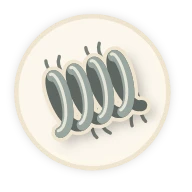
For the prostate, the material is tiny beads or small particles made of plastic. Some types also contain gelatin from pigs. They stay in place for good. Sometimes the doctor also places a tiny metal coil in a nearby artery, so the beads do not reach the tissue it feeds.4 to 7
If you avoid pork products or have had a reaction to gelatin, tell your doctor before the procedure.4
How well does it work?
Early results are encouraging. Most men feel much better, and for many the relief lasts at least three years. The American Urological Association's 2026 guideline lists PAE as an option for men with larger prostates. It says PAE can improve symptoms by about as much as TURP surgery. It is also an option for men who take blood thinners or have a high risk of bleeding.
Some men may need another treatment later, such as a second embolization or surgery: about 1 out of 5 within five years. If PAE works for you, it may help you avoid or put off surgery. If it does not, surgery is still an option.14 to 18
Side effects
You may have a burning feeling in your lower belly, need to pee often, and some pelvic pain for a few days. A little blood in your urine can happen. Most men keep normal ejaculation. Some notice less semen. Losing ejaculation completely is uncommon, and much less common than after TURP surgery. PAE does not seem to affect erections. Serious problems are uncommon.8151719 to 23
Results vary from person to person. Talk to a doctor about whether this is right for you.
An enlarged prostate is common as men age. This is also known as benign prostatic hyperplasia (BPH). BPH is not cancer and does not raise your risk of prostate cancer. Many men have no symptoms. If you have trouble peeing, embolization is one of many options. You can also consider medicines, other less invasive treatments, or surgery. The right choice depends on your symptoms and goals.12
If you cannot pee at all, have a fever with chills, see a lot of blood or clots in your urine, have severe pain, or feel very sick or faint, call 911.
Your other enlarged prostate treatment options
Medicines
These ease symptoms like frequent peeing and a weak stream. No procedure is needed.
Alpha blockers
These include pills (such as tamsulosin). They relax the muscles around the prostate and bladder so urine flows more easily.12
- How invasive is it?
- These are pills. No procedure is needed.
- How well does it work?
- Good evidence suggests these pills ease symptoms for many men. Most men notice a change within 3 to 7 days.12
- Side effects
- You may feel dizzy, mostly when you stand up. Ejaculation may change. If you plan eye surgery for cataracts, tell your eye doctor if you take one or have taken one.24
Prostate-shrinking pills
These are pills (such as finasteride or dutasteride). They lower a hormone that makes the prostate grow, so it slowly shrinks.1225
- How invasive is it?
- These are pills. No procedure is needed.
- How well does it work?
- It can take 3 to 6 months to feel better. Strong evidence shows they lower the chance of needing surgery. Finasteride cut that chance about in half over 4 years. Taking one with an alpha blocker may work better than an alpha blocker alone for men with larger prostates.1225 to 28
Tadalafil
This is a pill. It relaxes muscles around the bladder and prostate. It is also used for erection problems.229
- How invasive is it?
- This is a pill. No procedure is needed.
- Side effects
- You may have a headache, upset stomach, or back pain. Do not take it with nitrate heart medicines. It is not recommended with alpha blockers for this use.29
Less invasive treatments
These treat the prostate without major surgery. Nothing is cut out of your body. Before you agree to surgery, ask about these.
Prostate artery embolization (PAE)See detailsUrethral lift
Small implants lift and hold the prostate away from the urethra, like tiebacks on a curtain.231
- How invasive is it?
- It is done through the penis, with no cuts in the skin. Most men need little or no urine tube time and return to normal activity in about 1 week.3132
- How well does it work?
- Early studies suggest it eases symptoms, often within 2 weeks. It works only for some prostate sizes, so ask if yours fits. Some men need another procedure: about 1 out of 7 within 5 years.32
- Side effects
- Side effects are mostly mild and short-lived. Erections and ejaculation usually stay the same.32
Water vapor (steam) therapy
Steam released into the prostate burns away some of the inner tissue. This makes the path for urine larger.231
- How invasive is it?
- It is done through the penis, with no cuts in the skin. It can be done in the doctor's office.31
Temporary implant
A small folded device is placed in the prostate for about a week. As it opens, it makes small cuts that widen the passage. Then it is removed.3136
- How well does it work?
- Early studies suggest it helps some men. Many men also felt better after a fake procedure, so doctors are still learning how much of the relief comes from the implant. We do not yet know how long it lasts.3637
- Side effects
- Side effects are mostly mild and short-lived. New erection or ejaculation problems seem uncommon.36
Medicine-coated balloon
A balloon passed through the penis widens the space where the prostate squeezes the urethra. The balloon is coated with a medicine that helps keep it from closing again.40
- How invasive is it?
- It is done through the penis, with no cuts in the skin. It can be done in the office.38
- How well does it work?
- Early studies suggest it eases symptoms for at least 2 years. It works only for some prostate sizes, so ask if yours fits.3839
- Side effects
- You may have blood in your urine or a bladder infection. Sex life usually stays the same.39
Surgery
Surgery removes the part of the prostate that blocks the flow of urine.
Transurethral resection (TURP)
Surgery removes the inside of the prostate with a small tool passed through the penis.41
Laser surgery
A laser passed through the penis removes or vaporizes the blocking tissue. One type is called HoLEP.31
Waterjet surgery
High-pressure jets of water, passed through the penis, remove the blocking tissue.31
Open or robotic prostate removal
Surgery through the belly removes the inside of a very large prostate.47
- How invasive is it?
- It takes a cut in the lower belly, or small cuts with a robot. After open surgery, most men stay in the hospital for 2 to 4 days with a urine tube. Recovery takes about 6 weeks.247
- How well does it work?
- It is often used when the prostate is too large for other surgery. Most men can pee as usual afterward.47
- Side effects
- Dry orgasms, leaking urine, bleeding, and infection can happen.47
Learn more
What should I ask my doctor?
You can ask about any option on this page, even one your doctor does not offer.
- Which options could work for me, and which could not?
- How would each option affect my erections and ejaculation?
- How long would I need to recover, and will I need a urine tube?
- Do you offer prostate artery embolization, or can you refer me to someone who does?
Common questions
Do I need treatment?
Not always. If your symptoms are mild and do not bother you, your doctor may watch them with yearly checkups. You can also drink less before bed and cut back on alcohol and caffeine. These changes can help, and they're safe to try.2
Does an enlarged prostate mean cancer?
No. It is not cancer, and it does not raise your risk of prostate cancer. Some symptoms can look alike, so your doctor may check your PSA, a blood test, to screen you for prostate cancer.12
Will treatment affect my sex life?
It depends on the treatment. Many surgeries cause dry orgasms, where semen goes into the bladder. Some pills can lower your sex drive or cause erection problems. Ask your doctor how each option fits your goals before you choose.2542
Do I need surgery for an enlarged prostate?
Not always. Medicines and less invasive treatments, such as PAE (prostate artery embolization), are also options. Surgery is often used when other treatments have not helped or problems develop.2
References
The small numbers on this page point to these sources.
- MedlinePlus Medical Encyclopedia (U.S. National Library of Medicine). Enlarged prostate. Reviewed July 1, 2025. Read November 4, 2026. https://medlineplus.gov/ency/article/000381.htm
- National Institute of Diabetes and Digestive and Kidney Diseases (NIH). Prostate enlargement (benign prostatic hyperplasia). Last reviewed June 2024. Read November 4, 2026. https://www.niddk.nih.gov/health-information/urologic-diseases/prostate-problems/prostate-enlargement-benign-prostatic-hyperplasia
- RadiologyInfo.org (Radiological Society of North America and American College of Radiology). Catheter embolization. Reviewed August 5, 2024. https://www.radiologyinfo.org/en/info/cathembol
- Merit Medical. Tris-acryl gelatin microspheres: instructions for use 404692001MLP_001. 2018. https://cloud.merit.com/catalog/IFUs/404692001MLP.pdf
- US Food and Drug Administration. 510(k) summary K203276: polyvinyl alcohol hydrogel microspheres (Biocompatibles UK). April 20, 2021. https://www.accessdata.fda.gov/cdrh_docs/pdf20/K203276.pdf
- Boston Scientific. Polyvinyl alcohol embolization particles: product information. Accessed November 11, 2026. https://www.bostonscientific.com/en-US/products/embolization/contour-pva-embolization-particles.html
- Maclean D, Vigneswaran G, Maher B, et al. The effect of protective coil embolization of penile anastomoses during prostatic artery embolization on erectile function: a propensity-matched analysis. Journal of Vascular and Interventional Radiology. 2023;34(2):218-224. https://doi.org/10.1016/j.jvir.2022.10.023
- Society of Interventional Radiology. Enlarged prostate (benign prostatic hyperplasia) and prostate artery embolization. Reviewed September 2024. Read November 4, 2026. https://www.sirweb.org/for-patients/conditions-and-treatments/enlarged-prostate/
- UCLA Health, Department of Radiology. Prostate artery embolization. Read November 4, 2026. https://www.uclahealth.org/medical-services/radiology/prostate-imaging/treatments-procedures/prostate-artery-embolization
- British Society of Interventional Radiology. Prostate artery embolisation: patient information leaflet. 2025. Read November 5, 2026. https://www.bsir.org/patients-1/patient-information-leaflets/adult-procedures/prostate-artery-embolisation/
- Penn Medicine, Interventional Radiology. Prostate artery embolization: frequently asked questions. Read November 5, 2026. https://pennmedicine.org/for-patients-and-visitors/find-a-program-or-service/interventional-radiology/prostate-artery-embolization/prostate-artery-embolization-faqs
- MedlinePlus Medical Encyclopedia (U.S. National Library of Medicine). Transurethral resection of the prostate: discharge. Read November 4, 2026. https://medlineplus.gov/ency/patientinstructions/000300.htm
- Ray AF, Powell J, Speakman MJ, et al. Efficacy and safety of prostate artery embolization for benign prostatic hyperplasia: an observational study and propensity-matched comparison with transurethral resection of the prostate (the UK-ROPE study). BJU International. 2018;122(2):270-282. doi:10.1111/bju.14249. PMID 29645352. https://doi.org/10.1111/bju.14249
- Pisco JM, Bilhim T, Costa NV, et al. Randomised clinical trial of prostatic artery embolisation versus a sham procedure for benign prostatic hyperplasia. European Urology. 2020;77(3):354-362. doi:10.1016/j.eururo.2019.11.010. PMID 31831295. https://doi.org/10.1016/j.eururo.2019.11.010
- Pisco JM, Bilhim T, Pinheiro LC, et al. Medium- and long-term outcome of prostate artery embolization for patients with benign prostatic hyperplasia: results in 630 patients. Journal of Vascular and Interventional Radiology. 2016;27(8):1115-1122. doi:10.1016/j.jvir.2016.04.001. PMID 27321890. https://doi.org/10.1016/j.jvir.2016.04.001
- Goueli R, Badlani GH, Welliver C, et al. Management of lower urinary tract symptoms attributed to benign prostatic hyperplasia: AUA guideline (2026) part III: procedural/surgical management. Journal of Urology. Published May 6, 2026, as submitted. doi:10.1097/JU.0000000000005099. Prostate artery embolization: conditional recommendation, evidence grade B, prostates 50 cc or larger. https://www.auanet.org/2026BPHGuideline
- Jung JH, McCutcheon KA, Borofsky M, et al. Prostatic arterial embolization for the treatment of lower urinary tract symptoms in men with benign prostatic hyperplasia. Cochrane Database of Systematic Reviews. 2022;(3):CD012867. doi:10.1002/14651858.CD012867.pub3. PMID 35349161. https://doi.org/10.1002/14651858.CD012867.pub3
- Bilhim T, Costa NV, Torres D, Pinheiro LC, Spaepen E. Long-term outcome of prostatic artery embolization for patients with benign prostatic hyperplasia: single-centre retrospective study in 1072 patients over a 10-year period. CardioVascular and Interventional Radiology. 2022;45(9):1324-1336. doi:10.1007/s00270-022-03199-8. PMID 35778579. https://doi.org/10.1007/s00270-022-03199-8
- Guy's and St Thomas' NHS Foundation Trust (United Kingdom). After a prostate embolisation. Last reviewed November 2023. Read November 4, 2026. https://www.guysandstthomas.nhs.uk/health-information/prostate-embolisation-for-an-enlarged-prostate/after-a-prostate-embolisation
- Müllhaupt G, Hechelhammer L, Diener PA, et al. Ejaculatory disorders after prostatic artery embolization: a reassessment of two prospective clinical trials. World Journal of Urology. 2020;38(10):2595-2599. doi:10.1007/s00345-019-03036-7. PMID 31813028. https://doi.org/10.1007/s00345-019-03036-7
- Lokeshwar SD, Valancy D, Lima TFN, et al. A systematic review of reported ejaculatory dysfunction in clinical trials evaluating minimally invasive treatment modalities for BPH. Current Urology Reports. 2020;21(12):54. doi:10.1007/s11934-020-01012-y. PMID 33104947. https://doi.org/10.1007/s11934-020-01012-y
- Al Rawashdah SF, Pastore AL, Velotti G, et al. Sexual and functional outcomes of prostate artery embolisation: a prospective long-term follow-up, large cohort study. International Journal of Clinical Practice. 2020;74(3):e13454. doi:10.1111/ijcp.13454. PMID 31769906. https://doi.org/10.1111/ijcp.13454
- Sapoval MR, Bhatia S, Déan C, et al. Two-year outcomes of prostatic artery embolization for symptomatic benign prostatic hyperplasia: an international, multicenter, prospective study. CardioVascular and Interventional Radiology. 2024;47(11):1515-1524. doi:10.1007/s00270-024-03802-0. PMID 39230672. Funded by an embolic maker (NCT03527589). https://doi.org/10.1007/s00270-024-03802-0
- U.S. Food and Drug Administration approved label (DailyMed). Tamsulosin hydrochloride capsules. Revised February 2025. Read November 4, 2026. https://dailymed.nlm.nih.gov/dailymed/drugInfo.cfm?setid=13a5032d-0be1-4001-916e-459f0b1a051d
- U.S. Food and Drug Administration approved label (DailyMed). Finasteride 5 mg tablets. Revised March 2026. Read November 4, 2026. https://dailymed.nlm.nih.gov/dailymed/drugInfo.cfm?setid=6f988153-fc74-4ca4-b29a-111f750c4a4b
- U.S. Food and Drug Administration approved label (DailyMed). Dutasteride capsules. Revised October 2023. Read November 4, 2026. https://dailymed.nlm.nih.gov/dailymed/drugInfo.cfm?setid=960797b3-09b1-4d6a-8ece-8b5d918e93e4
- McConnell JD, Bruskewitz R, Walsh P, et al. The effect of finasteride on the risk of acute urinary retention and the need for surgical treatment among men with benign prostatic hyperplasia. New England Journal of Medicine. 1998;338(9):557-563. doi:10.1056/NEJM199802263380901. PMID 9475762. https://doi.org/10.1056/NEJM199802263380901
- Roehrborn CG, Siami P, Barkin J, et al. The effects of combination therapy with dutasteride and tamsulosin on clinical outcomes in men with symptomatic benign prostatic hyperplasia: 4-year results from the CombAT study. European Urology. 2010;57(1):123-131. doi:10.1016/j.eururo.2009.09.035. PMID 19825505. Funded by the drug maker (NCT00090103). https://doi.org/10.1016/j.eururo.2009.09.035
- U.S. Food and Drug Administration approved label (DailyMed). Tadalafil tablets. Revised March 2026. Read November 4, 2026. https://dailymed.nlm.nih.gov/dailymed/drugInfo.cfm?setid=bcd8f8ab-81a2-4891-83db-24a0b0e25895
- Pattanaik S, Mavuduru RS, Panda A, et al. Phosphodiesterase inhibitors for lower urinary tract symptoms consistent with benign prostatic hyperplasia. Cochrane Database of Systematic Reviews. 2018;11:CD010060. doi:10.1002/14651858.CD010060.pub2. PMID 30480763. https://doi.org/10.1002/14651858.CD010060.pub2
- MedlinePlus Medical Encyclopedia (U.S. National Library of Medicine). Prostate resection: minimally invasive. Reviewed April 29, 2025. Read November 4, 2026. https://medlineplus.gov/ency/article/007415.htm
- Roehrborn CG, Barkin J, Gange SN, et al. Five year results of the prospective randomized controlled prostatic urethral L.I.F.T. study. Canadian Journal of Urology. 2017;24(3):8802-8813. PMID 28646935. LIFT pivotal study NCT01294150, sponsored by the device maker. https://europepmc.org/article/MED/28646935
- McVary KT, Gittelman MC, Goldberg KA, et al. Final 5-year outcomes of the multicenter randomized sham-controlled trial of a water vapor thermal therapy for treatment of moderate to severe lower urinary tract symptoms secondary to benign prostatic hyperplasia. Journal of Urology. 2021;206(3):715-724. doi:10.1097/JU.0000000000001778. PMID 33872051. Sponsored by the device maker (NCT01912339). https://doi.org/10.1097/JU.0000000000001778
- Carletti F, Tamborino F, Turcan A, et al. Five-year retreatment and medication restart rates following benign prostate hyperplasia treatments: a nationwide real-world analysis using Epic Cosmos. European Urology Focus. 2026;12(3):383-392. doi:10.1016/j.euf.2026.01.003. PMID 41558957. https://doi.org/10.1016/j.euf.2026.01.003
- McVary KT, Gange SN, Gittelman MC, et al. Minimally invasive prostate convective water vapor energy ablation: a multicenter, randomized, controlled study for the treatment of lower urinary tract symptoms secondary to benign prostatic hyperplasia. Journal of Urology. 2016;195(5):1529-1538. doi:10.1016/j.juro.2015.10.181. PMID 26614889. Sponsored by the device maker (NCT01912339). https://doi.org/10.1016/j.juro.2015.10.181
- Chughtai B, Elterman D, Shore N, et al. The iTind temporarily implanted nitinol device for the treatment of lower urinary tract symptoms secondary to benign prostatic hyperplasia: a multicenter, randomized, controlled trial. Urology. 2021;153:270-276. doi:10.1016/j.urology.2020.12.022. PMID 33373708. Sponsored by the device maker (NCT02506465). https://doi.org/10.1016/j.urology.2020.12.022
- Amparore D, De Cillis S, Schulman C, Kadner G, Fiori C, Porpiglia F. Temporary implantable nitinol device for benign prostatic hyperplasia-related lower urinary tract symptoms: over 48-month results. Minerva Urology and Nephrology. 2023;75(6):743-751. doi:10.23736/S2724-6051.23.05322-3. PMID 37350585. Sponsored by the device maker (NCT02145208). https://doi.org/10.23736/S2724-6051.23.05322-3
- Kaplan SA, Moss J, Freedman S, et al. The PINNACLE study: a double-blind, randomized, sham-controlled study evaluating the Optilume BPH catheter system for the treatment of lower urinary tract symptoms secondary to benign prostatic hyperplasia. Journal of Urology. 2023;210(3):500-509. doi:10.1097/JU.0000000000003568. PMID 37555604. Sponsored by the device maker (NCT04131907). https://doi.org/10.1097/JU.0000000000003568
- Kaplan SA, Moss JL, Freedman SJ. Two-year long-term follow-up of treatment with the Optilume BPH catheter system in a randomized controlled trial for benign prostatic hyperplasia (the PINNACLE study). Prostate Cancer and Prostatic Diseases. 2024;27(3):531-536. doi:10.1038/s41391-024-00833-z. PMID 38684918. Sponsored by the device maker (NCT04131907). https://doi.org/10.1038/s41391-024-00833-z
- U.S. Food and Drug Administration. Optilume BPH catheter system, P220029, approved June 30, 2023. Read November 4, 2026. https://www.fda.gov/medical-devices/recently-approved-devices/optilume-bph-catheter-system-p220029
- MedlinePlus Medical Encyclopedia (U.S. National Library of Medicine). Transurethral resection of the prostate. Reviewed July 1, 2025. Read November 4, 2026. https://medlineplus.gov/ency/article/002996.htm
- Calik G, Laguna MP, Gravas S, Albayrak S, de la Rosette J. Preservation of antegrade ejaculation after surgical relief of benign prostatic obstruction is a valid endpoint. World Journal of Urology. 2021;39(7):2277-2289. doi:10.1007/s00345-021-03682-w. PMID 33796882. https://doi.org/10.1007/s00345-021-03682-w
- NHS (United Kingdom). Transurethral resection of the prostate (TURP): risks. Page last reviewed June 12, 2025. Read November 4, 2026. https://www.nhs.uk/conditions/transurethral-resection-of-the-prostate-turp/risks/
- Chen J, Dong W, Gao X, et al. A systematic review and meta-analysis of efficacy and safety comparing holmium laser enucleation of the prostate with transurethral resection of the prostate for patients with prostate volume less than 100 mL or 100 g. Translational Andrology and Urology. 2022;11(4):407-420. doi:10.21037/tau-21-1005. PMID 35558272. https://doi.org/10.21037/tau-21-1005
- Sathianathen N, Hwang EC, Brown SJ, et al. Holmium laser enucleation of the prostate for the treatment of lower urinary tract symptoms in men with benign prostatic hyperplasia. Cochrane Database of Systematic Reviews. 2026;9:CD013291. doi:10.1002/14651858.CD013291.pub2. PMID 42713842. https://doi.org/10.1002/14651858.CD013291.pub2
- Gilling PJ, Barber N, Bidair M, et al. Five-year outcomes for Aquablation therapy compared to TURP: results from a double-blind, randomized trial in men with LUTS due to BPH. Canadian Journal of Urology. 2022;29(1):10960-10968. PMID 35150215. Sponsored by the device maker (NCT02505919). https://europepmc.org/article/MED/35150215
- MedlinePlus Medical Encyclopedia (U.S. National Library of Medicine). Simple prostatectomy. Reviewed April 29, 2025. Read November 4, 2026. https://medlineplus.gov/ency/article/007416.htm