What is pelvic venous disease (pelvic congestion syndrome)?
Pelvic pain that lasts more than 6 months is called chronic pelvic pain. Sometimes it comes from veins in the pelvis that are wide or squeezed. Doctors call this pelvic venous disease. You may also hear the name pelvic congestion syndrome, or May-Thurner syndrome when a large vein is squeezed. It is most common in women before menopause who have been pregnant.1 to 3
Common symptoms3
About pelvic vein embolization and stenting
Two vein problems can cause this pain, and they often happen together. Veins near the ovaries and uterus can widen and let blood flow the wrong way. A large vein in the pelvis can also be squeezed by an artery, which is often called May-Thurner syndrome. Each problem has its own treatment. Both are done through a tiny skin nick, without surgery, and nothing is cut out of your body. Some women need one treatment, and some need both.1118 to 21
Embolization: closing the wide veins
Veins on and around the uterus and ovaries can widen and fill with blood. That can cause a deep ache.
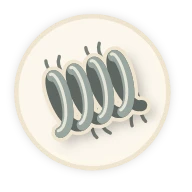
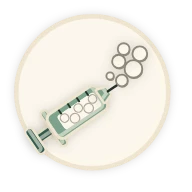
A thin tube goes through a tiny skin nick to the wide veins. A foamy medicine makes them scar shut. Tiny coils or plugs can close the larger ones.
The closed veins shrink over time, and the swelling settles. Blood finds its way through healthy veins instead. For many women, the pain eases.
A doctor guides a thin tube through a tiny skin nick to the wide veins near the ovaries and uterus. Tiny coils, plugs, a medical glue, or a medicine then close those veins.10
What is embolization?
Embolization means blocking blood flow on purpose, from inside a blood vessel. A doctor guides a thin tube to the small blood vessels that feed the problem area. Then the doctor releases a material that blocks them.6
Stenting: opening a squeezed vein (May-Thurner syndrome)
An artery can press on a large vein in the pelvis. Blood backs up behind the squeeze, into the pelvic veins and the leg. This is often called May-Thurner syndrome.
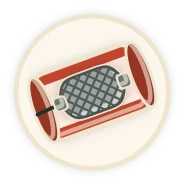
A thin tube goes through a tiny skin nick to the squeezed vein. A stent, a small mesh tube, opens up inside it.
The stent holds the vein open, and blood drains from the pelvis and leg again. The stent stays in for good.
A doctor guides a thin tube through a tiny skin nick to the squeezed vein and places a stent, a small mesh tube, to hold it open. The stent stays in for good.11
How well do they work?
Embolization. Early results are encouraging. About 3 out of 4 women have much less pain soon after embolization, and for many the relief lasts for years. In the one trial that compared embolization with a fake procedure, embolization eased pain more. More research is under way. It is an option to look into if you have not found relief with anything else.1012 to 17
Stenting. Early studies suggest a stent eases pelvic pain for women whose pain comes from a squeezed vein, and that when both vein problems are present, treating both gives more lasting relief than a stent alone. For a swollen leg, most people have less swelling after a stent. While it goes away completely in 3 to 5 out of 10 patients, 6 to 8 out of 10 patients see improvement. Pain also tends to improve more reliably than swelling.18 to 26
Side effects
Embolization. Pain in the belly or back right afterward is common. Serious problems are possible, but rare: about 1 out of 100. Most of these are fixed with another procedure. Pain may come back for some women. Some may need a second treatment.1227
Stenting. Back pain after a stent is common. A clot in the stent or the stent moving is rare, about 1 to 2 out of 100. Doctors may suggest a blood thinner during a later pregnancy.2829
Results vary from person to person. Talk to a doctor about whether this is right for you.
Long-term pelvic pain is common in women, and it has many causes. Some women try many treatments and still have no answer. For some of them, the cause is veins in the pelvis that are wide or squeezed. Embolization and stenting treat these veins without surgery. You can also consider medicines or surgery. The right choice depends on your symptoms and goals.1230
If you have severe pain, heavy bleeding, a fever, a swollen and painful leg, or feel very sick or faint, call 911.
Your other chronic pelvic pain treatment options
Medicines
These can ease pain. No procedure is needed.
Hormone medicines
Surgery
Surgery closes the wide veins or removes the organs they drain.
Removing the uterus and ovaries
A surgeon removes the uterus and both ovaries.5
- How invasive is it?
- This is major surgery.
- How well does it work?
- Early studies suggest it can ease pain. However, about 1 out of 3 women may still have some pain afterward.5
- Side effects
- You can no longer get pregnant. Removing both ovaries causes menopause, so doctors often give hormone replacement. It has the risks of any major surgery.5
Learn more
How can veins cause pelvic pain?
Veins carry blood back to the heart. In the pelvis, veins near the ovaries and uterus can widen and let blood flow the wrong way. A large vein can also be squeezed by an artery, so blood backs up into the pelvic veins. A vein near the kidney can be squeezed too. Doctors now group these vein problems together.2
How is it found?
What should I ask my doctor?
- Could the veins in my pelvis be part of my pain?
- Could something else, such as endometriosis, also be part of it?
- Which options could work for me, and which could not?
- Do you offer pelvic vein embolization and stenting, or can you refer me to someone who does?
Common questions
References
The small numbers on this page point to these sources.
- Ahangari A. Prevalence of chronic pelvic pain among women: an updated review. Pain Physician. 2014;17(2):E141-147. PMID 24658485. https://pubmed.ncbi.nlm.nih.gov/24658485/
- Meissner MH, Khilnani NM, Labropoulos N, et al. The Symptoms-Varices-Pathophysiology classification of pelvic venous disorders: a report of the American Vein & Lymphatic Society International Working Group on Pelvic Venous Disorders. Journal of Vascular Surgery: Venous and Lymphatic Disorders. 2021;9(3):568-584. doi:10.1016/j.jvsv.2020.12.084. PMID 33529720. https://doi.org/10.1016/j.jvsv.2020.12.084
- Krambeck C, Tesch K, Watrowski R, Maass N, Alkatout I. Pelvic congestion syndrome: the gynecological perspective. Journal of Clinical Medicine. 2026;15(4):1655. doi:10.3390/jcm15041655. PMID 41753340. https://doi.org/10.3390/jcm15041655
- Zlotnik M, Messina MdL, Vieira TDR, et al. High prevalence of endometriosis in women with chronic pelvic pain and confirmed pelvic varicosities: a multiparametric MRI study. Clinics (Sao Paulo). 2026;81:100895. doi:10.1016/j.clinsp.2026.100895. PMID 41780295. https://doi.org/10.1016/j.clinsp.2026.100895
- Beard RW, Kennedy RG, Gangar KF, et al. Bilateral oophorectomy and hysterectomy in the treatment of intractable pelvic pain associated with pelvic congestion. British Journal of Obstetrics and Gynaecology. 1991;98(10):988-992. doi:10.1111/j.1471-0528.1991.tb15336.x. PMID 1751445. https://doi.org/10.1111/j.1471-0528.1991.tb15336.x
- RadiologyInfo.org (Radiological Society of North America and American College of Radiology). Catheter embolization. Reviewed August 5, 2024. https://www.radiologyinfo.org/en/info/cathembol
- Strobl F, Böhm AK, Mertens L, et al. Pelvic vein embolization using different embolic agents for the treatment of pelvic venous insufficiency: a systematic review and meta-analysis. Journal of Vascular Surgery: Venous and Lymphatic Disorders. 2026;14(6):102599. https://doi.org/10.1016/j.jvsv.2026.102599
- US Food and Drug Administration. 510(k) K153778: platinum embolization coils with synthetic fibers (Cook). May 19, 2016. https://www.accessdata.fda.gov/scripts/cdrh/cfdocs/cfpmn/pmn.cfm?ID=K153778
- Abbott. Nitinol vascular plug: instructions for use ARTEN600304404 A. 2023. https://manuals.eifu.abbott/content/dam/av/manuals-eifu/global/BY/en/ARTEN600304404_A.pdf
- Strobl F, Böhm AK, Mertens L, et al. Pelvic vein embolization using different embolic agents for the treatment of pelvic venous insufficiency: a systematic review and meta-analysis. Journal of Vascular Surgery: Venous and Lymphatic Disorders. 2026;14(6):102599. doi:10.1016/j.jvsv.2026.102599. PMID 42571790. https://doi.org/10.1016/j.jvsv.2026.102599
- Desai KR, Sabri SS, Elias S, et al. Consensus statement on the management of nonthrombotic iliac vein lesions from the VIVA Foundation, the American Venous Forum, and the American Vein and Lymphatic Society. Circulation: Cardiovascular Interventions. 2024;17(8):e014160. doi:10.1161/CIRCINTERVENTIONS.124.014160. PMID 39034930. https://doi.org/10.1161/CIRCINTERVENTIONS.124.014160
- Hanna J, Bruinsma J, Temperley HC, Fernando D, et al. Efficacy of embolotherapy for the treatment of pelvic congestion syndrome: a systematic review. Irish Journal of Medical Science. 2024;193(3):1441-1451. doi:10.1007/s11845-024-03608-6. PMID 38294607. https://doi.org/10.1007/s11845-024-03608-6
- Kim HS, Malhotra AD, Rowe PC, Lee JM, Venbrux AC. Embolotherapy for pelvic congestion syndrome: long-term results. Journal of Vascular and Interventional Radiology. 2006;17(2 Pt 1):289-297. doi:10.1097/01.RVI.0000194870.11980.F8. PMID 16517774. Single group, no comparison. https://doi.org/10.1097/01.RVI.0000194870.11980.F8
- Laborda A, Medrano J, de Blas I, Urtiaga I, Carnevale FC, de Gregorio MA. Endovascular treatment of pelvic congestion syndrome: visual analog scale (VAS) long-term follow-up clinical evaluation in 202 patients. Cardiovascular and Interventional Radiology. 2013;36(4):1006-1014. doi:10.1007/s00270-013-0586-2. PMID 23456353. Single group, no comparison. https://doi.org/10.1007/s00270-013-0586-2
- Hansrani V, Riding D, Seif MW, Caress AL, Payne K, Ghosh J, McCollum CN. Transvenous occlusion of incompetent pelvic veins to treat chronic pelvic pain in women: a randomised controlled trial. BJOG. 2023;130(11):1362-1369. doi:10.1111/1471-0528.17512. PMID 37095614. https://doi.org/10.1111/1471-0528.17512
- ClinicalTrials.gov NCT06168058. Randomized controlled, single-blinded, parallel-group trial of ovarian vein and pelvic vein embolization in women with chronic pelvic pain and pelvic varices (EMBOLIZE). Weill Medical College of Cornell University. Recruiting; record read November 6, 2026. https://clinicaltrials.gov/study/NCT06168058
- Daniels JP, Champaneria R, Shah L, Gupta JK, Birch J, Moss JG. Effectiveness of embolization or sclerotherapy of pelvic veins for reducing chronic pelvic pain: a systematic review. Journal of Vascular and Interventional Radiology. 2016;27(10):1478-1486.e8. doi:10.1016/j.jvir.2016.04.016. PMID 27397619. https://doi.org/10.1016/j.jvir.2016.04.016
- Alenichev AV, Chubchenko SV, Gavrilov SG. Iliac vein stent placement in the treatment of pelvic venous disorders in women: a systematic review. Phlebology. 2026;41(4):268-281. doi:10.1177/02683555251365068. PMID 40738172. https://doi.org/10.1177/02683555251365068
- Mokhtar HHM, Salem AM, Zaki MM, Emara MH. Comparative study between isolated iliac vein stenting versus concomitant iliac vein stenting with pelvic vein embolization in patients with pelvic venous insufficiency secondary to nonthrombotic iliac vein lesions. Annals of Vascular Surgery. 2026;133:860-869. doi:10.1016/j.avsg.2026.08.039. PMID 42697323. https://doi.org/10.1016/j.avsg.2026.08.039
- Razavi MK, Jaff MR, Miller LE. Safety and effectiveness of stent placement for iliofemoral venous outflow obstruction: systematic review and meta-analysis. Circulation: Cardiovascular Interventions. 2015;8(10):e002772. doi:10.1161/CIRCINTERVENTIONS.115.002772. PMID 26438686. https://doi.org/10.1161/CIRCINTERVENTIONS.115.002772
- Kibbe MR, Ujiki M, Goodwin AL, Eskandari M, Yao J, Matsumura J. Iliac vein compression in an asymptomatic patient population. Journal of Vascular Surgery. 2004;39(5):937-943. doi:10.1016/j.jvs.2003.12.032. PMID 15111841. https://doi.org/10.1016/j.jvs.2003.12.032
- Raju S, Neglén P. High prevalence of nonthrombotic iliac vein lesions in chronic venous disease: a permissive role in pathogenicity. Journal of Vascular Surgery. 2006;44(1):136-143. doi:10.1016/j.jvs.2006.02.065. PMID 16828437. https://doi.org/10.1016/j.jvs.2006.02.065
- Neglén P, Hollis KC, Olivier J, Raju S. Stenting of the venous outflow in chronic venous disease: long-term stent-related outcome, clinical, and hemodynamic result. Journal of Vascular Surgery. 2007;46(5):979-990. doi:10.1016/j.jvs.2007.06.046. PMID 17980284. https://doi.org/10.1016/j.jvs.2007.06.046
- Hong L, Wang X, Fang Z, et al. Clinical efficacy of Venastent, a novel iliac vein stent for non-thrombotic iliac vein lesions: a multi-centre randomised controlled trial. European Journal of Vascular and Endovascular Surgery. 2022;63(6):883-889. doi:10.1016/j.ejvs.2022.04.005. PMID 35717357. https://doi.org/10.1016/j.ejvs.2022.04.005
- Liu H, Zeng Q, Li F, et al. Comparison of the Zylox Penguin venous stent system and Zilver Vena stent for non-thrombotic iliac vein lesions: a multicentre randomised controlled trial. European Journal of Vascular and Endovascular Surgery. 2026. doi:10.1016/j.ejvs.2026.02.043. PMID 41759711. https://doi.org/10.1016/j.ejvs.2026.02.043
- Ye K, Lu X, Li W, et al. Long-term outcomes of stent placement for symptomatic nonthrombotic iliac vein compression lesions in chronic venous disease. Journal of Vascular and Interventional Radiology. 2012;23(4):497-502. doi:10.1016/j.jvir.2011.12.021. PMID 22342482. https://doi.org/10.1016/j.jvir.2011.12.021
- Sutanto SA, Tan M, Onida S, Davies AH. A systematic review on isolated coil embolization for pelvic venous reflux. Journal of Vascular Surgery: Venous and Lymphatic Disorders. 2022;10(1):224-232.e9. doi:10.1016/j.jvsv.2021.07.006. PMID 34358670. https://doi.org/10.1016/j.jvsv.2021.07.006
- Wen-da W, Yu Z, Yue-Xin C. Stenting for chronic obstructive venous disease: a current comprehensive meta-analysis and systematic review. Phlebology. 2016;31(6):376-389. doi:10.1177/0268355515596474. PMID 26205370. https://doi.org/10.1177/0268355515596474
- Villalba L, Vaddavalli VV, Tripathi RK. Iliac vein stenting and pregnancy. Journal of Vascular Surgery: Venous and Lymphatic Disorders. 2023;11(6):1276-1284. doi:10.1016/j.jvsv.2023.08.003. PMID 37572777. https://doi.org/10.1016/j.jvsv.2023.08.003
- Le Pennec V, Douane F, Brun JL, et al. Endovascular management of pelvic congestion syndrome: an expert consensus statement from the French Society of Cardiovascular Imaging (SFICV), Interventional Radiology Federation (FRI), College of French Radiology Teachers (CERF), and French Society of Women's Imaging (SIFEM). Diagnostic and Interventional Imaging. 2025;106(10):356-366. doi:10.1016/j.diii.2025.04.004. PMID 40312243. https://doi.org/10.1016/j.diii.2025.04.004
- Cheong YC, Smotra G, Williams AC. Non-surgical interventions for the management of chronic pelvic pain. Cochrane Database of Systematic Reviews. 2014;(3):CD008797. doi:10.1002/14651858.CD008797.pub2. PMID 24595586. https://doi.org/10.1002/14651858.CD008797.pub2
- Farquhar CM, Rogers V, Franks S, Pearce S, Wadsworth J, Beard RW. A randomized controlled trial of medroxyprogesterone acetate and psychotherapy for the treatment of pelvic congestion. British Journal of Obstetrics and Gynaecology. 1989;96(10):1153-1162. doi:10.1111/j.1471-0528.1989.tb03190.x. PMID 2531611. https://doi.org/10.1111/j.1471-0528.1989.tb03190.x
- Gloviczki ML, Demetres MR, Salazar G, Khilnani NM. Venoactive drugs for venous origin chronic pelvic pain in women: a systematic review. Phlebology. 2026;41(7):579-599. doi:10.1177/02683555251411027. PMID 41432346. https://doi.org/10.1177/02683555251411027
- Gavrilov SG, Moskalenko YP, Grishenkova AS, Chubchenko SV. Venoactive drug treatment for patients with pelvic varicose veins: results of the single-center, randomized, open-label study (VENOTREAT). Vascular Medicine. 2025;30(5):590-598. doi:10.1177/1358863X251362200. PMID 40855727. https://doi.org/10.1177/1358863X251362200
- Emad El Din M, Soliman M, El Kiran Y, et al. Ovarian vein surgical ablation versus endovascular technique for treatment of pelvic vein incompetence. Journal of Vascular Surgery: Venous and Lymphatic Disorders. 2023;11(4):801-808. doi:10.1016/j.jvsv.2022.10.018. PMID 37003463. https://doi.org/10.1016/j.jvsv.2022.10.018
- Jurga-Karwacka A, Karwacki GM, Schoetzau A, Zech CJ, Heinzelmann-Schwarz V, Schwab FD. A forgotten disease: pelvic congestion syndrome as a cause of chronic lower abdominal pain. PLoS One. 2019;14(4):e0213834. doi:10.1371/journal.pone.0213834. PMID 30939134. https://doi.org/10.1371/journal.pone.0213834
- Rozenblit AM, Ricci ZJ, Tuvia J, Amis ES Jr. Incompetent and dilated ovarian veins: a common CT finding in asymptomatic parous women. American Journal of Roentgenology. 2001;176(1):119-122. doi:10.2214/ajr.176.1.1760119. PMID 11133549. https://doi.org/10.2214/ajr.176.1.1760119
- Baccellieri D, Basile A, Arena A, et al. Delphi consensus on diagnostic and therapeutic pathways for pelvic venous disorders: a multidisciplinary algorithm. Vasa. 2026;55(6):379-388. doi:10.1024/0301-1526/a001267. PMID 41782320. https://doi.org/10.1024/0301-1526/a001267
- Bartl T, Wolf F, Dadak C. Pelvic congestion syndrome (PCS) as a pathology of postmenopausal women: a case report with literature review. BMC Women's Health. 2021;21(1):181. doi:10.1186/s12905-021-01323-3. PMID 33906668. https://doi.org/10.1186/s12905-021-01323-3